
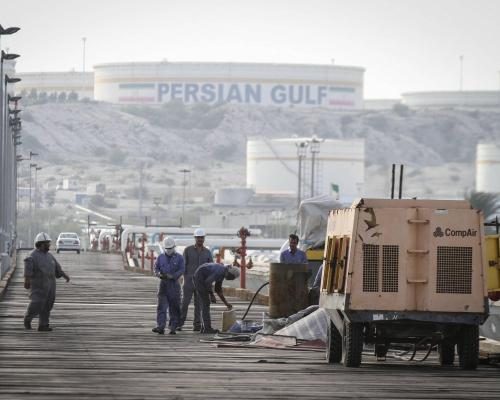
The United States is reportedly contemplating a military occupation or blockade of Iran's Kharg Island, a key oil terminal, in a bid to pressure Tehran into reopening the strategic Strait of Hormuz. This development comes despite previous assertions from former President Donald Trump suggesting a lack of interest in deploying ground troops in the region. The Axios report underscores the escalating tensions between the US and Iran, particularly as Iran's military has issued threats against US officials and military leaders.
Kharg Island, situated approximately 16 miles from the Iranian city of Bushehr in the Gulf, plays a critical role in Iran's oil exports, accounting for about 90% of the nation's oil shipments. The island spans only 20 square kilometers but is vital for Iran's economy, which heavily relies on fossil fuel revenues. The idea of a US occupation raises significant concerns about the risks involved for American forces, who could be vulnerable to Iranian drone and rocket attacks in the confined geographical space of the island. Originally reported by The Guardian.
Iran's Military Response Intensifies
The Iranian military has escalated its rhetoric, vowing to "hunt down" US and Israeli officials wherever they may be. Abolfazl Shekarchi, a spokesperson for Iran's armed forces, highlighted this aggressive stance, stating, "We are watching your cowardly officials and commanders, pilots and wicked soldiers." These threats are part of a broader response to perceived aggression from the US and its allies, as hostilities in the region continue to rise.
Recent military actions have already underscored the volatility in the Gulf. On Friday, Iranian drone strikes targeted Kuwait's Mina al-Ahmadi oil refinery, causing significant damage. This refinery, vital for Kuwait's oil processing-capable of handling approximately 730,000 barrels of oil per day-was struck just a day after it had already suffered damage from another Iranian assault. This pattern of attacks reflects Iran's strategy of targeting energy infrastructure in response to actions taken against its assets.
US Military Deployments Heighten Tensions
In response to the escalating situation, the Pentagon has deployed the 31st Marine Expeditionary Unit, a rapid-response force comprising approximately 2,200 marines, to the Middle East. However, military officials have not clarified the specific missions these marines might undertake. This deployment adds another layer of complexity to an already tense environment, where contradictory briefings from the Trump administration and its Israeli allies have only fueled confusion regarding their strategic intentions.
This lack of clarity is evident as the conflict shows no signs of de-escalating. Reports indicate that US and Israeli forces have targeted a total of 16 Iranian cargo vessels in various port towns along the Gulf, marking a significant escalation in military operations. Local officials confirmed that these vessels, linked to towns such as Bandar Lengeh and Bandar Kong, were completely destroyed in the strikes.
Widespread Regional Impact on Energy Prices
The ongoing conflict has had a pronounced effect on global oil and gas prices, leading to warnings of a potential economic shock. As clashes rage across the region-from Tel Aviv to the Caspian Sea-energy prices have surged, creating further instability in international markets. The Iranian response to Israeli attacks on its infrastructure, including the pivotal South Pars offshore natural gas field, has exacerbated these tensions, leading to increased military exchanges.
In a rare public statement, Iran's new supreme leader, Ayatollah Mojtaba Khamenei, purportedly wounded in earlier strikes, has declared that Tehran's enemies need to lose their "security." His comments come amid heightened fears regarding Iran's military capabilities and its willingness to retaliate against perceived aggressors. The continuing cycle of violence has left analysts and governments alike grappling with the potential ramifications for regional security and energy supply stability.
As conflicts escalate and diplomatic solutions remain elusive, the situation in the Gulf promises to remain a focal point of international concern. The potential for a US occupation of Kharg Island could redefine military engagements in the region, raising questions about the balance of power and the ongoing struggle for control over vital energy resources.
Originally reported by The Guardian. View original.