
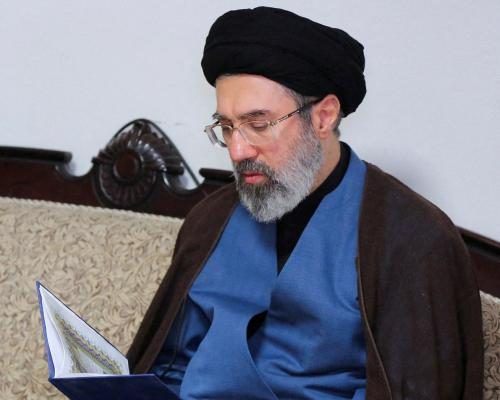
In a significant development amidst escalating tensions in the Middle East, Mojtaba Khamenei has been appointed as Iran's New Supreme Leader following the death of his father, Ayatollah Ali Khamenei. This transition comes as oil prices soar past $100 a barrel, driven by ongoing conflicts and geopolitical strife.
The Iranian clerical body responsible for selecting the supreme leader announced the decision on Sunday, urging the nation to unite behind Mojtaba Khamenei. The new leader, 56, has largely remained out of the public eye but has been a key player in Iran's power structure, primarily working within his father's office. His appointment has already drawn criticism; former U.S. President Donald Trump labeled him an "unacceptable" choice, while Israel indicated it would continue to target Iran's Leadership. Originally reported by The Guardian.
Drone Attacks in Bahrain Cause Civilian Casualties
On Monday, Bahrain reported that an Iranian drone attack on the island of Sitra overnight resulted in injuries to 32 civilians. The Bahraini health ministry confirmed that all the wounded were citizens, with four cases classified as serious, including children. Among the injured was a 17-year-old girl suffering from severe head and eye injuries, and a two-month-old baby, according to the state news agency.
The drone strike is part of a broader pattern of escalating attacks in the Gulf region, where Iranian forces are reportedly intensifying their retaliatory actions. Multiple explosions were reported in Doha, Qatar, while the Qatari defense ministry confirmed the interception of a missile attack. Saudi Arabia also reported successful interceptions of drones aimed at its Shaybah oil field, demonstrating the widespread volatility in the region.
Global Oil Prices Surge Amidst Middle East Tensions
In the wake of these developments, global oil prices have surged beyond $100 per barrel, raising alarm among investors and contributing to a significant market sell-off. Australian shares experienced a substantial decline, with the benchmark S&P/ASX 200 dropping 4% during lunchtime trading, marking the largest single-day fall since last year's tariff announcements by Donald Trump. Investors are increasingly concerned about the potential for rising inflation triggered by disrupted oil supplies.
The impact of soaring oil prices is already being felt across various sectors, as the cost of goods and services rises. This inflationary pressure complicates economic recovery efforts in many countries and poses challenges for policymakers aiming to maintain stability in turbulent times. Investors are bracing for continued volatility as the situation in the Middle East unfolds.
Military Actions Escalate Across the Region
In addition to the drone strike in Bahrain, recent military actions have heightened tensions in Lebanon and Iraq. A loud explosion was reported in Beirut's southern suburbs, an area known to be a Hezbollah stronghold. Following multiple strikes from Israel in recent days, this latest blast has raised fears of further escalation in the conflict.
The Israeli military has indicated that it has initiated a series of attacks on central Iran, ostensibly targeting military assets linked to Hezbollah. Simultaneously, U.S. diplomatic facilities near Baghdad International Airport have come under rocket and drone attacks, but defense systems have successfully intercepted these threats. The ongoing military exchanges exemplify the fragile security situation in the region and the potential for broader conflict.
Mojtaba Khamenei's ascension to the role of supreme leader amid such turmoil poses significant implications for Iran's domestic and foreign policies. His previous lack of public engagement may limit his immediate effectiveness in addressing the nation's pressing issues, including economic challenges exacerbated by international sanctions and military confrontations.
As the world watches closely, the geopolitical landscape in the Middle East continues to shift, with the potential for further conflict and instability. The interplay between military actions, economic pressures, and leadership transitions will be critical in determining the region's future.
Originally reported by The Guardian. View original.