
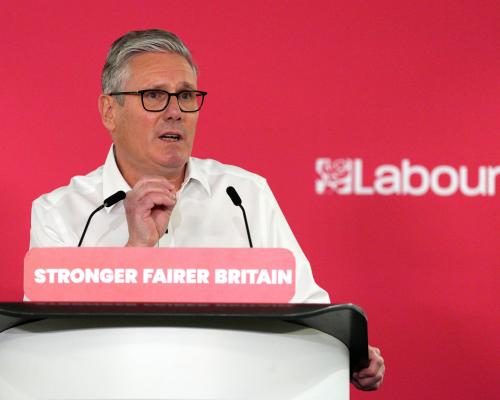
As political tensions mount ahead of a critical cabinet meeting, David Lammy, the Deputy Prime Minister and Justice Secretary, arrived at Downing Street amidst growing speculation over Prime Minister Keir Starmer's Future. With cabinet ministers largely withholding support for Starmer, the political landscape in the UK is charged with uncertainty.
Cabinet Silence Raises Questions
David Lammy was seen waving to reporters as he entered Number 10 on Wednesday morning, but he did not respond to questions about Prime Minister Starmer's leadership. This silence comes after many cabinet ministers failed to publicly support Starmer during media appearances the day before. Their actions in the cabinet meeting could significantly influence whether Starmer remains in power. Originally reported by The Guardian.
Political analysts are debating the implications of a potential leadership change. Key considerations include who might succeed Starmer and what new strategies they would adopt. Critics argue that any new leader would likely inherit the same challenges that have plagued Starmer's administration, such as public dissatisfaction and economic concerns. The political context is particularly volatile, both domestically and internationally, raising the stakes for any decision regarding leadership.
The Stakes of Leadership Change
There are multiple factors weighing on the minds of cabinet ministers as they approach the meeting. Firstly, the timing of a leadership change is critical. With only 20 months into the current government, ministers must weigh the risks of replacing their leader against the potential benefits of waiting until closer to the next general election.
Furthermore, the response from the Conservative Party, Reform UK, and right-wing media to a new leader could be overwhelmingly negative. Political analysts suggest that a shift in leadership would initially be met with enthusiasm from opposition parties but could quickly evolve into a campaign to destabilize the new Prime Minister.
Importantly, ministers are also considering whether Starmer has the capability to revitalize his leadership. His approval ratings are at historic lows, and questions remain about whether he can effectively communicate a new vision that resonates with both party members and the wider public.
Financial Markets React to Political Uncertainty
As the political climate becomes more unpredictable, UK government borrowing costs have begun to rise. The yield on benchmark 10-year UK gilts increased by nearly 10 basis points, hitting 5.1%, up from 5% the previous day. This uptick in borrowing costs is noteworthy, especially as it follows a similar trend observed in longer-dated bonds, with 30-year yields climbing to over 5.77%, nearing a 28-year high of 5.78%.
Market analysts, including Michael Brown from brokerage Pepperstone, have noted that investors are particularly concerned about the potential for a new Prime Minister to adopt more left-leaning fiscal policies. Such a shift could exacerbate the UK's inflation issues, which have been a point of contention for the current government.
Brown commented, "The market's main concern here, and the reason for this gilt underperformance, is twofold - firstly, that a new PM would shift to the left, and loosen/scrap the UK's current fiscal rules; and, secondly, that doing so would exacerbate the UK's inflation problem."
Public Sentiment and Party Dynamics
Public opinion is a significant factor in the ongoing debate surrounding Starmer's leadership. Cabinet members are acutely aware that any leadership transition could lead to perceptions of instability. Labour, which has campaigned on the promise of stability following years of Conservative governance, risks alienating voters if it appears to be in disarray.
Additionally, ministers are concerned about how the electorate would respond to a Labour government perceived as ineffective. The question remains: Can Starmer shift public opinion in his favor, or is it too late? The notion of a Labour government inflicting more of the same discontent could undermine their credibility and electoral prospects.
Rachel Reeves, the Chancellor, arrived at Downing Street earlier without addressing reporters, further underscoring the tension within the cabinet. The outcome of this cabinet meeting could very well shape the future direction of the Labour Party and its leadership.
As the situation evolves, all eyes will be on the decisions made during this pivotal cabinet meeting and how those decisions will resonate with both party members and the public in the weeks to come.
Originally reported by The Guardian. View original.