
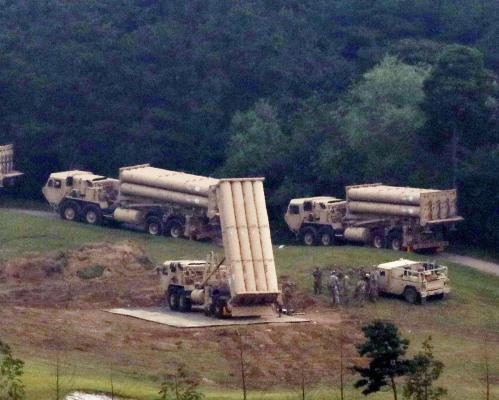
The recent redeployment of US missile systems from South Korea to the Middle East has left South Korea on edge, raising questions about the future of its defense strategy against North Korea. After nearly a decade of positioning the Terminal High Altitude Area Defense (THAAD) system in the village of Seongju, the move by the Pentagon suggests a shift in priorities that could embolden North Korea.
Seongju: A Strategic Defense Hub
Nearly ten years ago, the tranquil village of Seongju became a focal point for South Korea's defense against potential North Korean aggression. On a spring morning, camouflaged trucks arrived, delivering the US-made THAAD missile defense system to the area. Despite local protests fearing that the deployment would make them a target for Pyongyang's missiles, the South Korean government, with backing from Washington, insisted that THAAD was essential for intercepting North Korean projectiles before they could reach South Korean territory. This deployment not only aimed to bolster South Korea's defenses but also drew ire from China and Russia, which viewed THAAD's advanced radar capabilities as a security threat to their own interests. Originally reported by The Guardian.
Concerns Arise Over US Commitment
Reports have emerged indicating that the United States is relocating parts of the THAAD system, along with other military assets, to the Middle East to support its ongoing operations against Iran. This decision has Triggered skepticism regarding the US's long-term security commitment to South Korea, a crucial ally in East Asia along with Japan. Critics are questioning the rationale behind South Korea's substantial investment in a defense system that appears vulnerable to being withdrawn. The implications of this redeployment are significant, especially considering North Korea's nuclear ambitions, which may prompt increased provocations against the South.
Government Reassurances Amid Uncertainty
In light of the US's actions, South Korea's liberal president, Lee Jae Myung, has sought to reassure the public about the nation's ability to deter threats from the North, emphasizing that the redeployment of US military assets would not adversely affect South Korea's defense strategy. During a cabinet meeting, Lee stated, "If asked whether that would seriously hinder our deterrence strategy against North Korea, I can say with certainty that it would not." He highlighted that South Korea's defense budget is among the highest globally, reportedly 1.4 times greater than North Korea's gross domestic product. Additionally, South Korean Foreign Minister Cho Hyun confirmed that discussions were underway regarding the potential redeployment of some US Patriot missile defense systems to the Middle East.
Regional Implications and Japan's Concerns
The US's rapid redeployment of military hardware to the Middle East has also raised alarms in Japan, which hosts approximately 50,000 US troops, including many stationed on the southern island of Okinawa. Reports indicate that two US guided-missile destroyers based in Yokosuka are currently deployed in the Arabian Sea. The head of Japan's main opposition party, Junya Ogawa, expressed concern over the possibility of US vessels based in Japan being sent to the Middle East, asserting, "Japan has not permitted the stationing of US forces so they can sortie from those bases to fire missiles towards the Middle East." This sentiment underscores the broader regional anxiety regarding the potential implications of US military strategy in Asia.
Despite President Lee's attempts to downplay the security risks associated with the redeployment, experts warn that the move could embolden North Korea to increase provocations. Military studies professor Choi Gi-il from Sangji University cautioned, "There is a risk that North Korea could miscalculate the relocation of some of these weapons as a pretext for low-level provocations to test the allies' defense posture." The JoongAng Daily, a conservative South Korean newspaper, echoed these concerns, stating that any reduction in the country's ability to defend itself "inevitably raises concerns."
As the situation unfolds, South Korea must navigate the complexities of regional security while ensuring that it can maintain a robust defense posture. With the US's commitment being called into question, the South Korean government faces the challenge of strengthening its own defense capabilities to mitigate any potential gaps left by the redeployment of American assets.
Originally reported by The Guardian. View original.