
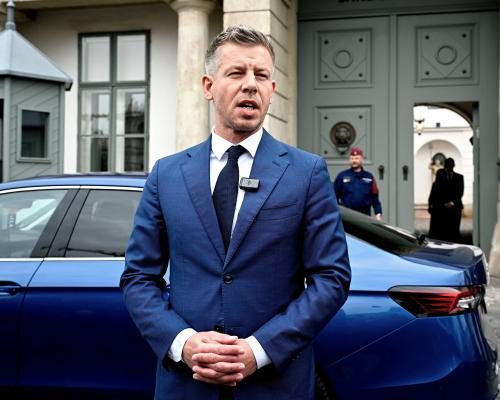
Péter Magyar, the recently elected leader of Hungary, is actively working to establish a new government by mid-May, following discussions with President Tamás Sulyok. This meeting signals a pivotal shift in Hungarian politics, as Magyar aims to distance his administration from the long-standing influence of former Prime Minister Viktor Orbán. With parliamentary results expected to be certified by May 4, the transition appears to be on track, with Magyar expressing confidence that the new government will be operational shortly thereafter.
Government Formation Timeline Set
Following his election victory, Péter Magyar has confirmed that the groundwork for forming a new Hungarian government is already underway, targeting mid-May for completion. His discussions with Tamás Sulyok, who remains a key ally of Viktor Orbán, revolved around the official timetable for the new parliament. The results of the recent election must be certified by May 4, after which the parliamentary structure can be established. Originally reported by The Guardian.
Magyar has indicated that his administration plans to engage in informal dialogues with the European Commission regarding the restoration of the rule of law in Hungary. This is an essential step for unlocking billions of euros in EU funds that have been frozen due to Orbán's contentious relations with Brussels. He emphasized the urgency of these talks, aiming to expedite the process and improve Hungary's standing in the European Union.
Calls for Presidential Resignation
In a bold move, Magyar has publicly suggested that President Sulyok should resign as part of a broader institutional overhaul. This statement indicates potential tensions as the new government prepares to take office. Sulyok, who serves a largely ceremonial role and was elected by parliament, may face significant pressure from the new majority. Magyar's remarks were pointed, declaring that Sulyok is "unworthy of representing the unity of the Hungarian nation" and "unfit to serve as the guardian of legality." The implications of this statement could lead to a contentious political landscape as the transition unfolds.
Magyar's call for Sulyok's resignation not only highlights the desire for change but also sets a confrontational tone for the new administration's relationship with existing state institutions. By framing the situation this way, Magyar is signaling that his government intends to pursue substantial reforms and a departure from the policies of the Orbán era.
Media Reforms in the Spotlight
During a recent appearance on Hungary's state broadcaster, which has often been criticized as a mouthpiece for the previous government, Magyar outlined his plans for media reform. He announced intentions to suspend the operations of the current news outlets under state control, marking a significant shift toward ensuring independent and unbiased coverage. This reform is part of a broader initiative to dismantle what he described as years of pro-government propaganda.
In a poignant moment, Magyar noted that it was ironic he needed to win an election to gain access to the public broadcaster. His visit to the Kossuth Rádió and M1 TV studios after 18 months signals a changing of the guard in Hungary's media landscape. This reform effort underscores Magyar's commitment to restoring journalistic integrity and offering a platform for diverse viewpoints.
A New Era for Hungary?
As Péter Magyar prepares to take the reins of power, the political climate in Hungary is set for a transformation. His plans to establish a government by mid-May, coupled with his proactive stance on engaging with European institutions, suggest a significant shift away from the Orbán administration's policies. The potential resignation of President Sulyok and the planned media reforms indicate that Magyar is serious about implementing change.
As Hungary moves forward, the country will be watching closely to see how these developments unfold. The transition period will be critical, not just for Magyar's administration, but for the future of Hungarian democracy and its relationship with the European Union. The coming weeks will likely reveal the extent of Magyar's reforms and his ability to navigate the challenges that lie ahead, both domestically and internationally.
Originally reported by The Guardian. View original.