
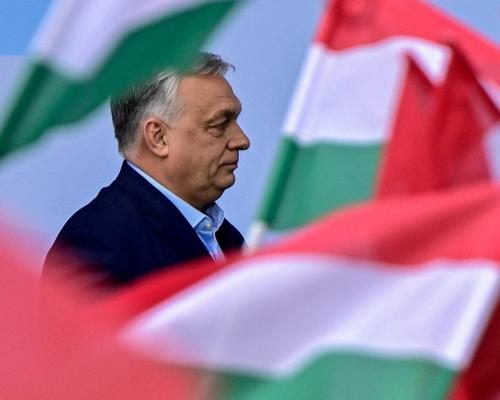
The Kremlin expressed cautious optimism on Tuesday regarding Hungary's newly elected Prime Minister, Péter Magyar, who appears willing to engage in pragmatic discussions. This comes after the significant electoral defeat of Viktor Orbán, Moscow's closest ally in Europe. Kremlin spokesperson Dmitry Peskov noted, "For now, we can note with satisfaction, as far as we understand, his [Magyar's] willingness to engage in pragmatic dialogue." However, he also emphasized that Hungary has lost its special status and now joins the ranks of "unfriendly countries" in the eyes of Russia.
Peskov's remarks signal a notable shift in the Kremlin's stance towards Hungary, which had previously enjoyed a more favorable relationship under Orbán. The Kremlin did not congratulate Magyar following his election victory, instead framing Hungary's choice as a respected decision. "Hungary made its choice. We respect that choice," Peskov stated on Monday, underscoring the Kremlin's acknowledgment of a crucial shift in its European alliances. Originally reported by The Guardian.
Magyar's Pragmatic Approach to Foreign Policy
In his first statements as prime minister, Péter Magyar conveyed that a significant break with Russia should not be anticipated. He indicated that Hungary would continue to pursue a pragmatic foreign policy, maintaining its energy ties with Russia while seeking to balance relations with the West. "We cannot change geography," Magyar told reporters, highlighting Hungary's reliance on Russian energy imports, which account for more than 80% of its fossil gas and crude oil supplies.
Despite this dependence, Magyar expressed a desire to diversify Hungary's energy sources. "Russia will be there, Hungary will be here. But we will try to diversify," he said, indicating an awareness of the geopolitical landscape and the need for Hungary to navigate its energy needs carefully. However, he also made it clear that he does not intend to emulate Orbán's close alignment with Vladimir Putin.
A Clear Stance on the Ukraine Conflict
Unlike Orbán, who often portrayed a favorable view of Russia, Magyar has taken a firmer position regarding the ongoing conflict in Ukraine. He unequivocally identified Russia as the aggressor, stating, "If Vladimir Putin calls, I'll pick up the phone. If we did talk, I could tell him that it would be good to end the killing after four years and end the war." This statement marks a stark departure from Orbán's previous rhetoric, which often sought to downplay Russia's actions.
Orbán had cultivated a relationship with Putin, often obstructing EU initiatives aimed at supporting Ukraine, including lobbying to weaken sanctions and blocking financial aid. His government had even vetoed an EU loan worth billions that Ukraine urgently needed. Leaked conversations revealed Orbán's willingness to serve Russian interests, with him reportedly telling Putin, "I am at your service." The new prime minister's approach indicates a significant shift in Hungary's foreign policy direction.
Implications for Russia and Europe
The implications of Orbán's electoral defeat resonate beyond Hungary. Analysts suggest that Russia's loss of a key European ally exposes the vulnerabilities of its strategy to align with populist leaders. Political analyst Alexander Baunov from the Carnegie Endowment for International Peace noted that this event reinforces a belief among hawkish elites in Moscow: relying on Kremlin-friendly leaders in democratic systems is inherently risky. "In Moscow, the takeaway is that only truly authoritarian systems are reliable partners," Baunov stated.
This lesson extends beyond Hungary as geopolitical dynamics continue to shift. The Kremlin must now consider the unpredictability of democratic elections in Europe, where leaders can change quickly. The uncertainty surrounding the future of Russian relations with Western nations is further complicated by the potential political landscape in the United States, where leaders like Donald Trump may not remain a constant.
In Budapest, the mood has shifted dramatically, with citizens celebrating the end of Orbán's tenure and chanting slogans such as "Ruszkik, haza" (Russians, go home). This phrase, rooted in the Hungarian Revolution of 1956, serves as a poignant reminder of the public's desire to distance the nation from Moscow's influence.
As Hungary embarks on a new chapter under Péter Magyar, the future of its foreign policy remains uncertain, particularly regarding its relationship with Russia. The incoming government faces the challenge of balancing energy needs with a growing inclination toward Western alliances, all while navigating the complex geopolitical landscape that has become increasingly fraught.
Originally reported by The Guardian. View original.