
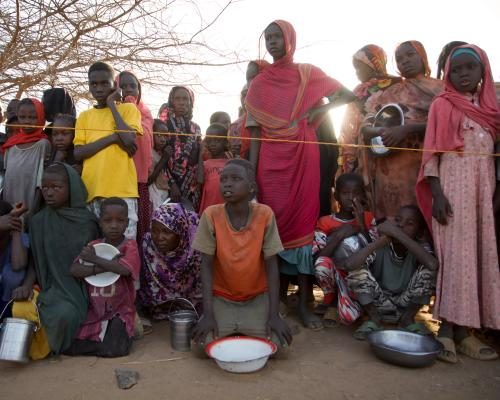
As Sudan's brutal conflict approaches its fourth year, the humanitarian crisis is intensifying, prompting severe criticism from Denise Brown, the top UN official in the country. On the eve of the third anniversary of the war, Brown described the international community's response as 'bloody unacceptable,' highlighting the dire situation that has forced 14 million people to flee their homes and left tens of thousands missing.
Speaking to the Guardian, Brown expressed alarm at the apparent lack of political urgency to resolve a war that has already claimed over 150,000 lives. 'It seems to me, every single conversation on Sudan is about the humanitarian crisis. How about focusing on finding a solution to end the war?' she remarked. This sentiment is echoed by the growing body of reports detailing the worsening conditions as Sudan faces the world's largest humanitarian crisis. Originally reported by The Guardian.
Escalating Humanitarian Needs Amid Ongoing Conflict
The conflict, primarily between the paramilitary Rapid Support Forces (RSF) and the Sudanese army, has devastated the nation's infrastructure. Recent research from Islamic Relief reveals that nearly 50% of the community kitchens vital for feeding millions have closed in just six months. This has exacerbated hunger and increased the risk of famine.
A coalition of aid agencies, including Action Against Hunger, reported that many Sudanese are now surviving on just one meal a day, illustrating the harsh reality faced by countless families. Mercy Corps has also highlighted significant disruptions in essential food-producing regions. With fighting showing no signs of slowing, the situation is dire.
Health services have been severely impacted, with the Sudanese American Physicians Association indicating that 37% of hospitals are currently non-functional. Furthermore, over 200 documented attacks on health facilities have been reported, compounding the suffering of civilians caught in the crossfire.
The Economic Toll of War
The ongoing conflict has set back Sudan's economy by more than 30 years, according to assessments by the UN Development Programme and the Institute for Security Studies. The report warns that if the conflict persists until 2030, an additional 34 million people could be pushed into deprivation.
As the humanitarian needs grow, the funding situation appears increasingly grim. This year, overall funding for Sudan's humanitarian plans is only 16% met, raising concerns about the capacity to deliver aid effectively. Sheldon Yett, head of UNICEF in Sudan, noted that even the limited resources available are becoming less impactful, as transportation costs have surged by 30% due to the Iran war.
'In some cases, the cost of delivery is now greater than the cost of the supplies themselves,' Yett stated. The soaring fuel prices are making it increasingly difficult for aid organizations to operate, further complicating efforts to address the humanitarian crisis.
The Heartbreaking Reality of Missing Persons
In addition to the widespread suffering, the number of civilians reported missing or forcibly disappeared has risen sharply since the war began. The International Committee of the Red Cross (ICRC) has recorded over 11,000 cases of missing persons-a staggering increase of more than 40% in just the last year. Investigators are working tirelessly to track down those who have vanished, but the true number is likely much higher.
Daniel O'Malley, head of the ICRC in Sudan, commented on the chaotic nature of the conflict, saying, 'There's a constant pattern of people going missing, disappearing, especially when a location changes hands.' This grim reality was echoed by Fatima, a woman displaced from El Obeid to Port Sudan, who is searching for her stepson, missing for a year amidst the chaos.
Hope Amidst Despair: Upcoming Conference in Berlin
The urgency of the situation is underscored by an upcoming conference in Berlin, where international leaders hope to secure increased funding for humanitarian efforts and exert pressure on warring parties to allow aid access. However, previous peace initiatives have failed to curb the violence, which is marked by repeated atrocities and war crimes.
As the conflict continues, the challenges facing Sudan are immense. Yet, there remains a glimmer of hope that concerted international efforts can bring about a resolution. Aid agencies and the global community must prioritize Sudan, understanding that the world cannot afford to overlook the suffering of millions any longer.
Originally reported by The Guardian. View original.