
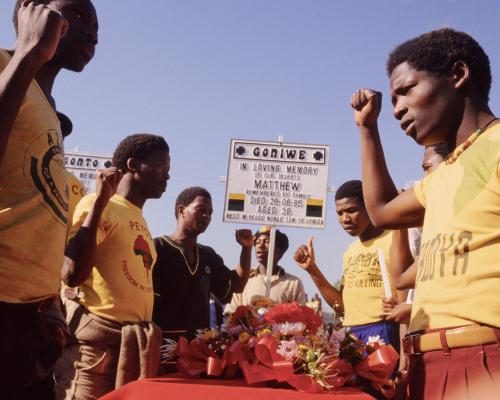
On the night of June 27, 1985, Fort Calata, Matthew Goniwe, Sicelo Mhlauli, and Sparrow Mkonto set off from Port Elizabeth, now Gqeberha, after an anti-apartheid meeting. Tragically, they never reached their destination. About an hour into their journey back to Cradock (now Nxuba), the four men were stopped by three white security police officers, handcuffed, and driven away. Following a brutal encounter, Mkonto was shot, and the others were attacked. Their bodies were mutilated and set ablaze, marking a dark chapter in South Africa's struggle against apartheid. Known as the Cradock Four, their murders symbolized the horrific violence of the time.
The end of apartheid in 1994 brought hope for justice, yet the families of the Cradock Four have found themselves still searching for answers. Over four decades later, their plight highlights the shortcomings of the Truth and Reconciliation Commission (TRC), which was established to address human rights violations during apartheid. The hearings began on April 15, 1996, led by Nobel Peace Prize laureate Desmond Tutu, aiming to uncover the truth behind the atrocities committed during that era. Originally reported by The Guardian.
Failures of the Truth and Reconciliation Commission
The TRC offered a platform for victims to share their stories, but many families, including those of the Cradock Four, feel let down by the process. While it documented the experiences of around 21,000 victims, only 849 amnesty applications were granted, leaving countless cases unresolved. Successive administrations led by the African National Congress (ANC) have been criticized for failing to pursue TRC-recommended prosecutions. Families accuse former presidents Thabo Mbeki and Jacob Zuma of collusion with apartheid-era generals, suggesting they struck deals to avoid prosecuting past atrocities committed by ANC members.
Mbeki, who served from 1999 to 2008, has denied halting TRC cases, while Zuma, president from 2009 to 2018, has sought to obstruct inquiries into political interference in prosecutions. In the case of the Cradock Four, initial inquests in 1987 and 1993 failed to identify specific perpetrators, although the TRC hearings revealed that implicated officers later admitted to the murders to evade punishment.
Continued Struggle for Justice
The families of the Cradock Four have not given up their fight. A renewed inquest into the murders began in June 2022, following years of pressure on the government to take action. The families still demand to know why those responsible for the killings were not prosecuted, especially after they were denied amnesty by the TRC. The first TRC hearings took place in East London, about 180 miles from Gqeberha, offering victims their first opportunity to voice their suffering publicly.
During the hearings, Nomonde Calata, Fort Calata's widow, revealed her deep pain to the nation, a moment that resonated with many. She expressed her struggle to maintain composure in the face of her husband's brutal death at 28. "[I thought] the enemy will laugh at me when they see my sadness," she recounted during an interview. Her emotional testimony reflected the anguish felt by countless families who lost loved ones during the apartheid era.
The Legacy of Apartheid Violence
The legacy of apartheid continues to cast a long shadow over South Africa. The TRC may have documented abuses, but it did not bring closure for many families. The commission was limited in scope, only addressing events from 1960 to 1994. Despite this, it captivated the nation, with testimonies revealing horrific accounts of torture, abduction, and murder. High-profile figures like Eugene de Kock, known as "Prime Evil," were convicted for their roles in the violence, but many perpetrators remain unpunished.
While the TRC aimed to promote national unity and healing, the failure to adequately address the demands for justice has left many feeling betrayed. The re-opening of the inquest into the Cradock Four represents a small glimmer of hope, but significant challenges remain. Families still grapple with their loss and the unanswered questions surrounding the murders.
As the struggle for justice continues, the families of the Cradock Four remain resolute in their pursuit of accountability, determined to ensure that the memory of their loved ones is not forgotten. With each passing year, the fight against impunity for past atrocities serves as a reminder that the quest for truth and reconciliation is far from over.
Originally reported by The Guardian. View original.