
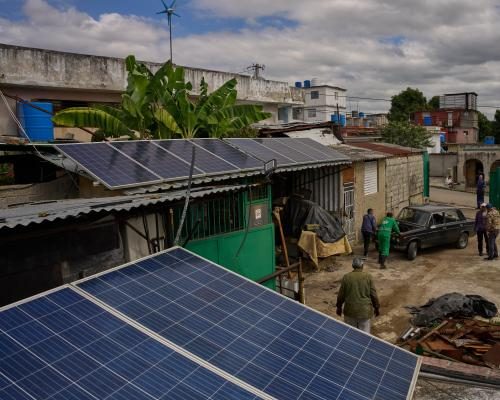
Cuba may be able to overcome the stringent energy blockade imposed by the United States with an estimated $8 billion investment in renewable energy, according to a recent analysis by the Common Wealth thinktank. The report suggests that such an investment could enable the Caribbean nation to generate 93.4% of its electricity from renewable sources. Furthermore, for a total of $19.2 billion, Cuba could achieve a fully renewable energy grid, making it the first country in the Caribbean to do so.
Energy Crisis Deepens Amid US Sanctions
The timing of this analysis is particularly crucial as Cuba grapples with severe energy shortages exacerbated by the US-led blockade. Since January 2023, the island nation has received only one shipment of oil from Russia, following the implementation of trade tariffs by the Trump administration, which targeted any country willing to sell oil to Cuba. As a result, by March, Cuba's national electric grid had collapsed, leading to widespread blackouts affecting critical infrastructure such as hospitals and transportation systems. The situation has left the population of 10 million struggling with power outages, highlighting the urgent need for a sustainable energy solution. Originally reported by The Guardian.
Renewable Energy as a Path to Independence
The Common Wealth thinktank's Transition Security Project (TSP) emphasizes that a transition to renewable energy could provide Cuba with the independence it desperately needs from its volatile neighbor. Kevin Cashman, a researcher with TSP, stated, "The US's energy dominance strategy seeks to entrench dependence on fossil fuels, stall the green transition and strengthen US power." However, the report argues that the increasing affordability of solar power and battery storage presents an opportunity for countries like Cuba to break free from fossil fuel dependency.
According to the analysis, an $8 billion investment would allow Cuba to meet nearly all of its electricity needs through renewable sources, drastically reducing the country's reliance on imported fossil fuels. Even a more modest $5 billion investment would still cut fossil fuel dependence to just 20% of electricity generation. This shift could set a significant precedent for other nations in the region, demonstrating the viability of a green energy transition despite external pressures.
Investment Scenarios and Their Implications
The TSP analysis modeled various scenarios for Cuba's energy future. The most ambitious proposal suggests that solar energy could provide 75% of the country's electricity, with wind accounting for 20%, while hydropower and bioenergy would contribute the remaining share. Cheaper investment scenarios would lean more heavily on bioenergy and wind, but all options present a path toward cheaper electricity. The report indicates that the cost per kilowatt-hour (kWh) would decrease significantly as investments increase, dropping from 14.3 cents in the baseline scenario to as low as 6.5 cents with an $8 billion investment.
This transformation, while requiring extensive societal adjustments, is not without precedent. After the Soviet Union's collapse in the 1990s, Cuba successfully shifted its agricultural practices toward agroecology and self-sufficiency. The Cuban government has already made strides in renewable energy, bringing over 1,000 megawatts of solar energy online in the past year with the assistance of Chinese financing.
Funding the Renewable Future: Who Will Pay?
Despite the promising outlook, the question of financing remains pivotal. The TSP report advocates for viewing the necessary funding as reparative climate finance, emphasizing that the transition to renewable energy could not only benefit Cuba economically but also serve as a model for other countries facing similar challenges. The report argues that Cubans could repay investments through the savings generated by cheaper energy, thus making a compelling case for international support.
As the global community increasingly acknowledges the necessity of transitioning to greener energy sources, the implications of Cuba's renewable energy investment extend far beyond its borders. If successful, Cuba could emerge as a beacon of sustainable energy development in the Caribbean, showcasing how nations can innovate under difficult circumstances.
So, while the road ahead may be challenging, Cuba's potential shift towards renewable energy could redefine its energy landscape and inspire other nations facing similar external pressures. The call for international investment in this transition highlights a growing recognition that energy independence is not just a local issue but a global imperative.
Originally reported by The Guardian. View original.