
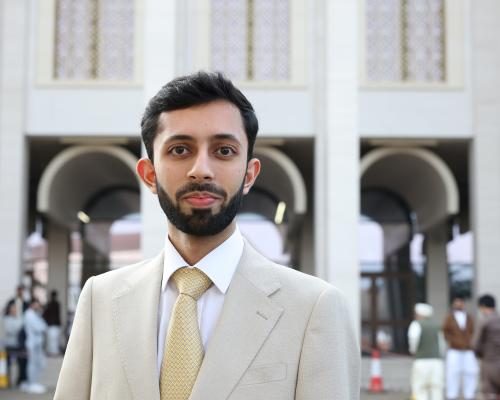
On Friday morning, the Baitul Futuh mosque in south London buzzed with energy as thousands gathered to celebrate Eid al-Fitr, marking the end of Ramadan. As one of the largest mosques in Europe, it served as a hub for the Muslim community, showcasing the festive spirit shared by millions across the UK. However, this year's celebratory atmosphere has been overshadowed by a political uproar ignited by controversial remarks from party leaders about Islam and public expressions of faith.
The political discourse was sparked earlier this week when Nick Timothy, the shadow justice Minister, criticized Islamic prayers held in public spaces, labeling them as intimidating and un-British. His comments followed a Ramadan event in Trafalgar Square, which has taken place five times without incident. This rhetoric was echoed by Nigel Farage, leader of the Reform party, who characterized the event as an attempt to "intimidate and dominate our way of life." Such statements have left many within the Muslim community feeling unsettled and disappointed. Originally reported by The Guardian.
Concern Over Political Rhetoric
Taufique Ahmad, a 22-year-old legal intern and member of the mosque's press team, expressed his concerns about the harsh language directed at the Muslim community. He said, "The harsh and potentially harmful language used against the community is quite disturbing." Ahmad emphasized the resilience of British identity, stating, "The British identity is such a strong thing that it's not fragile enough that you see a glimpse of diversity that you'll wither away and shatter." For Ahmad, witnessing others practice their faith publicly only strengthens his sense of belonging in Britain.
The backlash against Timothy's comments has prompted responses from various political leaders. Kemi Badenoch, the leader of the Conservative party, supported Timothy, saying he was "defending British values." Conversely, Labour leader Keir Starmer accused the Conservative party of harboring a problem with Muslims, highlighting the division within the political sphere. The growing tension has sparked concerns about the normalization of bigotry and discrimination against Muslims, as evidenced by rising hate crimes across the country.
Community Voices Against Division
As the political rhetoric escalates, many Muslims, like 35-year-old Taahir Ahmad, reflect on their experiences living under the shadow of discrimination. "9/11 happened when I was a kid," he recalled while heading to visit his mother after Friday prayers. "It was horrifying, I was the only brown kid at my school at the time, and kids being kids, they blamed me for everything and what not, it was kind of traumatic." Ahmad views the recent political discourse as a tactic to create division, stating that political leaders should participate in community events to experience their peaceful nature firsthand.
Ahmad added, "If you target a certain ethnicity or religious group, you are isolating them and what you're trying to do is organize the public to go against those people." Despite the negativity, he remains hopeful, asserting that Muslims are often misrepresented by both the media and politicians. "We're not as bad as the media or politicians portray us to be," he stated firmly.
A Broader Perspective on British Identity
Michelle Rahman, a practicing Muslim woman from east London, echoed similar sentiments. As an NHS worker and youth leader at the mosque, Rahman believes the views expressed by a few politicians do not reflect the broader public sentiment. "We expect our politicians to hold unity in society, so how do I look at it? Disappointed," she shared. However, Rahman remains optimistic, asserting, "That is not the opinion of the masses."
She acknowledged that there has been division in society, but insists it does not define the United Kingdom. Rahman believes that events like Eid al-Fitr symbolize the country's diversity and shared values. "Actually, it's not a representation of the broader community," she concluded, emphasizing the importance of solidarity in the face of adversity.
The recent political discourse has prompted the UK government to adopt a definition of anti-Muslim hostility in an effort to combat discrimination and prejudice. As the Muslim community reflects on their identity and experiences, they remain hopeful that unity and understanding will ultimately prevail over division and hostility.
Originally reported by The Guardian. View original.