
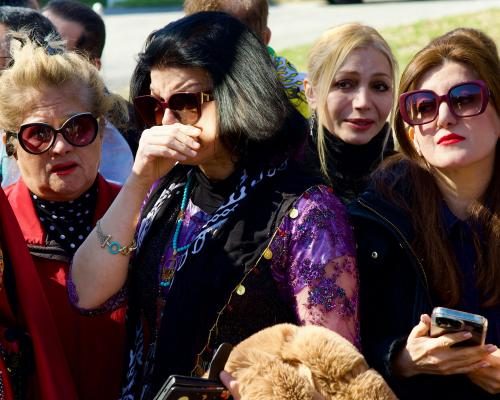
As conflict rages on in Iran, Iranian Americans find themselves grappling with a complex tapestry of emotions ranging from hope to despair. The recent military actions, including Israeli and American missile strikes on Tehran, have sparked a myriad of reactions within the diaspora community, estimated at over 4 million in North America alone. For many, the events have rekindled feelings of optimism, while others experience profound anguish and anger over the ongoing destruction of their homeland.
Mixed Emotions Amidst Ongoing Conflict
Nasser, a Boston-based Iranian American father in his sixties, was initially struck by a sense of hope when news of the death of Iran's supreme leader, Ayatollah Ali Khamenei, emerged alongside missile attacks on Tehran. He described his feelings as a "flash of hope" or perhaps even "vengeance." This sentiment resonates with numerous Iranians in the North American diaspora, many of whom have long rejected the rule of the velayat-e-faqih, or the "guardianship of the Islamic jurist." Many view Khamenei as directly responsible for the bloodshed during recent protests, which resulted in thousands of deaths. Originally reported by The Guardian.
However, as the war has unfolded over the past three weeks, that initial optimism has been replaced by dread and illness. "Now," Nasser reflects, "I feel sick about it." The toll of the military conflict, with thousands of Iranians dead and cultural heritage sites damaged, has cast a dark shadow over the hopes for a liberated future.
Generational and Ideological Divisions
The Iranian American community is far from homogenous. With multiple waves of emigration since the Islamic Revolution, the diaspora encompasses various political views and personal experiences. Some members are deeply engaged in activism against the Iranian regime, while others are more ambivalent or even supportive of a return to the monarchy that was overthrown in 1979.
Ali, a New Yorker in his forties, expressed his anger toward those he perceives as "ne'er-do-well royalists" who celebrate the destruction of their homeland. "I wanted to spit hot fire," he said, reflecting the frustration many feel about the conflict's impact on their ability to visit Iran. The divisions run deep, even within families, as differing political views clash amid the ongoing violence.
Nowruz: A Time for Reflection, Not Celebration
The celebration of Nowruz, the Persian New Year, coincided this year with Eid-al-Fitr, marking the end of Ramadan. Typically a time for joy and family gatherings, this year's festivities are overshadowed by the brutal realities of the conflict. Iranians across the globe are mourning the loss of lives and cultural heritage while grappling with their political beliefs.
The regime's violent response to protests in January, which left thousands dead, shocked many in the diaspora. The subsequent war has only compounded the trauma. Those who initially supported military intervention now find themselves reconsidering their stance amid the suffering inflicted on ordinary Iranians.
Monarchists and Their Voices in the Diaspora
Within the Iranian American community, a vocal minority clamors for the return of the monarchy, led by former crown prince Reza Pahlavi. Despite a lack of credible polling, it's clear that this faction does not express much empathy for the war's consequences. On social media, they often champion Pahlavi, who claims to be "uniquely positioned" to lead a new Iran. However, his comments following the onset of the conflict-offering condolences only to American families-have drawn criticism.
A recent incident in Canada, where an anti-regime activist was allegedly murdered, has further illustrated the fractures within the community. Two monarchists were arrested in connection with the killing, highlighting the tensions that exist between those who support a return to monarchy and those who advocate for a new political direction.
Amidst these divisions, some Iranians, while not staunch supporters of Pahlavi, express a willingness to consider him over the current regime. Recent discussions reveal a pragmatic approach among older Iranians who have settled in the West, reflecting a yearning for stability and freedom after decades of turmoil.
As the situation in Iran continues to evolve, the Iranian American community remains deeply divided. While some cling to hope for a better future, others face the harsh realities of war and its painful consequences on their homeland. The ongoing conflict has forced many to confront not only their political beliefs but also their connections to a land that seems increasingly distant.
Originally reported by The Guardian. View original.