
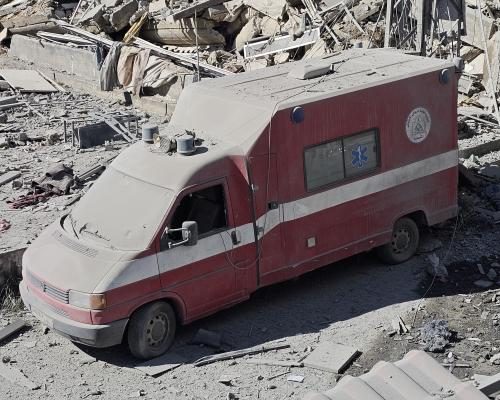
Healthcare workers and officials in Lebanon are raising alarming accusations against Israel, claiming that bombings in southern Lebanon have been aimed deliberately at medical facilities and personnel. Since the onset of conflict on March 2, Israeli airstrikes have reportedly damaged at least 128 medical sites, resulting in the deaths of 40 healthcare workers and injuries to 107 others, according to the Lebanese Ministry of Health.
Systematic Attacks on Medical Facilities
The ongoing conflict escalated after Hezbollah launched rockets into Israel, which prompted a robust military response from Israeli forces. Medical professionals allege that Israeli strikes have often employed double-tap tactics, where an initial bombing is followed by a second strike after a brief pause. This strategy not only endangers medical responders but is also seen as a method to instill fear and chaos within the community. Originally reported by The Guardian.
Most attacks have reportedly occurred while healthcare workers were in ambulances or stationed at first aid centers, many of which have been completely destroyed. Abdullah Nour el-Din, head of the Islamic Health Association (IHA) emergency response team south of the Litani River, stated, "The Israeli enemy is trying as much as possible to prevent life in our region and push people to flee. Our role is to help people, to stand by them and to provide services so they can remain on their land." His comments highlight the dire situation that healthcare providers face amid attacks.
Attacks on Ambulances and Medical Personnel
According to the Lebanese Ministry of Health, the vast majority of the strikes have specifically targeted the IHA, an organization that cooperates with the Lebanese government to provide health services. Other affected entities include the Lebanese Red Cross and the Amal movement's Islamic Scouts Association health service. Reports indicate that healthcare facilities have been struck even during humanitarian efforts, such as when first responders gathered to break their fast during Ramadan.
One tragic incident occurred on March 8, when an IHA emergency response center in Zifta was targeted, leading to the deaths of two employees and leaving another paralyzed. Hussein Moshawrab, the new head of the center, recounted a haunting moment when he FaceTimed with his staff just before the strike. "I did a video call with them at iftar, because we can't all gather due to the danger of being struck. The next time I saw them was when they were under the rubble," he said.
Legal and Ethical Implications
International law protects medical facilities and personnel, categorizing them as civilians in conflict zones. Targeting these entities could constitute a war crime, a point underscored by Amnesty International, which condemned attacks on medical workers regardless of political affiliations. The Israeli military has accused Hezbollah of using ambulances for military purposes, but has yet to provide any substantive evidence to support this claim. The Lebanese Ministry of Health has denounced these accusations as attempts to justify what they describe as war crimes.
Despite the hazards, healthcare workers in southern Lebanon are adopting precautionary measures to mitigate risks. Many have reduced the number of personnel in each response team from three to two, aiming to protect lives if an attack occurs. Reports suggest that strikes have not only targeted facilities but have also intentionally struck medics during moments of vulnerability, such as when they were responding to emergencies.
Community Resilience Amid Chaos
As the conflict continues, the resilience of the local community remains palpable. Many displaced individuals have returned to their homes despite warnings from the Israeli army to evacuate. They face the grim reality of returning to a war-torn environment, often finding their residences bombed shortly after their return. Medical workers like Nour el-Din believe the attacks are part of a broader strategy to render southern Lebanon uninhabitable.
While the situation escalates, the commitment of healthcare providers to deliver services persists. They operate under the constant threat of violence, yet they remain dedicated to their mission. The tragic loss of life among healthcare workers only emphasizes the urgent need for a resolution to this ongoing conflict.
As the international community watches, the plight of medical personnel and the civilians they serve remains at a critical juncture, raising questions about the future of healthcare in a region plagued by violence.
Originally reported by The Guardian. View original.