
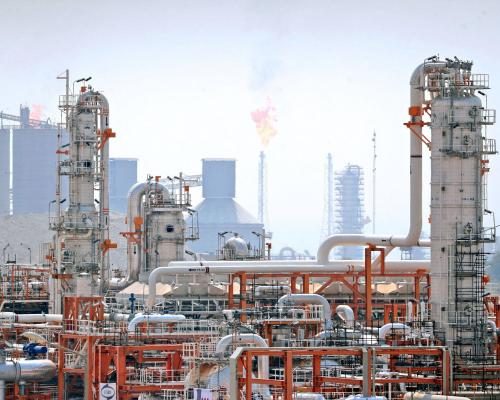
Iran's foreign minister, Abbas Araghchi, issued a stark warning on Thursday, asserting that the nation would exhibit "zero restraint" in the event of further assaults on its energy infrastructure. This declaration came on the heels of a significant Iranian strike that has reportedly incapacitated nearly one-fifth of Qatar's liquefied natural gas (LNG) export capacity, a move likely to have lasting repercussions for years to come. The heightened tensions followed an Israeli attack on Iran's substantial South Pars gas field, which Iran shares with Qatar, prompting retaliatory strikes against Qatar's Ras Laffan gas complex and other neighboring Gulf states.
Impact of Strikes on Global Energy Markets
The fallout from these escalations has sent shockwaves through global energy markets. Ras Laffan, a critical hub supplying approximately 20% of the world's natural gas, has been severely affected. Following the Iranian strikes, global gas prices surged, contributing to a dramatic increase in Brent crude prices, which reached as high as $119 a barrel before settling at $110. This represents a staggering 60% increase since hostilities between the US-Israeli coalition and Iran began on February 28. European and UK gas prices mirrored this trend, jumping as much as 24% before slightly easing, more than doubling since the onset of the conflict. Originally reported by The Guardian.
Stock markets also felt the reverberations of the escalating conflict, with significant sell-offs across major global indices. The UK's FTSE 100 closed down 2.35%, reflecting similar declines in Germany's Dax and France's CAC. In Asia, markets in Japan and South Korea faced steep falls, contributing to a pervasive sense of panic.
Statements from Iranian Leadership
Araghchi's remarks came in response to the Israeli military's actions, which he characterized as an unwarranted aggression. He stated, "Our response to Israel's attack on our infrastructure employed FRACTION of our power. The ONLY reason for restraint was respect for requested de-escalation. ZERO restraint if our infrastructures are struck again." This declaration signals a potential escalation in hostilities should Iran's energy assets come under attack again, heightening fears of a broader regional conflict.
Reactions from Global Powers
The international community has reacted with concern as the crisis unfolds. A coalition of countries, including the UK, France, Germany, Italy, the Netherlands, and Japan, issued a joint statement expressing their "deep concern" over the escalating tensions. They urged Iran to cease its aggressive actions, which include laying mines and conducting missile attacks that threaten commercial shipping in the strategic Strait of Hormuz. The coalition emphasized that the consequences of Iran's actions would have global ramifications, particularly affecting the most vulnerable populations.
U.S. President Donald Trump, amidst these developments, refuted claims that the Israeli attack was coordinated with Washington. He stated, "I told [Netanyahu], don't do that, and he won't do that." Trump's comments come as he seeks an additional $200 billion in congressional funding for military operations, further complicating the regional dynamics. Despite his insistence that he would not deploy ground troops to Iran, the U.S. has stationed 2,000 Marines in the region as a precautionary measure.
Long-term Consequences for Qatar and the Region
The repercussions of the strikes are particularly dire for Qatar. The chief executive of QatarEnergy, Saad Sherida Al-Kaabi, estimated that approximately $20 billion in damage had been inflicted upon its facilities. He noted that repairs could sideline 12.8 million tons of gas per year for three to five years, potentially jeopardizing energy supplies to several European nations. Al-Kaabi expressed disbelief at the turn of events, stating, "I never in my wildest dreams would have thought that Qatar would be - Qatar and the region - in such an attack, especially from a brotherly Muslim country in the month of Ramadan."
As the conflict escalates, tensions continue to rise, with Saudi Arabia's foreign minister alluding to the possibility of military action in response to the Iranian strikes. The situation remains fluid, and the international community is closely monitoring developments, aware that any misstep could lead to a larger confrontation.
Originally reported by The Guardian. View original.