
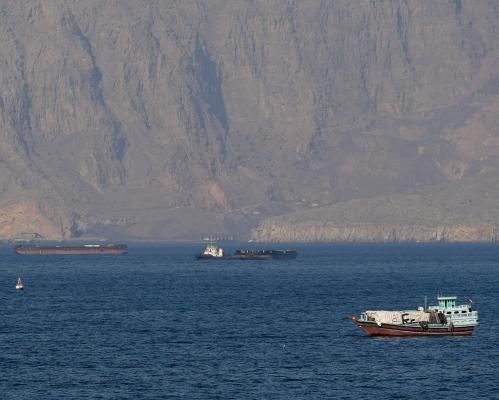
The ongoing crisis in the Middle East deepened over the weekend as Iranian President Masoud Pezeshkian criticized former President Donald Trump for his stance on Iran's nuclear rights. Speaking to the Iranian Student News Agency, Pezeshkian stated, "Trump says Iran cannot make use of its nuclear rights but doesn't say for what crime. Who is he to deprive a nation of its rights?" This exchange comes as tensions escalate in the vital Strait of Hormuz, where crucial oil shipments have been disrupted.
Massive Oil Losses Amidst Conflict
Since the onset of the conflict nearly 50 days ago, the global oil market has experienced unprecedented disruptions, with analysts estimating a loss exceeding $50 billion in crude oil production. According to calculations by Reuters, over 500 million barrels of crude oil and condensate have been removed from the market, marking the largest energy supply disruption in modern history. This figure is staggering, equating to a global halt in aviation demand for ten weeks, or no road travel for eleven days. Originally reported by The Guardian.
Iain Mowat, a principal analyst at Wood Mackenzie, elaborated on the implications of this loss, noting that it nearly corresponds to a month's worth of oil demand in the United States. As the crisis unfolds, analysts anticipate that the economic ramifications will linger for months, if not years.
Iran's Position on Nuclear Rights
In the backdrop of these developments, Iranian officials have conveyed mixed messages regarding negotiations with the United States. Iran's top negotiator, Mohammad Bagher Ghalibaf, acknowledged recent progress in talks but highlighted that significant gaps remain, particularly concerning nuclear issues and the status of the Strait of Hormuz. "We have had progress but there is still a big distance between us," Ghalibaf remarked, indicating that while discussions are ongoing, fundamental disagreements persist.
This is compounded by Trump's recent comments praising Israel as a "GREAT Ally of the United States," further complicating the diplomatic landscape. On social media, he warned against Iranian "blackmail" regarding shipping routes, signaling a firm stance against Tehran's maneuvers in the Gulf.
Strait of Hormuz Re-Closed
The situation escalated when Iranian officials announced the reimposition of restrictions in the Strait of Hormuz, crucial for global oil transport. This decision followed the U.S. refusal to lift its blockade on Iranian ports, prompting Iran to declare the strait under "strict management and control" by its armed forces. The Iranian Khatam al-Anbiya joint military command stated that the strait has returned to its "previous status," heightening fears of confrontation.
Reports indicated that Iranian Revolutionary Guard Corps (IRGC) ships fired upon vessels attempting to navigate the strait, including an Indian-flagged tanker carrying crude oil. These aggressive actions underline the volatile nature of the area and the potential for further conflict.
US Response and Regional Implications
In response to the renewed tensions, Trump convened a Situation Room meeting at the White House to evaluate the ongoing crisis. A senior U.S. official noted that unless a breakthrough occurs in peace negotiations, the prospect of renewed hostilities could materialize within days. Meanwhile, the Iranian deputy foreign minister, Saeed Khatibzadeh, stated that further talks cannot be scheduled until both sides agree on a framework for discussions.
Adding to the regional volatility, Hezbollah has denied involvement in a recent deadly attack on UN peacekeepers in southern Lebanon, which resulted in the death of a French soldier and injuries to three others. In the wake of these events, Israeli forces have begun demolishing homes in southern Lebanese towns, further escalating tensions in the area.
The situation remains precarious, with the global community watching closely. UNICEF has also suspended operations in northern Gaza after Israeli forces killed two truck drivers contracted by the agency. As the crisis continues, the implications for international oil markets and geopolitical stability are profound.
As diplomatic efforts remain stymied, the situation in the Middle East continues to evolve, underscoring the urgency for a resolution that addresses the underlying issues at the heart of the conflict. The coming days may prove crucial in determining whether a path to de-escalation can be forged.
Originally reported by The Guardian. View original.