
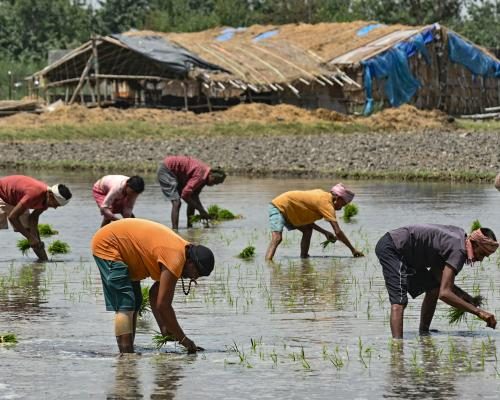
As conflict in Iran escalates, farmers in Punjab, India's agricultural heartland, are grappling with anxiety over potential fertilizer shortages that threaten their livelihoods and the region's food security. Gurvinder Singh, a 52-year-old farmer, fears the upcoming rice harvest could suffer due to a lack of essential fertilizers, which are critical for maximizing yield during the kharif season.
Impact of Global Conflicts on Local Agriculture
The war in Iran, a conflict thousands of miles away, has begun to reverberate across India, particularly affecting the agricultural sector. Iran's blockade of the Strait of Hormuz has created shockwaves in global oil and gas markets, leading to rising prices and supply chain disruptions. Farmers like Singh are particularly worried about urea, a nitrogen-based fertilizer that plays a vital role in crop production. "If we don't get fertilizers, there will be less yield," Singh said. "That will affect my entire family and the entire region, because we are completely dependent on agriculture." Originally reported by The Guardian.
This crisis comes at a time when the World Food Programme warns that an additional 45 million people could face acute food insecurity if the conflict in Iran persists. Experts highlight that countries in South Asia, including India and Sri Lanka, are especially vulnerable due to their reliance on imported fertilizers and energy sources for farming. With India being the world's second-largest fertilizer consumer-using over 60 million tonnes annually-the stakes are high.
Fertilizer and Gas Shortages Raise Alarm
The ongoing conflict has already started to strain supply chains. According to agricultural economist Devinder Sharma, early indicators suggest tightening supplies and rising costs for key agricultural inputs. "Any disruption quickly creates anxiety," he noted. Farmers are experiencing panic as they rush to stockpile urea, which is critical for maximizing rice yields. The usual consumption of urea in India stands at around 35 million to 40 million tonnes annually, with a significant portion depending upon imported natural gas for its production.
Currently, gas supplies for fertilizer production have dropped by 30%, leading to fears that the agricultural sector may soon feel the impact. While officials maintain that fertilizer plants are operating normally, farmers remain skeptical. "In my 35 years in this business, I have not seen such panic," said Prakash Limbuyya Swami, a fertilizer retailer in Karnataka. "Farmers are already hoarding fertilizers, despite their limited shelf life, due to fear of shortages."
Government Reassurances Amidst Farmer Anxiety
Despite government assurances of healthy fertilizer stocks, the anxiety among farmers persists. Officials claim that current buffer stocks are higher than the previous year, indicating a stable supply situation. Aparna S Sharma, a senior official in the Department of Fertilizers, stated, "Currently, we have higher stocks compared to last year, indicating a healthy supply position." She also mentioned that sourcing is being diversified beyond traditional suppliers in the Gulf.
However, farmers are not convinced. Small-scale farmers in Punjab are already operating with heavy losses and are burdened by debts, making them particularly sensitive to market fluctuations. The kharif season, which typically begins with the procurement of seeds and fertilizers in May, is crucial for producing approximately 100 million tonnes of rice. With the planting season approaching, the time to secure necessary inputs is running out.
Long-Term Implications for Food Security
The potential fallout from these shortages could extend far beyond immediate crop yields. A lack of adequate fertilizers will hinder farmers' ability to water, harvest, process, store, and transport their crops, exacerbating the crisis. Increased prices for diesel and electricity due to rising fuel costs only add to the strain on agricultural activities. "Any shortage will affect our productivity," said Tejveer Singh, a farmer in Ambala, Punjab.
As the situation unfolds, farmers like Gurvinder Singh continue to pray for a swift resolution to the conflict in Iran. The potential for a food crisis looms large, threatening not only their livelihoods but also the food security of millions in India and beyond. The interconnectedness of global events has never been more apparent, with local farmers caught in a web of geopolitical tensions and economic uncertainties.
Originally reported by The Guardian. View original.