
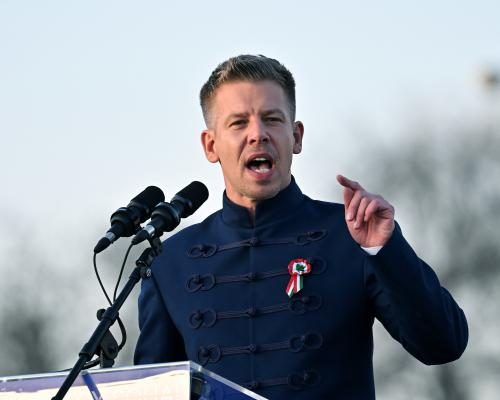
In a dramatic escalation ahead of Hungary's elections, leading candidate Péter Magyar has accused the ruling Fidesz party of treason following allegations that confidential EU discussions were leaked to Russia. Magyar, a conservative anti-corruption campaigner and head of the Tisza party, is challenging Viktor Orbán's 16-year premiership as polling indicates a potential shift in power.
Recent reports claim that Hungary's Foreign Minister, Péter Szijjártó, routinely relayed sensitive information from EU meetings to his Russian counterpart, Sergey Lavrov. These allegations have drawn sharp criticism, and Magyar has called for a thorough investigation, asserting that such actions could constitute treason-an offense that carries a possible life sentence. Originally reported by The Guardian.
Accusations of Collusion and Betrayal
Magyar took to social media platform X, stating, "If confirmed, this would amount to treason, which carries a potential life sentence. A future Tisza government will immediately investigate the matter." His remarks came after a report from the Washington Post claimed Szijjártó provided Lavrov with live updates during EU meetings.
Magyar, who previously held a position within Fidesz, is now leading the Tisza party, which has gained traction in polls just three weeks before the elections scheduled for April 12. His accusations reflect a growing sentiment among critics that the Orbán government is compromising Hungarian and European interests through its dealings with Russia.
EU Commission Demands Clarity
The European Commission has expressed its concerns over the reported breaches of confidentiality. Anitta Hipper, a spokesperson for the Commission, emphasized the importance of trust among EU member states, stating that the alleged leaks are "greatly concerning." Hipper called on the Hungarian government to clarify the situation, highlighting that maintaining confidentiality is crucial for the EU's functioning.
Relations between Hungary and other EU nations have soured, especially as Orbán blocked a €90 billion EU loan intended for Ukraine last week. Polish Prime Minister Donald Tusk remarked on Twitter that the idea of Orbán's administration sharing details with Moscow shouldn't be surprising, given long-standing suspicions.
Reactions to the Allegations
In response to the allegations, Szijjártó dismissed the claims as "fake news," attempting to downplay their significance. However, two diplomatic sources confirmed the reports, indicating that Szijjártó had indeed shared sensitive information with Lavrov during critical discussions on EU policy regarding the war in Ukraine.
EU diplomats are not surprised by the revelations, suggesting that Hungary's access to sensitive information may need to be reconsidered moving forward. Currently, there are no restrictions on Hungary's access, but some diplomats have reported feeling more guarded around Hungarian representatives in light of these developments.
Investigations and the Climate of Mistrust
Following these revelations, Orbán announced an investigation into what he termed the "wire-tapping" of Szijjártó, following a pro-government publication's claims that foreign intelligence agencies monitored Szijjártó with the assistance of investigative journalist Szabolcs Panyi. Panyi, known for his in-depth reporting on Russian influence in Hungary, argued that the government is conducting a smear campaign against him.
Panyi's past work uncovered attempts by former Slovakian Prime Minister Peter Pellegrini to seek Orbán's help in establishing connections with Russia, which ultimately did not succeed. His investigative efforts have made him a target for government scrutiny, especially after he reported that his phone had been hacked with Pegasus spyware, allegedly by government actors trying to undermine his reporting.
As the April 12 elections approach, many EU diplomats do not anticipate any change in Orbán's stance regarding the €90 billion loan for Ukraine. The political climate suggests that the ruling party may leverage these accusations to rally support ahead of the vote, despite international implications.
With tensions rising both domestically and with the EU, Hungary's political landscape is fraught with uncertainty. As Péter Magyar continues to challenge the status quo, the fallout from these allegations could significantly impact the future of Hungary's governance and its relationship with Europe.
Originally reported by The Guardian. View original.