
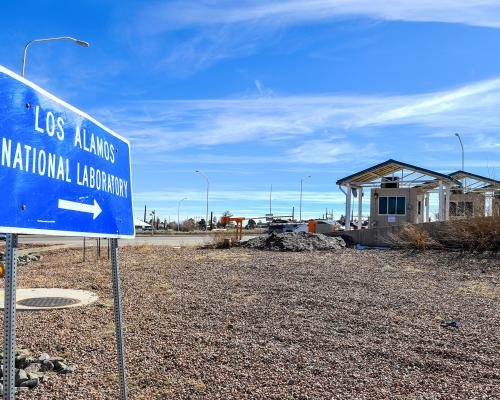
A wave of conspiracy theories has emerged surrounding the mysterious disappearances and deaths of at least 11 U.S. scientists, with many asserting connections to national security and even UFOs. This narrative has rapidly transitioned from fringe online discussions to mainstream media, sparking inquiries from Congress and drawing attention from notable political figures.
Origins of the Conspiracy Theory
The conspiracy theories began to gain traction in early 2023, particularly after the disappearance of retired U.S. Air Force Major General William "Neil" McCasland. On February 27, at 68 years old, McCasland left his home in Albuquerque, New Mexico, taking only his.38 revolver and leaving behind his phone and glasses. His wife reported him missing shortly after noon, prompting a Silver Alert from local authorities. McCasland's background as a former commander at Kirtland Air Force Base's Phillips Research Site raised eyebrows, particularly among UFO enthusiasts. Originally reported by The Guardian.
Lt. Kyle Woods of the Bernalillo County Sheriff's Office stated, "Nothing has been ruled out, which is why we're investigating every possible link that we can." However, Woods added caution, indicating that any UFO-related theories would need substantial evidence to gain traction in the investigation. The limited information surrounding McCasland's disappearance soon led to the resurfacing of other cases involving scientists with similar backgrounds.
The Growing List of Missing and Deceased Scientists
As discussions around McCasland intensified, reports of at least 10 other scientists who had gone missing or died in unusual circumstances began to surface. Among them was Michael David Hicks, a researcher at NASA's Jet Propulsion Laboratory, who passed away at 59 in 2023 under unexplained circumstances. Another noteworthy case involves Monica Reza, who vanished while hiking in the Angeles National Forest in June 2022. Reza, 60, was hiking with a friend when she disappeared, and her body has never been found.
Further complicating the narrative, the list includes several scientists with ties to national security. Notable names include astrophysicist Carl Grillmair, who was shot dead on his porch, and MIT physicist Nuno Loureiro, who was killed by a former classmate. Jason Thomas, a chemical biologist at Novartis, disappeared in December, with his remains discovered months later in Massachusetts. Additionally, Amy Eskridge, an Alabama-based researcher involved in gravity-modification research, died by suicide in 2022, but her case has also been mired in speculation.
Political Response and Public Speculation
The rising conspiracy narrative caught the attention of former President Donald Trump, who promised to investigate the claims. This endorsement from a prominent political figure helped propel the conspiracy theory into mainstream discussions. Republican lawmakers, including James Comer of Kentucky and Eric Burlison of Missouri, have demanded inquiries from the FBI, NASA, and the Department of Energy into the alleged connections between these scientists and sensitive U.S. scientific secrets.
In a letter to various law enforcement agencies, they stated, "These reports allege that at least 10 individuals who 'had a connection to U.S. nuclear secrets or rocket technology' have 'died or mysteriously vanished in recent years.' If the reports are accurate, these deaths and disappearances may represent a grave threat to U.S. national security and to U.S. personnel with access to scientific secrets." Such statements underscore the growing concern surrounding the potential implications of these cases.
Reality vs. Conspiracy
The rapid spread of this conspiracy theory highlights the challenges of discerning fact from fiction in today's information landscape. With social media amplifying sensational narratives, many are left wondering whether there's any substance behind these claims, or if they merely reflect societal anxieties in an age rife with disinformation.
Experts argue that the allure of conspiracy theories often lies not in their factual validity but in the narrative they create. The case of the missing scientists taps into fears surrounding national security, foreign adversaries, and the unknown, particularly regarding advanced technologies and UFOs. As investigations continue, the public remains captivated by the mystery, with each new detail feeding into the larger narrative.
Ultimately, whether these disappearances are connected to a broader conspiracy remains uncertain. What is clear, however, is that the intersection of science, national security, and conspiracy theories will continue to provoke discussions across various platforms, from internet forums to the halls of Congress.
Originally reported by The Guardian. View original.