
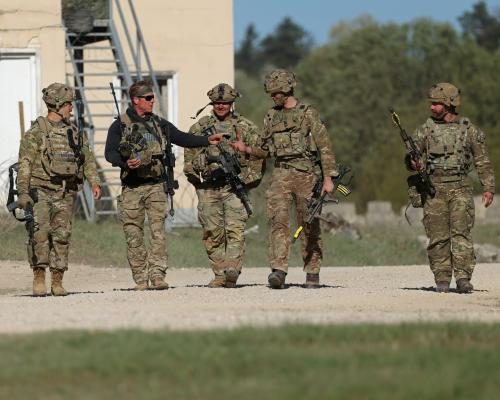
Germany's Defence Minister Boris Pistorius has called for European nations to enhance their security efforts following the announcement by the United States to withdraw 5,000 troops from Germany. The Pentagon indicated that the troop withdrawal, a significant military shift, is expected to be completed within the next six to twelve months. While Pistorius acknowledged that the presence of American soldiers in Europe serves both European and US interests, he emphasized the necessity for Europe to take more responsibility for its own security.
US Troop Withdrawal: A Foreseen Shift
In recent remarks, Boris Pistorius stated, "It was foreseeable that the US would withdraw troops from Europe, including Germany." This announcement arrives amid rising tensions between US President Donald Trump and German Chancellor Friedrich Merz, particularly after Merz remarked that the US was being "humiliated" by Iran. The withdrawal will impact the largest US military base in Europe, which hosts approximately 35,000 active-duty personnel and serves as a critical training hub for NATO operations. Originally reported by The Guardian.
Pistorius highlighted that the time has come for Europe to reconsider its security strategies. He pointed to Germany's ongoing efforts to bolster its military capabilities through expanding the Bundeswehr armed forces and accelerating equipment procurement. He stated, "Germany is on the right track" in enhancing its defense infrastructure, indicating a proactive approach to a changing security landscape in Europe.
Rising Tensions Over Iran
The troop withdrawal coincides with heightened tensions surrounding Iran, as President Trump expressed dissatisfaction with a new proposal from Tehran aimed at ending the ongoing conflict. This proposal was delivered to mediator Pakistan but lacked details about its contents. The US State Department has signaled its commitment to military support for Middle Eastern allies, announcing military sales exceeding $8.6 billion to countries such as Israel, Qatar, Kuwait, and the United Arab Emirates.
In a related development, Washington has warned European allies, including the UK, Poland, Lithuania, and Estonia, that they should expect long delays in weapon deliveries as the US works to replenish its stockpiles depleted by the ongoing conflict with Iran. The Pentagon's decisions come amid a backdrop of public disputes between US and German Leadership, raising questions about the future of NATO collaboration.
Military Sales and Strategic Alliances
Among the military sales approved by the US State Department are significant contracts for advanced weaponry. These include $4.01 billion for Patriot air and missile defense systems for Qatar and $992.4 million for advanced precision kill weapon systems (APKWS). Kuwait is set to receive an integrated battle command system worth $2.5 billion, while Israel will also acquire APKWS systems at a similar cost.
These arms sales underline the US's commitment to strengthening its alliances in the region and ensuring that its partners are equipped to handle regional threats. However, as tensions rise, the ability of European nations to independently address their security needs becomes increasingly vital.
Impact of Regional Conflicts on Local Populations
As military actions continue in the region, the humanitarian toll also rises. Recent Israeli strikes in southern Lebanon resulted in the deaths of twelve individuals, including civilians. The Israeli military's decision to carry out these strikes, despite a ceasefire, raises concerns about the ongoing violence and its impact on local populations. The situation reflects the broader instability in the Middle East, which complicates international diplomatic efforts, including those involving Iran.
Iran's Supreme Leader, Ayatollah Mojtaba Khamenei, has called on his nation to engage in an economic battle against perceived enemies, urging business owners not to lay off workers despite the challenging economic climate exacerbated by sanctions. Such internal pressures could influence Tehran's willingness to negotiate peace, adding another layer of complexity to the ongoing conflict.
As the US prepares for a significant troop withdrawal from Germany, the implications for both European security and international relations are profound. The evolving dynamics in the Middle East, coupled with the need for European nations to assume a greater role in their defense, will shape the future of NATO and transatlantic relations. With ongoing conflicts and emerging threats, the path forward for European security remains uncertain.
Originally reported by The Guardian. View original.