
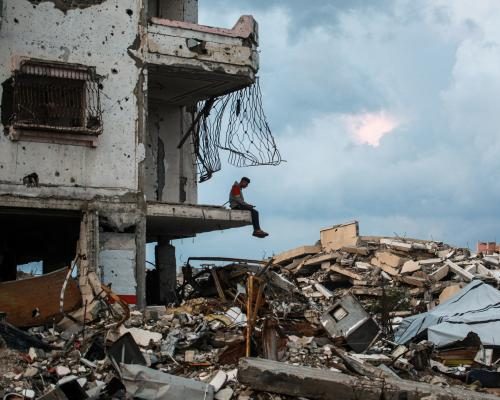
As the world's attention shifts to Iran, exhausted Palestinians in Gaza are grappling with severe hardships seventeen months after the onset of conflict. The once-vibrant territory has transformed into a landscape of despair, where daily life is marked by the constant threat of violence and a dire humanitarian crisis. "Drones never stop buzzing overhead, gunfire and shelling continue almost daily and naval boats fire towards fishermen," lamented 56-year-old Ahmed Baroud, a father of five currently displaced in Deir al-Balah.
Life in the Aftermath of War
Five months after a ceasefire was announced, the situation in Gaza remains precarious. Civilian casualties continue to rise, with health authorities reporting six fatalities and four injuries from an Israeli airstrike in the al-Mawasi area of Khan Younis last Sunday. The humanitarian crisis is evident as the streets and markets of Gaza reflect a life stripped of vibrancy. Residents line up for food and essential supplies amid the rubble of their former homes. The war's toll has left many struggling for basic necessities, and the recent escalation of battles in Iran has exacerbated the situation. Originally reported by The Guardian.
Ahmed Baroud noted, "The situation has become even more strained since the war on Iran began," attributing the surge in prices of food and other essentials to the ongoing conflict. As costs continue to rise, many families find themselves unable to afford basic items. Ibtisam Al-Kurdi, who lost both her sons in the war, echoed this sentiment, stating, "We can no longer afford vegetables or meat, and we rely daily on canned food and legumes, with a constant fear that famine may return." The struggle for survival has become an everyday reality for countless families.
Living Conditions Deteriorate
As spring rains continue to fall, displaced individuals find themselves in increasingly difficult living conditions. Camp tents are inundated, and cold temperatures worsen the plight of those already suffering. The personal toll is evident; conversations that once revolved around dreams and aspirations have been replaced with discussions of survival. Students no longer aspire for academic excellence but instead hope to earn enough to prevent their younger siblings from begging on the streets.
Public transportation in Gaza has also transformed into a space for shared grief, with passengers recounting their stories of loss. One man shared how he had invested everything into building his dream home, only to have it destroyed and his family killed in the war. Another woman spoke of losing all her children and now raising her grandchildren alone. These stories underscore the pervasive sense of grief that hangs over the community.
Healthcare Crisis Unfolds
The healthcare situation in Gaza has reached alarming levels, with many patients unable to receive necessary medical treatment. Ibrahim Kaheel, another displaced resident, highlighted the dire need for medical supplies, stating, "Water, which used to be available, now only reaches us two days a week due to a malfunction in the municipal supply line." Basic diagnostic tools are scarce, leaving medical professionals unable to treat patients suffering from serious conditions, including cancer.
Currently, over 20,000 people are waiting to travel abroad for medical treatment, with more than 11,000 cancer patients requiring urgent care. The UN agency for Palestinian refugees, UNRWA, has indicated that the Kerem Shalom crossing remains the only operational route for cargo, resulting in severe bottlenecks for incoming supplies. The healthcare crisis is exacerbated by broken infrastructure and inconsistent electricity, contributing to an escalating public health risk as untreated sewage contaminates the environment.
Hope Amid Despair
Despite the overwhelming challenges, many residents cling to hope for a better future. The recent reopening of the Rafah crossing for limited movement has provided a glimmer of possibility, yet it is far from a solution. As Ibrahim Kaheel articulated, "After the war on Iran, food prices rose significantly and goods became scarce in the markets, and some prices are still continuously increasing." The situation remains desperate, with families facing an uncertain future.
As Gaza continues to endure the repercussions of prolonged conflict and international distractions, the resilience of its people remains a testament to their enduring spirit. However, the urgent need for humanitarian aid and a sustainable resolution to the ongoing crisis cannot be overstated. Each day brings with it the hope that peace will one day prevail, allowing families to rebuild their lives and reclaim their futures.
Originally reported by The Guardian. View original.