
As Israeli airstrikes intensify against civilian targets in Iran and the U.S. military presence in the Gulf expands, the hope for Pakistan to serve as a neutral ground for peace talks between Iran and the United States is increasingly under threat. Pakistan, leveraging its unique position of good relations with both Tehran and Washington, has sought to position itself as a mediator in a conflict that now seems to be widening.
Pakistan's Diplomatic Balancing Act
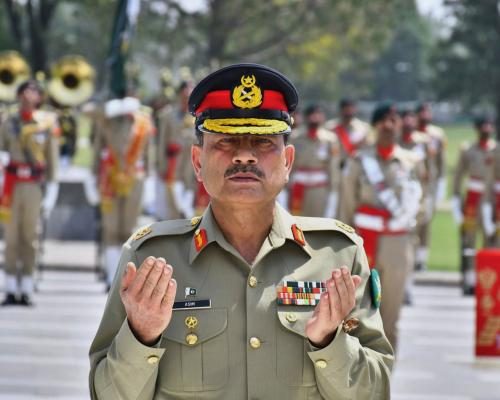
Pakistan's military chief, Field Marshal Asim Munir, has emerged as a key figure in these diplomatic efforts, having established a rapport with U.S. President Donald Trump. The country has been cultivating its ties with Iran, which have notably improved over recent years. Both Tehran and Washington have expressed a willingness to engage in talks, according to Pakistani officials. However, the growing hostilities and lack of trust complicate the situation. The stark disparity between the positions of the two nations also poses a significant barrier to any potential negotiations. Originally reported by The Guardian.
Israeli airstrikes have heightened tensions dramatically, particularly after the bombing of two major Iranian steel plants and civilian nuclear sites. Iranian Foreign Minister Abbas Araghchi criticized these actions, asserting that they contradict Trump's earlier promise to halt attacks on civilian infrastructure to facilitate diplomacy. The strikes have targeted universities and other non-military facilities, actions that Pakistani officials fear could derail any prospect of dialogue.
Trust Issues and Regional Dynamics
Iran's primary concern remains the cessation of hostilities, and the assurance that future attacks from the U.S. and Israel will not occur. Maleeha Lodhi, a former Pakistani ambassador to the U.S., emphasized that the biggest hurdle lies in the skepticism surrounding Trump's reliability: "The toughest part is believing Trump's word. He is not a rational player. He's completely whimsical." While Trump maintains that Iran is desperate for a deal, Tehran counters that he is merely "negotiating with himself."
For Iran, a ceasefire is insufficient; they demand a binding agreement that guarantees an end to the conflict. One contentious issue is Iran's control of the Strait of Hormuz, a critical waterway for global oil and gas exports. This proposition has been rebuffed by U.S. Secretary of State Marco Rubio, although Trump has floated the idea of a joint U.S.-Iranian administration of the strait. Thus far, Pakistani officials have acted as intermediaries, relaying proposals between the two sides, who have taken hardline stances.
Upcoming Diplomatic Initiatives
Pakistan's diplomatic activities gained momentum over the weekend, with Prime Minister Shehbaz Sharif reaching out to Iranian President Masoud Pezeshkian. Additionally, the foreign ministers of Turkey, Egypt, Saudi Arabia, and Pakistan are set to convene in Islamabad to discuss strategies for de-escalating the conflict. This quartet is emerging as a new alignment within the Muslim world, bolstered by three of the largest armies in the region, nuclear capabilities, and Saudi Arabia's financial resources.
However, behind the scenes, Saudi officials have expressed a desire for continued military action against Iran, complicating Pakistan's efforts to mediate. Furthermore, Pakistani officials anticipate that any peace talks will likely be indirect, with officials shuttling between different rooms, as Tehran refuses to engage in direct negotiations with U.S. representatives.
Challenges Ahead for Pakistan
Pakistan's strategic position is further complicated by its nuclear capabilities and a sizable military that could ensure security for any peace talks held on its territory. Additionally, the nation's air force could potentially facilitate safe passage for Iranian officials. Yet, Iran remains wary of U.S. intentions, especially after recent airstrikes that occurred during negotiation attempts.
The ongoing buildup of U.S. troops in the region suggests that America may not be genuinely committed to peace talks. Recent reports indicate that the Pentagon is contemplating deploying an additional 10,000 soldiers, supplementing the 7,000 already en route to the Middle East. In a bid to restore confidence, Pakistan has proposed that the U.S. be represented by Vice President JD Vance, a suggestion that has received a positive response from Iran, which is skeptical of previous negotiators like Steve Witkoff and Jared Kushner.
For Pakistan, the urgency of its peace efforts cannot be overstated. A recent defense agreement with Saudi Arabia places the country in a precarious position, where it might be drawn into the conflict on Riyadh's side. With a long border with Iran and the world's second-largest Shia Muslim population, Pakistan is keen to avoid any escalation that could destabilize its own security.
Originally reported by The Guardian. View original.