
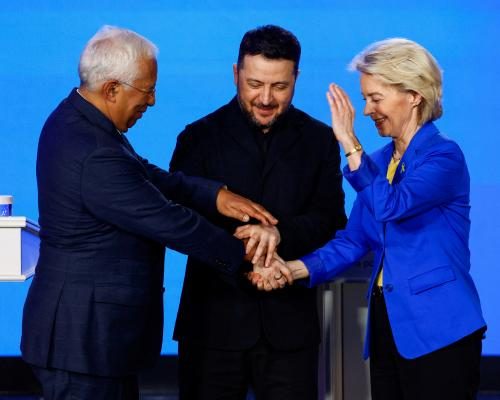
In a significant breakthrough, European Union leaders have approved a crucial €90 billion (£78 billion) Loan for Ukraine, concluding a prolonged diplomatic deadlock. This financial package was finalized alongside the EU's 20th sanctions package targeting Russia, with both agreements secured just ahead of a summit in Cyprus. The approval marks an important step in reinforcing support for Ukraine as the conflict with Russia persists. Ursula von der Leyen, President of the European Commission, expressed optimism about the developments, stating on social media, "We are on our way to Cyprus with good news."
Hungary Lifts Veto, Clearing the Path for Financial Aid
After weeks of negotiations, Hungary lifted its veto against the €90 billion loan and new sanctions, allowing the EU to finalize both measures. The deadlock had stemmed from a dispute over a damaged oil pipeline that runs through Ukraine, which affected Hungary's oil supply. With the resumption of Russian oil deliveries to both Hungary and Slovakia, Hungarian Prime Minister Viktor Orbán's government reversed its objections to EU support for Ukraine. The Hungarian energy group MOL confirmed the resumption of oil shipments on Thursday, signaling a thaw in relations as the EU aims to bolster its assistance to Ukraine. Originally reported by The Guardian.
Viktor Orbán, who recently faced a political setback with the election of his Conservative rival, Péter Magyar, will not attend this summit. In his absence, Ukrainian President Volodymyr Zelenskyy is set to meet with other EU leaders in the Cypriot resort of Ayia Napa for discussions over dinner. This gathering highlights the EU's commitment to supporting Ukraine amidst ongoing hostilities.
Ukraine's Financial Strategy and Arms Procurement
President Zelenskyy underscored the importance of securing this loan, citing its role in providing financial certainty for Ukraine. He emphasized the need for investment in arms production and the procurement of essential weapons from international partners, particularly those that have yet to establish production facilities in Ukraine. Recent months have seen extensive Russian attacks on Ukraine's energy infrastructure, making it crucial for the country to prepare its energy sector for the upcoming winter.
With the ongoing conflict, the support from the EU is not only a financial necessity but also a strategic imperative. The €90 billion loan is expected to help Ukraine address immediate military needs and bolster its defense capabilities. Zelenskyy's social media posts reflect a focused strategy on ensuring that Ukraine can withstand the pressures of war while also preparing for future challenges.
Addressing Energy Prices and Broader Regional Stability
The summit in Cyprus will also see EU leaders tackle rising energy prices and the broader implications of the ongoing war in the Middle East. With heightened tensions and uncertainty regarding the conflict, regional leaders from Lebanon, Egypt, Syria, and Jordan are set to participate in discussions aimed at fostering stability. An EU official noted that the situation in the Middle East remains "volatile and fast-paced," emphasizing the need for careful diplomacy and engagement.
In light of soaring energy prices, EU leaders are expected to consider measures such as cutting electricity taxes and promoting incentives for a faster transition to green energy. While the bloc has made strides in boosting wind and solar power since the energy crisis of 2022, the pace of reducing reliance on oil and gas in other sectors, including transportation and housing, has been slower than anticipated. The European Commission recently raised concerns regarding the EU's "dangerous dependency on fossil fuels," revealing that the bloc has incurred an additional €24 billion in oil and gas imports since the beginning of the Middle East conflict in February.
Looking Ahead: The EU's Commitment to Ukraine and Energy Transition
This recent approval of the €90 billion loan and the new sanctions package against Russia signals the EU's unwavering commitment to supporting Ukraine during a critical juncture. As discussions proceed in Cyprus, the focus will remain on not only aiding Ukraine but also on addressing the immediate challenges posed by rising energy prices and regional instability. The outcomes of these talks will likely shape the EU's approach to both energy security and geopolitical strategy in the coming months. With Zelenskyy's participation, the summit underscores the importance of unity among European leaders in the face of adversity, reinforcing the collective resolve to counteract Russian aggression and support Ukrainian sovereignty.
Originally reported by The Guardian. View original.