
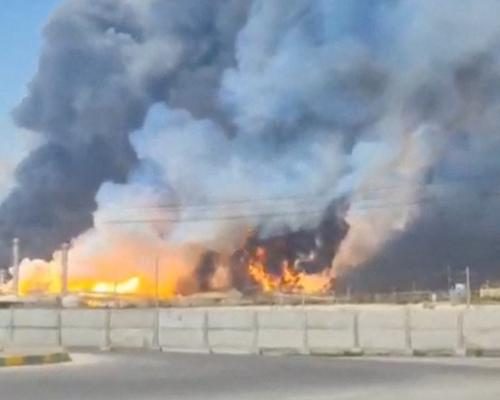
The intensifying attacks on vital oil and gas sites in the Middle East are ushering in a dangerous new chapter in the ongoing regional conflict, with far-reaching implications for global energy supplies and economic stability. Following an Israeli airstrike on a production facility at Iran's South Pars gasfield, Tehran has vowed to retaliate against critical energy infrastructure across the region, declaring a "full-scale economic war." South Pars, which lies offshore and is part of the world's largest natural gas reserve shared with Qatar, has become a focal point of this escalating crisis.
Within hours of the initial strike on South Pars, Iranian missiles targeted Ras Laffan in Qatar, home to crucial liquefied natural gas (LNG) processing facilities. According to QatarEnergy's chief executive, Saad al-Kaabi, the attack caused "extensive damage" to some of the world's leading suppliers of seaborne gas. The restoration of these facilities could take three to five years, raising concerns of a prolonged global gas supply crisis. Al-Kaabi expressed disbelief over the attack, stating, "I never in my wildest dreams would have thought that Qatar would be-Qatar and the region-in such an attack, especially from a brotherly Muslim country in the month of Ramadan." Originally reported by The Guardian.
Iran's Threats Target Regional Energy Assets
In the wake of the South Pars attack, Iranian state media issued warnings that key energy sites in Saudi Arabia, the UAE, and Qatar have become "direct and legitimate targets". This included major installations such as Saudi Arabia's Samref refinery near Yanbu and the Jubail petrochemical complex, alongside the UAE's al-Hosn gasfield and Qatar's Mesaieed petrochemical complex. Aditya Saraswat from Rystad Energy noted that Iran has largely followed through on its threats, making the situation particularly volatile.
On Thursday, the Saudi defense ministry confirmed a drone attack on the Samref refinery, which is critical for Saudi crude exports. Meanwhile, a ballistic missile aimed at Yanbu was intercepted, preventing further escalation. Other regional refineries, including Kuwait's Mina al-Ahmadi and Mina Abdullah, were also targeted by drones, causing fires. In the UAE, debris from intercepted missiles prompted the shutdown of the Habshan complex, one of the largest gas processing facilities globally, while Adnoc reported that its Bab oilfield was similarly threatened.
Market Reactions to Escalating Attacks
The immediate impact of these attacks has been felt across global gas markets, with European benchmark prices surging by 30% at the opening of trading, effectively doubling pre-crisis levels and reaching their highest point since early 2023. Saul Kavonic, head of research at MST Marquee, emphasized the severity of the situation, stating, "We are now well on the road to the doomsday gas crisis scenario." He warned that any disruption in LNG supplies could persist for months or even years, depending on the extent of damage incurred.
As tensions rise and military aggression continues, the global oil markets are grappling with the aftereffects of the most significant energy supply shock in history, following disruptions in the Strait of Hormuz. Analysts from Rystad Energy anticipate that Brent crude prices could soar past $120 a barrel in the immediate aftermath of these developments, with further price increases likely if the damage to facilities is significant.
International Responses and Future Implications
Former U.S. President Donald Trump has weighed in on the situation, issuing a stern warning to Iran against further attacks on Qatar's LNG facilities, suggesting that the U.S. would respond forcefully by threatening to "massively blow up the entirety of the South Pars gasfield." This rhetoric highlights the geopolitical stakes at play, as the conflict could severely disrupt energy supplies not just for the region but for the global market.
As the situation continues to unfold, the world watches closely. The targeting of energy infrastructure signals a dangerous escalation that could have long-lasting effects on global energy security. Should Iran follow through on its threats, the ramifications for oil and gas prices could be catastrophic, affecting economies dependent on energy imports and exacerbating existing geopolitical tensions.
Originally reported by The Guardian. View original.