
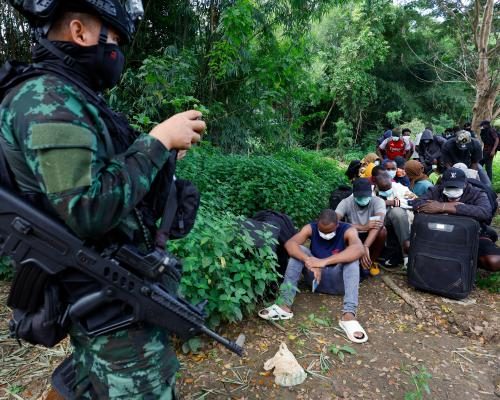
Charities and humanitarian organizations are sounding the alarm over the dire situation faced by victims of cyberscam farms in Southeast Asia. A recent report by Amnesty International highlights an escalating humanitarian crisis in Cambodia and Myanmar, where survivors are left destitute and abandoned after enduring horrific conditions. The report, published in January, reveals that hundreds of thousands of individuals from over 50 countries are trapped in these scam operations, lured by false job offers only to be subjected to severe exploitation.
Shocking Scope of the Crisis
Amnesty International's findings indicate a troubling trend of increasing numbers of victims emerging from cyberscam farms, particularly in Cambodia and Myanmar. Many of these individuals are stranded without resources, forced to sleep on streets while grappling with trauma. "We don't see the Cambodian state offering victim screening for these individuals or other support that you'd expect in a situation like this: a humanitarian crisis," stated Montse Ferrer, regional research director at Amnesty International. The absence of adequate support systems has led aid workers to describe the situation as an "international crisis on Cambodian soil." Originally reported by The Guardian.
According to the report, victims are often trafficked from their home countries under the pretense of lucrative job opportunities, only to find themselves coerced into cybercrime. Many are forced to engage in deceptive practices, such as catfishing, with severe repercussions for those who resist, including torture and sexual assault. The grim reality reveals that individuals are often trapped in these exploitative environments for months or even years.
Government Response and Rescue Operations
In recent months, governments in Thailand, Cambodia, and Myanmar have initiated crackdowns on the operations that have proliferated in the region since the onset of the COVID-19 pandemic. Last February, over 7,000 individuals were rescued in a significant operation in Myanmar, followed by an additional 2,000 rescues in October. However, experts emphasize that rescue efforts must be paired with substantial support for survivors, who face numerous challenges, including physical and mental health issues.
Andrey Sawchenko, vice-president of the International Justice Mission (IJM) for program impact in Asia-Pacific, stressed the urgent need for a coordinated approach to provide care for victims post-rescue. "Support needs to be available for the thousands of survivors, who may have physical and mental health needs," he said. As many survivors await processing, they often find themselves without food or shelter, exacerbating their already fragile situations.
The Struggle for Basic Needs
For many victims, the aftermath of their escape is fraught with uncertainty. Felix, a 31-year-old Ethiopian man, recounted his harrowing experience of being trapped in two different compounds in Myanmar for 18 months. His eventual release was precipitated by a medical condition caused by the severe working conditions. "They punch you, they kick you, everything," Felix recalled, reflecting on the violence he endured.
Local NGOs, such as the Thailand-based Immanuel Foundation, have stepped up to assist those who manage to escape. These organizations work with embassies to facilitate the repatriation of victims, but the process is often lengthy and fraught with obstacles. While smaller aid groups are doing their best to provide support, they are frequently overwhelmed and underfunded.
Barriers to Effective Aid
Despite the urgent need for assistance, many larger organizations, including the Red Cross, have yet to engage significantly with this crisis. Amy Miller, Southeast Asia director of Acts of Mercy, noted that there is very little humanitarian assistance for victims of cyberscam farms. The situation is complicated by funding cuts and strict regulations governing international aid operations in Cambodia and Myanmar.
Moreover, the stigma attached to victims involved in cybercrime poses a significant challenge. Many humanitarian organizations fail to recognize these individuals as victims of human trafficking, which limits access to necessary support. "There is a major bias that's happening across the sector in general; that most do not see them as victims of human trafficking," Miller remarked. This oversight is a barrier to providing adequate aid, as many survivors lack proper paperwork due to their illegal status after being smuggled across borders.
The plight of those affected by these cyberscam farms requires immediate, coordinated action. The international community must respond with greater urgency to address the humanitarian needs of these vulnerable individuals. Without additional resources and support, the cycle of exploitation will continue, leaving countless lives in jeopardy.
Originally reported by The Guardian. View original.