
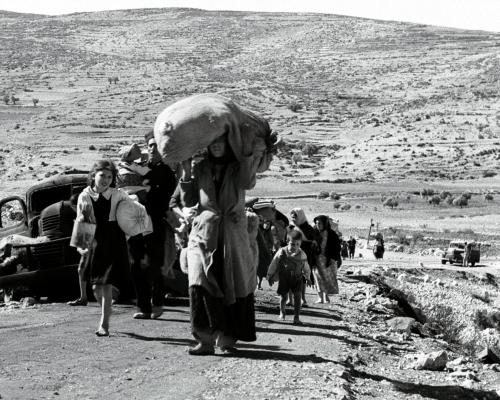
When it comes to the secret mission to rescue the un’s vital palestinian refugee archive, in a harrowing mission that encapsulated the urgency of preserving history amid chaos, humanitarian workers from the United Nations Relief and Works Agency for Palestine Refugees (UNRWA) embarked on a complex operation to rescue invaluable archival documents. These records detail the experiences of Palestinians fleeing their homes during the tumultuous periods leading to the establishment of Israel in 1948. By the summer of 2024, the stakes were incredibly high as the operation neared its final stages, with time running out and the threat of destruction looming large.
Understanding The Secret Mission To Rescue The UN’s Vital Palestinian Refugee Archive
The journey from East Jerusalem to Amman, typically a straightforward drive, turned treacherous for UNRWA workers tasked with safeguarding crucial archives. Over ten months, these officials, spread across various countries, undertook risky missions to collect and secure documents amidst escalating violence. The operation included perilous trips into Gaza City during airstrikes and the careful transport of unmarked envelopes containing historical records across borders. Originally reported by The Guardian.
As Roger Hearn, a senior UNRWA official overseeing the operation, stated, "Their destruction would have been catastrophic.. If there is ever a just and durable solution to this conflict, then this is the only evidence people can use to show there were once Palestinians living in a particular place." This sentiment underlined the urgency of the operation, as the archives contained original registration cards, birth, marriage, and death certificates vital for Palestinians tracing their ancestry.
Historical Significance and Ongoing Challenges
UNRWA was established in 1949 primarily to provide essential services like healthcare and education to around 750,000 Palestinian refugees. However, the agency's role expanded dramatically as the ongoing conflict exacerbated the need for archival preservation. The documents housed in Gaza City were not just paper; they held the key to understanding the Palestinian narrative and heritage.
Jean-Pierre Filiu, a professor of Middle East Studies at Sciences Po in Paris, emphasized the importance of these records, stating, "There are testimonies of how people were forced to flee in 1948, where they came from, where their property was, what was destroyed." His observations during a visit to Gaza underscored the archives' value in documenting the plight of over 200,000 Palestinians who sought refuge in Gaza during and after the 1948 conflict.
Despite the ongoing conflict, UNRWA faced additional challenges, including accusations from Israel regarding the agency's role in fostering hopes for the right of return among Palestinian refugees. After the Hamas assault in 2023, allegations surfaced claiming UNRWA staff had participated in the attack, leading to the dismissal of nine employees following an internal investigation.
Critical Rescue Missions Amid Destruction
The initial phases of the document rescue operation were nothing short of dramatic. In the days following Israel's invasion of Gaza, UNRWA was ordered to evacuate its offices in Gaza City, leaving behind invaluable archives. Sam Rose, the acting director of UNRWA affairs in Gaza, detailed the precarious situation, stating, "There was a real risk that the Israelis would move in and destroy them, or they would just be destroyed in a fire or an explosion or whatever." The looming threat of destruction highlighted the urgency of the situation.
In the chaos, a small team of UNRWA officials managed to return to Gaza City, navigating through the dangers of ongoing military operations. They undertook multiple trips to transport the documents to a food warehouse in Rafah, close to the Egyptian border. However, the process faced further complications as Egyptian authorities refused to allow the archives to exit Gaza without consulting Israeli officials, who imposed a nearly total blockade on the region.
The Fight for Preservation and Future Implications
The operation to save the UNRWA archives reflects a broader struggle to preserve Palestinian heritage amid ongoing Conflicts. With hundreds of thousands of historical records still vulnerable to destruction, the urgency remains palpable. Hearn remarked on the precarious situation: "There was this very dangerous period where we were getting many, many [cyber] attacks every day and genuinely thought we could see both the originals destroyed and any digital copies we had made. Then everything would have been gone for good." The risk of cyberattacks compounded the threats posed by physical destruction.
As the world watches, the fate of these archives serves as a reminder of the importance of historical documentation in the pursuit of justice and reconciliation. The efforts to secure this critical repository of Palestinian history continue, exemplifying the resilience of those dedicated to preserving a narrative that is often overshadowed by conflict.
Originally reported by The Guardian. View original.