
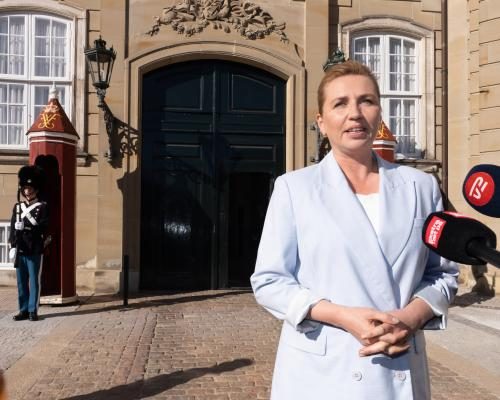
In a surprising twist in Danish politics, King Frederik has tasked Troels Lund Poulsen, the leader of the centre-right Liberal Party, with the responsibility of forming a new government after Prime Minister Mette Frederiksen's unsuccessful attempts to establish a coalition. This development, announced on Friday night, signals a significant shift in the political landscape of Denmark, which has been dominated by Frederiksen and her Social Democrats for years.
Frederiksen's Struggles After March Elections
Mette Frederiksen, the long-serving leader of the Social Democrats, faced a daunting challenge following the parliamentary elections held in March. Although her party garnered the most votes, it represented their worst electoral performance since 1903, with no party achieving a majority. The Social Democrats won a plurality but fell short of the necessary support to govern alone. Originally reported by The Guardian.
Frederiksen's efforts to forge a left-leaning government, including negotiations with Lars Løkke Rasmussen's centre-right Moderates, ultimately floundered. Rasmussen, regarded as a pivotal figure in the current political climate, decided to withdraw from negotiations on Friday, aligning himself with Poulsen instead. This shift effectively ended Frederiksen's hopes of maintaining power through a coalition with the Moderates, forcing the king's hand to seek an alternative route.
The King's Directive to Poulsen
In light of these developments, King Frederik issued a statement requesting Poulsen to lead negotiations aimed at forming a new government. The directive explicitly noted that the discussions should occur without the involvement of the Social Democrats or the Moderates. Poulsen's task will involve rallying support from various right-wing parties, a process that is expected to be complex and could extend for weeks.
This scenario marks a notable moment in Denmark's political history, as the current government formation process is already the longest on record. The king's decision reflects a broader trend of rightward political shifts in Denmark, evidenced by the March elections, which saw a surge in support for right-wing parties, including the far-right Danish People's Party, which tripled its votes to 9.1%.
Immigration as a Driving Issue
Immigration remains a contentious issue in Denmark, driving much of the political discourse and influencing voter sentiment across party lines. The Danish People's Party has capitalized on this sentiment, pushing for stricter immigration policies. According to reports, the party's backing of Poulsen's government formation is contingent on the introduction of measures aimed at encouraging a net exodus of Muslims from Denmark.
Frederiksen herself acknowledged the shifting composition of parliament, suggesting that the current makeup could indeed facilitate the formation of a right-wing government. She remarked, "The Danes.. have composed the [parliament] in such a way that a rightwing government can absolutely be formed. It might very well be that what we are seeing now is in fact the beginning of that."
Frederiksen's Popularity Amidst Challenges
Despite her struggles, Frederiksen still enjoys a degree of popularity. Her handling of international issues, particularly her firm stance against former U.S. President Donald Trump's attempt to purchase Greenland, earned her respect. However, her domestic policies, especially regarding taxation and immigration, have faced criticism.
Political analysts suggest that while Frederiksen may be down, she is not out. Should Poulsen struggle to assemble a viable coalition among the right-wing parties, the door may remain open for Frederiksen to return with a coalition of her own. The political dynamics in Denmark remain fluid, with potential for significant changes in governance.
As the political landscape evolves, Denmark stands at a crossroads. The coming weeks will likely reveal whether Poulsen can successfully navigate the complexities of coalition-building among a fragmented political landscape or if Frederiksen will find a way to reclaim her position amidst growing challenges.
Originally reported by The Guardian. View original.