
When it comes to ‘old masters too’: ghent exhibition celebrates female artists of the baroque, in a groundbreaking exhibition that reclaims the legacy of female artists in the Baroque era, the Ghent Museum of Fine Arts (MSK) is showcasing over 40 women who made significant contributions to the art world between 1600 and 1750. Titled Unforgettable: Women Artists from Antwerp to Amsterdam, 1600-1750, the exhibition opened this month, following a successful run in Washington, D.C. The display aims to highlight the remarkable yet often overlooked achievements of these artists, an initiative that falls in line with the museum's slogan: "Old masters were women too."
Understanding ‘Old Masters Too’: Ghent Exhibition Celebrates Female Artists Of The Baroque
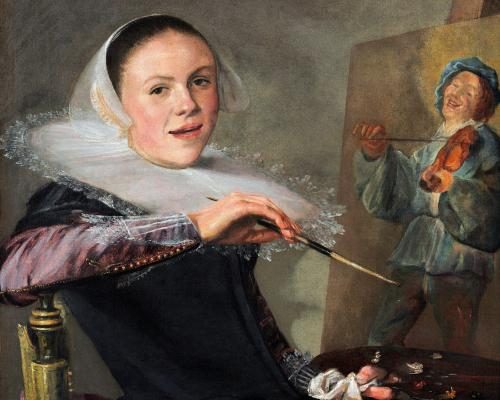
Among the featured artists is Judith Leyster, a prominent figure from the Dutch Golden Age, who painted her self-portrait at the age of 21 in 1630. In this captivating work, Leyster embodies cheerful confidence, adorned in silk and lace, as she holds her palette and brushes beside a painting. This self-portrait marked her entry into the Haarlem painters' guild, making her one of the first female artists to adopt the self-portrait as a means of self-promotion. Despite her acclaim during her lifetime, Leyster's legacy faded after her death, with her works often misattributed to her husband, Jan Miense Molenaer, or other male contemporaries. Originally reported by The Guardian.
The exhibition aims to rectify this historical oversight, bringing Leyster's vibrant works back into the public eye. Once dismissed and even sold by major institutions in the 1970s, her paintings are now celebrated as significant contributions to art history. Co-curator Frederica Van Dam emphasizes the importance of reflecting on why female artists have been overlooked, asking visitors: "Why haven't we seen artworks by women before? Why has no one ever questioned this?"
A Diverse Array of Talents
The exhibition highlights the diverse talents of women artists from the Low Countries, which encompasses modern-day Netherlands and northern Belgium. A total of 179 women were active in this vibrant art economy during the Baroque period. Notably, Maria van Oosterwijck's still-life paintings were highly sought after, gracing the walls of palaces across Europe. Additionally, Johanna Koerten, known for her intricate paper-cutting, caught the eye of Peter I of Russia during his 1697 visit to Amsterdam. Koerten's exceptional talent earned her substantial compensation, with one of her works reportedly bringing in more than double what Rembrandt earned for his masterpiece, The Night Watch.
This exhibition represents a pivotal moment in the ongoing rediscovery of female artists who have long been absent from major art historical narratives. Alongside Leyster and Oosterwijck, the exhibition also features the works of Artemisia Gentileschi, Michaelina Wautier, Marthe Donas, and Mary Cassatt, each of whom navigated the male-dominated art world of their time.
Art History's Gender Bias
The erasure of women's contributions to the art world can be traced back to the 19th century when art history emerged as a formal discipline. Predominantly male historians defined what constituted great art, often relegating female artists to the margins. This has resulted in many talented women, like Rachel Ruysch, being dismissed as mere imitators, despite their undeniable skill and popularity among collectors.
In the 19th century, the rise of painting as the pinnacle of artistic expression overshadowed applied arts-areas where many women excelled, such as lace-making, calligraphy, and paper-cutting. While some female artists received recognition, many remained anonymous, signing their names with an "X" in historical records. The exhibition also sheds light on the harsh realities faced by women artists, particularly those from poorer backgrounds, who earned meager wages for their labor.
Unconventional Life Choices of Women Artists
Many women featured in the exhibition made unconventional life choices that shaped their artistic journeys. One notable figure is Louise Hollandine, who chose to convert to Catholicism and enter a convent to preserve her artistic freedom. The daughter of exiled royalty, Hollandine navigated a life filled with privilege but ultimately opted for a path that allowed her to pursue her passion for painting. Her self-portraits, displayed in the exhibition, capture her dual existence as both a princess and a nun, reflecting her complex identity.
As the exhibition continues to draw visitors, it serves as a reminder of the rich contributions of women artists throughout history. While many names may still be lost to time, efforts like this one are crucial in restoring their rightful place in the annals of art history and ensuring that their stories are no longer forgotten.
Originally reported by The Guardian. View original.