
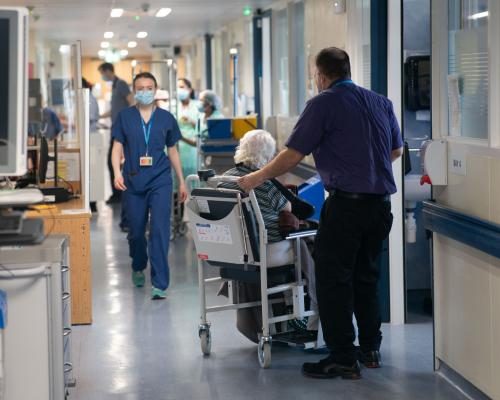
In a significant escalation of tensions within the UK healthcare system, the British Medical Association (BMA) has dismissed Prime Minister Keir Starmer's 48-hour ultimatum to resident doctors, who are planning to strike due to dissatisfaction with pay negotiations. The government has threatened to withdraw an offer of thousands of extra NHS training posts if the doctors do not call off their planned industrial action.
Ofgem Price Cap Reduction: A Temporary Relief
Starting tomorrow, the energy price cap set by Ofgem will decrease from £1,758 to £1,641. The UK government is framing this reduction as a key measure in its response to the ongoing cost of living crisis. The new cap will be in effect for three months, from April 1 to June 30. However, it's crucial to clarify that this price cap doesn't mean all households will pay less for their energy. In fact, around 50% of consumers may end up paying more, as the cap only limits how much energy suppliers can charge per unit, rather than the total bill. The average household will see their costs calculated assuming typical usage patterns, and for many, this may still result in higher expenditures. Originally reported by The Guardian.
Energy consultancy Cornwall Insight has forecasted an increase in the price cap to £1,929 for the third quarter of the year, reflecting a rise of £288 or 18% from the current cap. Craig Lowrey, a principal consultant at Cornwall Insight, noted that while summer typically sees lower energy demand, rising wholesale prices could lead to substantial increases in the October cap. If such trends continue, the government may need to reconsider its support measures for households facing rising energy costs. Martin McCluskey, an energy minister, emphasized the government's commitment to tackling the affordability crisis, stating, "Tackling the affordability crisis is our number one priority," and reiterated their willingness to intervene if necessary.
Starmer's Ultimatum and BMA's Response
As the government grapples with domestic issues, Keir Starmer is set to chair a meeting of the Cobra emergency committee to address the escalating conflict in Iran. However, his focus on the resident doctors' impending strike has sparked controversy. Starmer's ultimatum, delivered through an article in the Times, warns that the government might retract its offer of additional NHS training posts should the doctors proceed with their strike.
Dr. Jack Fletcher, chair of the BMA resident doctors committee, responded critically to Starmer's approach during an interview on the Today programme. He stated, "I'm very happy to sit down with the government at any point to try and negotiate a settlement, but I don't think that's done by writing in newspapers and issuing threats unilaterally." Dr. Fletcher highlighted that the BMA was pushed into considering strike action due to last-minute changes to the government's pay offer, which he described as a significant alteration to what had been previously discussed. He remarked, "The government made very late changes to the pay offer, reducing the pay investment and stretching it over a longer period in a way that had not been previously talked about."
Crisis in NHS: Negotiations and Future Prospects
The BMA's stance suggests a deepening crisis within the NHS, where negotiations appear fraught with tension. Dr. Fletcher emphasized the need for a credible and sustainable offer to be on the table, indicating that arbitrary deadlines set by the government are counterproductive. He asserted, "Any 'deadline' disappears the moment there is a credible and sustainable offer on the table. Our focus remains on getting a good deal for both doctors and for patients." This sentiment reflects a broader concern among healthcare professionals regarding the government's handling of pay and working conditions.
The stakes are high as the BMA seeks to avert a strike that could disrupt healthcare services across England. With ongoing discussions planned for later today, there remains a glimmer of hope that a resolution could be reached, potentially averting the strikes that many doctors feel are necessary to advocate for fair compensation and working conditions. However, the path forward is uncertain and will depend heavily on the government's willingness to engage in meaningful dialogue with the BMA.
As the situation develops, the interplay between rising energy costs and the healthcare crisis highlights the broader economic challenges facing the UK. Policymakers will need to navigate these complex issues carefully as they seek to balance financial realities with the urgent needs of both consumers and healthcare professionals.
Originally reported by The Guardian. View original.