
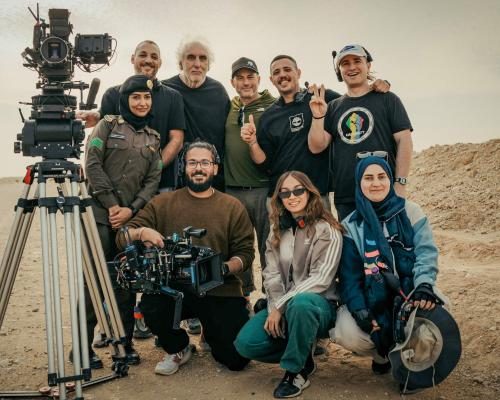
Acclaimed Australian director Phillip Noyce has embarked on a new project that has garnered significant attention: a feature film titled The Watchful Eyes, commissioned by the Saudi government. The film's narrative centers around the country's narcotics officers, portraying them as heroes in their fight against drug-related crime. This production is notable not only for its subject matter but also for the context in which it is being created, against a backdrop of serious human rights concerns within Saudi Arabia.
Film's Premise and Production Details
The Watchful Eyes is based on a real case from the Saudi Ministry of Interior's narcotics division. It aims to depict the "heroism of security men in combating drugs," according to the Saudi authorities. Filming began in December 2022 and is set to be completed soon, with a release planned for later this year. The film is being shot entirely in Saudi Arabia, emphasizing the regime's desire to showcase its security forces in a favorable light. Originally reported by The Guardian.
Phillip Noyce, known for his work on films like Rabbit-Proof Fence and Patriot Games, has taken on this project as a challenge, stating he sought the opportunity to explore a "previously closed society." The production is backed by Sela, a Saudi entertainment company supported by the Public Investment Fund, which aims to bolster the local film industry as part of Crown Prince Mohammed bin Salman's Vision 2030 initiative.
Human Rights Concerns Amid Film Production
The backdrop of The Watchful Eyes raises significant ethical questions. In 2022, Saudi authorities executed 356 individuals, with 243 of those executions related to drug offenses. Human rights organizations have criticized the kingdom's aggressive stance on drug enforcement, suggesting that it is part of a broader strategy to suppress dissent and control the narrative around drug-related crime.
Joey Shea, a senior researcher for Human Rights Watch, emphasized that the Saudi government uses investments in culture and entertainment as a means to whitewash its human rights record. "Given the subject matter of this film, it's really disturbing the role that these narratives may play in covering up the reality of these executions," Shea stated. The film's portrayal of Saudi narcotics officers as heroic figures could potentially obscure the severe consequences faced by those accused of drug offenses in the kingdom.
Creative Freedom and Narrative Control
Noyce has expressed that Sela has not interfered with the creative aspects of the film. He described The Watchful Eyes as a "low-budget kidnapping thriller" shot entirely in Arabic, emphasizing its gritty and raw nature. While discussing the potential for the story to convey an anti-drug message, Noyce remarked, "I guess the story could be edited to send an anti-drug message, but the story I shot was told from the highly emotional point of view of the lead detective in the hunt for a missing child." This perspective highlights the human element amidst the larger narrative of law enforcement.
However, the film's release is likely to coincide with ongoing scrutiny of Saudi Arabia's human rights practices. Critics argue that productions like The Watchful Eyes serve to legitimize the kingdom's authoritarian measures under the guise of cultural expression. Jeed Basyouni from the legal action NGO Reprieve noted the increasing trend of culture-washing, stating that the arts are being used to project an image of tolerance while masking the harsh realities of repression.
Saudi Arabia's Broader Cultural Ambitions
The production of The Watchful Eyes aligns with Saudi Arabia's broader ambitions to position itself as a global hub for film and entertainment. The regime's investment in the entertainment sector, including high-profile events and productions, is part of a strategy to diversify the economy and reduce reliance on oil. Noyce's involvement in this project illustrates the complexities artists face when working in environments with questionable human rights records.
As the film nears completion, it remains to be seen how it will be received both domestically and internationally. The juxtaposition of a gripping narrative about drug enforcement against the reality of state-sanctioned executions presents a challenging landscape for filmmakers and audiences alike. While Saudi Arabia aims to showcase its cultural evolution, the human rights abuses tied to its policies continue to cast a long shadow over its artistic endeavors.
Originally reported by The Guardian. View original.