
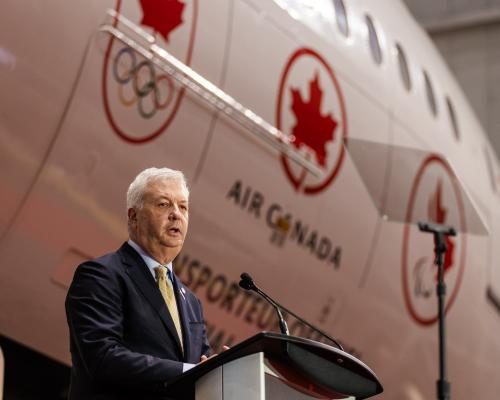
The head of Air Canada, Michael Rousseau, has announced his resignation following a public relations crisis ignited by his video tribute to pilots killed in a tragic runway accident. Rousseau's failure to communicate adequately in French during this tribute has drawn widespread criticism from the public and politicians alike, particularly given the airline's headquarters in Quebec, a province with a strong Francophone population.
Tragic Accident Sparks Controversy
The incident that triggered the backlash occurred on March 27, when an Air Canada Jazz flight landed at LaGuardia Airport in New York and collided with a fire truck on the runway. Tragically, the collision resulted in the deaths of two pilots, Antoine Forest and Mackenzie Gunther. Both pilots were commended for their quick actions that likely saved the lives of passengers aboard the flight. Originally reported by The Guardian.
In the wake of this tragedy, Air Canada released a four-minute condolence video featuring Rousseau. However, his tribute was marred by his use of only two French words-"bonjour" and "merci"-despite the fact that many Francophone passengers were onboard and that the airline operates primarily in a bilingual context. This oversight quickly escalated into a public relations nightmare for the airline.
Backlash Over Language Skills
Rousseau's failure to deliver a bilingual message in the video prompted immediate outrage. Under Canada's Official Languages Act, which recognizes both French and English as the nation's official languages, Air Canada is obligated to provide its services in both tongues. The airline's own policy mandates that all public communications be bilingual. In light of this, Rousseau's unilingual tribute was seen as a significant lapse in judgment.
Prime Minister Mark Carney expressed his disappointment, stating that Rousseau's message reflected a "lack of compassion" for the victims' families. This comment underscored the broader sentiment that the tribute did not adequately respect the cultural and linguistic diversity of Air Canada's clientele. Following the backlash, Rousseau issued a public apology, acknowledging that his "inability to speak French" had detracted from the focus on the victims and their families.
Public and Political Reactions
The fallout from Rousseau's video was swift and severe. By the end of the week, the office of the Commissioner of Official Languages had received over 2,000 complaints regarding the tribute. In Quebec, where the French language is deeply valued, lawmakers quickly rallied against Rousseau. A motion was overwhelmingly passed calling for his resignation, reflecting the frustration felt by many constituents over his language skills.
Social media users also weighed in, with comments ranging from disbelief to outright mockery. One user quipped, "The Air Canada CEO has lived in Montréal for decades, and he knows less French than a literal POLAR BEAR," referencing a bear recently relocated to Calgary with a French-speaking trainer. This sentiment captured the broader sentiment of disappointment regarding Rousseau's apparent lack of effort to learn the language, especially given his long tenure in a predominantly French-speaking environment.
Acknowledgment and Future Plans
In the aftermath of the uproar, Rousseau has confirmed that he will retire by the end of the third quarter of 2026. Until then, he will continue to lead Air Canada and serve on the board of directors. Rousseau expressed his regret in a statement, saying, "Despite many lessons over several years, unfortunately, I am still unable to express myself adequately in French. I sincerely apologize for this, but I am continuing my efforts to improve." This admission highlights the challenges faced by executives in a bilingual country.
Rousseau's struggles with the French language have not been new. In 2021, he faced criticism for delivering a high-profile speech in Quebec solely in English, a decision he defended by claiming his long residence in the city negated the need to learn French. He had previously committed to studying the language, ultimately logging around 300 hours of learning before his recent video.
The controversy surrounding Rousseau serves as a reminder of the cultural sensitivities inherent in Canada's bilingual landscape. As Air Canada moves forward, the company will need to address these language issues head-on to restore public trust and ensure that its communications resonate with all Canadians.
Originally reported by The Guardian. View original.