
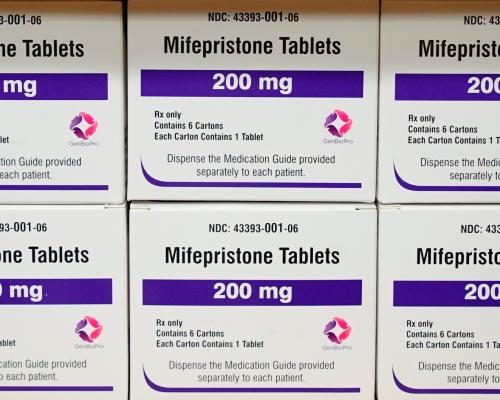
In a pivotal moment for reproductive health, abortion providers and advocates are gearing up for potential disruptions as the U.S. Supreme Court agreed to temporarily maintain nationwide access to mail-order mifepristone. This decision comes amidst ongoing legal challenges that could reshape the landscape of abortion medication access across the country.
Ongoing Legal Battles Loom Over Access to Mifepristone
The Supreme Court's recent ruling allows for the continued distribution of mifepristone, one of the two primary medications used for medication abortions, while multiple lawsuits are being heard in lower courts. Among these, a notable case involves the state of Louisiana suing the U.S. Food and Drug Administration (FDA) in an attempt to restrict access to the drug. Legal experts warn that if successful, this could set a precedent allowing individual states to impose rules affecting medication access nationwide. Originally reported by The Guardian.
David Cohen, a law professor at the Drexel University Kline School of Law, indicated that the Supreme Court has previously dismissed a similar case, citing lack of standing for the plaintiffs. However, he emphasized that the current legal landscape remains fraught with uncertainty. "Nothing's ever settled. Everything is always contested. The attacks are going to keep coming, and providers are going to keep adapting, and patients are going to keep getting abortions," said Cohen.
Impact of Regulatory Changes on Providers and Patients
The FDA is currently conducting a review of mifepristone amidst significant changes in its leadership, including the recent ousting of FDA Commissioner Marty Makary and Dr. Tracy Beth Hoeg, the acting director of the Center for Drug Evaluation and Research. These shifts have raised concerns among abortion advocates, who fear that regulatory changes may hinder access to crucial reproductive medications.
Emily Steinert McDowell, associate director of federal policy at Reproductive Freedom for All, expressed cautious optimism following the Supreme Court's decision, stating, "We can take a momentary sigh of relief, but there's always 10 other threats on the horizon." Bonyen Lee-Gilmore, chief external affairs officer at Patient Forward, echoed these sentiments, highlighting the need to prepare for potential worst-case scenarios as legal battles continue.
Telehealth and Medication Access Transforming Abortion Care
Telehealth has emerged as a crucial lifeline for patients seeking reproductive care, especially in rural areas. Melissa Bayne, an obstetrician-gynecologist in Michigan, noted how advancements in telehealth have transformed the management of miscarriages and abortions. Reflecting on her experiences, she mentioned how patients once faced invasive procedures under anesthesia, a reality they fear could return if access to mifepristone is restricted.
Dr. Bayne asserted, "Michiganders have the right to abortion in our state, but we need our federal leaders to defend it for us." In North Carolina, Dr. Jenna Beckham stressed the importance of local access to reproductive care, stating, "People are struggling to get by, let alone get hundreds of miles away for basic health care." For many, the prospect of traveling long distances for care is not just inconvenient but a significant barrier to accessing necessary medical services.
Consequences for Vulnerable Populations
The potential restrictions on abortion medications could have dire consequences for vulnerable populations, including survivors of intimate partner violence and human trafficking. Julie Dahlstrom, director of the immigrants' rights and human-trafficking program at Boston University School of Law, warned that limiting access to medications like mifepristone could lead to "monumental, tragic consequences." Research from the National Bureau of Economic Research has already indicated that restrictive abortion policies can lead to a rise in incidents of intimate partner violence.
With many states imposing bans on abortion at various stages of pregnancy, advocates are increasingly concerned that more individuals will seek care later in their pregnancies. Currently, 40 states enforce some level of abortion restrictions, with 30 of those states prohibiting the use of medication after the first trimester. Only four states-Maryland, New Mexico, Colorado, and Illinois-along with Washington D.C. provide comprehensive access to later abortion care.
As legal battles continue and the landscape of reproductive health evolves, abortion providers and advocates remain steadfast in their commitment to ensuring access to essential care. The ongoing fight for reproductive rights underscores the complex interplay of state and federal regulations, with many looking to the courts for clarity and protection.Originally reported by The Guardian. View original.