
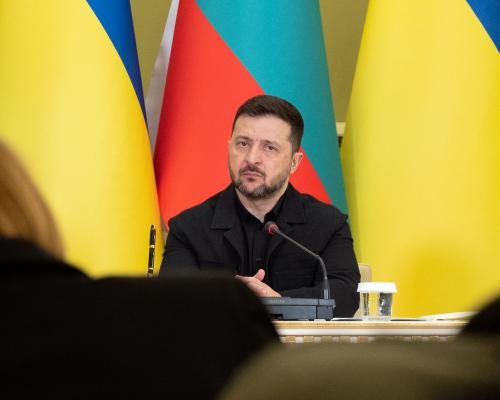
Ukrainian President Volodymyr Zelenskyy has extended an offer to share his country's expertise in maritime navigation, specifically regarding the Black Sea, with nations concerned about maintaining freedom of passage through the Strait of Hormuz amid escalating conflicts in the Middle East. Speaking during his nightly video address, Zelenskyy noted that Ukrainian Foreign Minister Andrii Sybiha participated in a virtual meeting focused on the critical task of reopening the Strait of Hormuz, which was attended by representatives from approximately 40 nations.
Ukraine's Maritime Experience on Offer
In his address, Zelenskyy stated, "Ukraine has relevant expertise concerning sea waterways, and the defence and reopening of maritime traffic." His comments underscore Ukraine's strategic position and knowledge gained from its ongoing conflict with Russia, particularly in protecting its maritime interests in the Black Sea. The offer comes at a time when international attention is increasingly drawn to the security of maritime routes in the Middle East, especially as tensions rise due to ongoing military actions. Originally reported by The Guardian.
Zelenskyy emphasized the importance of collaboration, suggesting that, "If [our] partners are ready to act, we will consider how we can strengthen them, how we can apply our expertise, knowledge and technological potential." This invitation to share insights could foster stronger diplomatic ties with countries seeking to ensure safe navigation in contested waters.
Escalating Violence in Ukraine
While Zelenskyy promotes Ukraine's maritime capabilities, the situation on the ground remains dire. Recent reports indicate that Russian forces have not made any territorial gains on the frontlines since March, marking a significant shift after two and a half years of continuous conflict. Analysis from the Institute for the Study of War (ISW) reveals that the Russian army has faced challenges, with Ukrainian forces successfully recapturing 9 square kilometers of territory in March alone.
As Ukraine continues to stand firm against Russian advances, the toll on civilians remains high. On Thursday, Russian strikes across various regions resulted in at least two fatalities and numerous injuries. In the southeastern Kherson region, a drone attack targeted civilians, fatally striking a 42-year-old man and injuring 16 others, including a teenage boy and three police officers. The ongoing bombardment underscores the humanitarian crisis exacerbated by the conflict.
International Child Repatriation Efforts
As hostilities persist, additional humanitarian efforts are underway. The White House announced that six Ukrainian children will be returned from Russia to their families in Ukraine, facilitated by the initiatives of Melania Trump. A seventh child is also expected to be repatriated later this month. These returns are part of broader efforts to address the alarming situation where nearly 20,000 Ukrainian children have been forcibly relocated to Russia and Belarus, often subjected to military training and indoctrination.
The urgency of these repatriation efforts reflects the ongoing impact of the conflict on vulnerable populations, particularly children. Ukrainian officials and international organizations are working diligently to reunite families torn apart by war, drawing attention to the plight of these children and the need for international support in securing their safe return.
Russian Attacks Intensify
In addition to the ongoing military actions in Ukraine, Russian forces have increased their assaults on infrastructure critical to civilian life. According to Naftogaz, Ukraine's state oil and gas company, there were 129 attacks on gas and heating facilities during the recent 151-day heating season. The strikes have targeted pipelines, gas production, and underground storage facilities, severely affecting the ability of Ukrainians to access essential heating and gas services.
As the conflict drags on, cities like Kharkiv and Chernihiv have faced relentless aerial bombardments. Kharkiv's mayor reported continuous drone strikes, with at least 20 incidents recorded in a single day, resulting in injuries and property damage. The sustained assaults highlight not only the military strategy but also the psychological impact of the war on civilians.
As Ukraine continues to navigate the complexities of war and international relations, President Zelenskyy's offer to assist in maritime navigation issues highlights the potential for collaboration among nations facing shared threats. With the situation evolving rapidly, the world watches closely as Ukraine strives to maintain its sovereignty while also addressing humanitarian concerns for its citizens.
Originally reported by The Guardian. View original.