
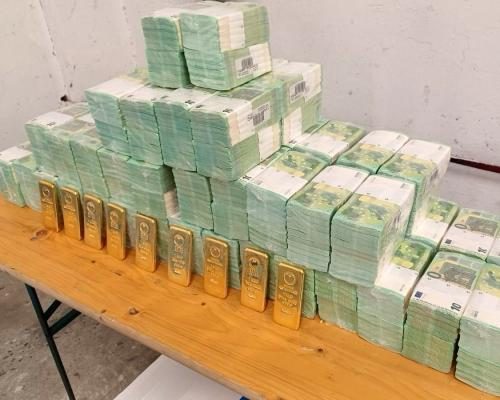
The ongoing conflict between Ukraine and Russia has taken a contentious turn as Ukrainian President Volodymyr Zelenskyy accused Hungary of engaging in 'banditry' after Hungarian authorities seized a shipment containing $82 million in gold and cash. The shipment, which included $40 million and €35 million (approximately $38 million), was detained last Thursday while being transported through Hungary. The seizure came amid suspicions of money laundering, prompting Prime Minister Viktor Orbán to order a 60-day custody for the assets as investigations proceed.
Details of the Seizure
The contentious seizure involved 9 kilograms (19.8 pounds) of gold, valued at around $82 million based on current market rates. Hungarian authorities claimed that the shipment was suspected of being linked to money laundering activities. The timing of the seizure coincides with escalating tensions between Ukraine and Hungary, particularly over gas supply disputes. Hungary and Slovakia have accused Ukraine of deliberately delaying repairs to an oil pipeline damaged in a Russian drone strike, further complicating diplomatic relations. Originally reported by The Guardian.
Zelenskyy reacted strongly to the actions taken by Budapest, describing them as illegal. He emphasized the need for European leaders to voice their opposition to Hungary's actions against Ukraine. The Ukrainian president's remarks reflect broader concerns about Hungary's relationship with Russia, as the Hungarian government has been perceived as increasingly sympathetic to Moscow during the war.
Military Developments on the Frontlines
As these diplomatic tensions unfold, military developments on the ground remain dynamic. Ukrainian forces have reportedly made significant gains in the southeastern Dnipropetrovsk industrial region, reclaiming over 400 square kilometers (approximately 150 square miles) from Russian troops. Major General Oleksandr Komarenko stated that this counteroffensive reflects Ukraine's ongoing efforts to push back against Russian advances.
Conversely, Russian President Vladimir Putin claimed that his forces have made strides in Ukraine's eastern Donbas region, an area that has been a focal point of the invasion. Putin asserted that while Ukraine controlled about 25% of the Donbas six months ago, it now holds only 15% to 17%, indicating a shift in territorial control.
Prospects for Diplomatic Engagement
In light of ongoing hostilities, the United States has proposed another round of talks between Russia and Ukraine, potentially mediated by Washington. Zelenskyy mentioned that these discussions could take place in Switzerland or Turkey, following disruptions to earlier plans in the United Arab Emirates due to the escalating conflict between the U.S. and Israel against Iran. The agenda may include discussions about prisoner swaps between the two nations.
Turkish President Recep Tayyip Erdoğan weighed in on the diplomatic efforts, asserting that the conflict in Iran should not impede the peace initiatives concerning Ukraine. The international community remains watchful as these diplomatic efforts unfold, with the hope of mitigating the ongoing humanitarian crisis caused by the war.
Humanitarian Concerns and International Reactions
Meanwhile, a UN team of investigators has reported that Russia's actions regarding the deportation and forcible transfer of thousands of Ukrainian children to Russia amount to crimes against humanity. The Independent International Commission of Inquiry on Ukraine stated that it has confirmed at least 1,205 cases of such deportation, with 80% of the affected children not having returned home after four years. This finding adds to the mounting evidence of human rights violations amid the conflict.
Additionally, Ukraine has launched a strike on a critical missile component plant in Russia's Bryansk region, utilizing British Storm Shadow missiles. Ukrainian officials reported the attack resulted in civilian casualties, with six deaths and 37 injuries confirmed by local authorities. This strike underscores the ongoing violence and retaliatory measures taking place as both sides seek to assert their military capabilities.
In a related note, the Venice Biennale's decision to allow Russia to participate in this year's event has drawn criticism from the European Union. EU officials condemned the decision and are considering actions, including potentially suspending funding to the organizing body. Ukraine had previously called for Russia's exclusion from the Biennale, in line with the actions taken in previous years.
As tensions escalate both on the battlefield and in diplomatic spheres, the international community is closely monitoring developments. The situation remains fluid, with the potential for further military and political ramifications as both Ukraine and Russia navigate the complexities of their Ongoing Conflict.
Originally reported by The Guardian. View original.