
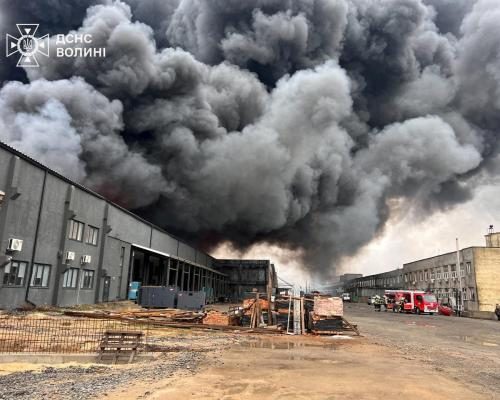
Ukrainian President Volodymyr Zelenskyy has strongly criticized Russia for launching drone attacks in response to his proposed Easter truce. On Wednesday, Zelenskyy revealed that he had engaged with US negotiators to discuss a potential ceasefire, yet Russian forces retaliated with over 700 drone strikes targeting western and central Ukraine in a rare daytime assault. He stated, "Russia is responding [to the Easter ceasefire offer] with Shahed drones and continues its terrorist operations against our energy sector, against our infrastructure."
Intensified Drone Attacks Target Ukraine
In a significant escalation, Russian forces have unleashed more than 700 drones, many of which are Iranian-designed Shahed models, on Ukrainian territories. This onslaught included over 360 drones launched during the day and 339 overnight, resulting in at least five fatalities and extensive damage to infrastructure. The Ukrainian Air Force reported that a drone strike in the central Cherkasy region killed four individuals, while another attack in the frontline Kherson region targeted a vehicle, leading to the death of a woman and severe injuries to two others. Originally reported by The Guardian.
Images released by Ukraine's Nova Poshta mailing company depicted a warehouse in flames in Lutsk, highlighting the devastating impact of the attacks. Zelenskyy's remarks underscored the stark contrast between his peace overtures and Russia's military aggression, as he reiterated the need for a diplomatic resolution to the ongoing conflict.
Diplomatic Efforts Amid Hostilities
President Zelenskyy indicated that discussions with US mediators regarding the four-year conflict have been "positive." These talks, held remotely on Wednesday, included key figures such as US special envoy Steve Witkoff, former President Donald Trump's son-in-law Jared Kushner, and Senator Lindsey Graham. NATO Secretary-General Mark Rutte also participated, reflecting the alliance's ongoing tensions with Moscow. Zelenskyy expressed gratitude for US support and emphasized the necessity of enhancing a document that outlines US security guarantees in any future peace agreement.
He conveyed optimism that a ceasefire during Easter could symbolize a breakthrough in diplomatic efforts, stating, "A silence over Easter could be exactly the signal that tells everyone that diplomacy can be successful." However, Russia's foreign ministry quickly dismissed Zelenskyy's truce proposal as a mere "PR stunt," further complicating the prospects for peace.
Ground Situation in Donbas Region
Amid the air attacks, the situation in the Donbas region remains tense. Russia claimed to have gained full control of Ukraine's Luhansk region, a crucial part of Donbas, but Ukrainian military officials disputed these assertions. Viktor Tregubov, a spokesperson for Ukrainian forces, acknowledged that while they have lost ground, they still hold small areas within Luhansk. "Unfortunately, we only hold small patches [in Luhansk], but those positions have been held by 3rd brigade for a long time," Tregubov remarked.
Historically, Russia has made dubious claims of territorial gains, often to bolster its negotiating position in talks with US representatives. Ukrainian officials argue that such statements are attempts to project an image of inevitable Russian victory, despite the realities on the ground. As of now, the conflict remains at a stalemate, particularly regarding territorial disputes, as Ukraine steadfastly refuses to cede the eastern Donbas region to Russian control.
Implications for Future Peace Talks
The current military escalation, particularly the drone strikes, poses a significant challenge to any potential dialogue between Ukraine and Russia. With Zelenskyy asserting that the US has been pressuring Ukraine to consider concessions, the dynamics of negotiations are shifting. The ongoing conflict has drawn international attention, particularly following the US and Israel's actions against Iran, which have further complicated geopolitical relations in the region.
As the situation develops, the response from both Ukraine and Russia will likely shape the future landscape of peace talks. Zelenskyy's ongoing discussions with US officials may pave the way for a renewed focus on diplomacy, but the immediate threat of violence remains ever-present. The international community will be watching closely as Ukraine strives to navigate this precarious juncture in its fight for sovereignty and stability.
Originally reported by The Guardian. View original.