
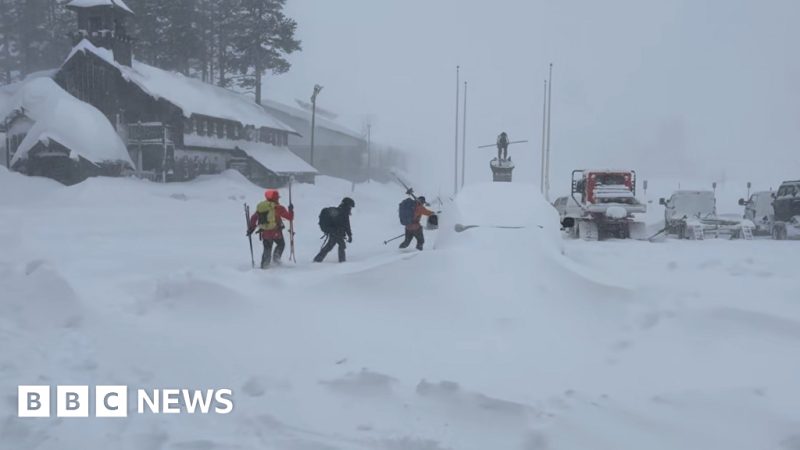
In a race against time, rescue teams have mobilized to save six skiers trapped by a devastating avalanche in the Castle Peak region of Truckee, California. The incident, which occurred on Tuesday, left nine individuals confirmed dead, while authorities continue to search for one missing skier. The avalanche struck a group of 15 backcountry skiers who were completing a three-day expedition to the Frog Lake Huts when disaster struck around 11:30 AM local time.
Challenging Conditions Hamper Rescue Operations
Initial emergency alerts were sent via satellite-texting capabilities from one of the group's guides and were followed by a distress signal from another skier's emergency beacon. The avalanche's impact was severe, prompting swift action from local authorities. However, reaching the trapped skiers proved daunting due to treacherous weather conditions, including heavy snowfall that closed nearby Highway 80.
Rescue teams from Boreal Mountain Ski Resort and Tahoe Donner's Alder Creek Adventure Center launched their operations despite the closed highway. Equipped with snow-cats-vehicles designed to traverse deep snow-rescuers began their journey toward the stranded skiers. By Tuesday afternoon, around 50 rescuers had arrived at a point approximately two miles from the survivors, who had taken refuge in makeshift tents.
Rescue Teams Face Life-or-Death Conditions
As rescuers navigated the avalanche site, which spanned an area comparable to a football field, they faced not only the physical challenges of deep snow but also the critical urgency of the situation. Research indicates that individuals fully buried in avalanche snow can succumb to asphyxiation within an hour. Additionally, approximately half of avalanche fatalities in North America result from blunt force trauma, underscoring the perilous nature of the rescue effort.
Using specialized climbing skins on their skis, both rescuers and the trapped skiers maneuvered through the backcountry to reach safety. Ultimately, six individuals were located alive, although two required immediate medical assistance for injuries sustained during the avalanche. According to Placer County Sheriff Wayne Woo, these two survivors were unable to walk and were transported to a nearby hospital with non-life-threatening injuries.
Tragic Losses and Continued Search Efforts
As of Wednesday afternoon, the search for a missing skier continued, with authorities presuming the individual to be deceased. The fatalities include seven women and two men, all part of the group that had set out for a recreational skiing adventure. Among the survivors, one was a guide while the others were clients of Blackbird Mountain guided tours, highlighting the tragic turn of an otherwise exhilarating experience.
Authorities have stated that recovering the bodies of those who perished will have to wait until conditions improve, emphasizing the ongoing risk posed by the inclement weather. The decision to postpone body recovery reflects the harsh realities faced by rescuers, who must balance the urgency of the situation with the safety of their teams.
Community Response and Future Precautions
The ski community has rallied in response to the tragedy, with many expressing their condolences and support for the victims' families. Local ski resorts have also begun discussions on enhancing safety measures for backcountry skiing, particularly as weather patterns become increasingly unpredictable. These conversations may lead to more comprehensive training programs for guides and skiers alike, aimed at reducing the risks associated with backcountry skiing.
As the weather begins to clear, the focus will shift from rescue operations to recovery efforts, ensuring that the memories of those lost are honored appropriately. The incident serves as a sobering reminder of the inherent risks associated with backcountry skiing and the critical need for safety measures in such environments.