
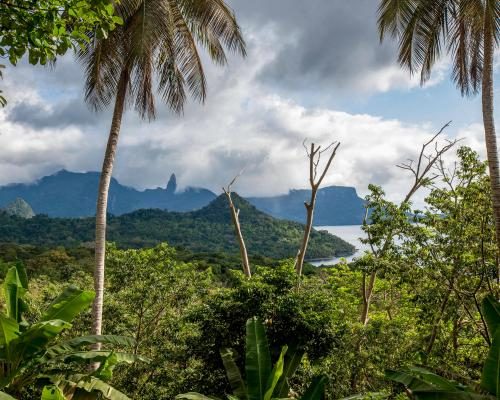
On the picturesque yet struggling island of Príncipe, part of the Democratic Republic of São Tomé and Príncipe, a groundbreaking initiative is transforming the relationship between local communities and their environment. Nearly 3,000 villagers have signed up for a program that offers financial rewards for adhering to an environmental protection code, marking a significant step towards sustainable development and ecological preservation.
Community Engagement in Conservation
At the dilapidated colonial farm buildings in Porto Real, agricultural worker Kimilson Lima, 43, expressed his enthusiasm after signing the agreement. "With this money we can have a proper floor in the house," he said. "And an inside toilet." Lima is part of a transformative project spearheaded by the Faya Foundation, which allocates quarterly dividends to villagers who commit to environmental stewardship. The initial payout of €816 (£708) has already made a substantial impact on the local economy, as it represents a considerable sum for the island's residents. Originally reported by The Guardian.
More than 60% of Príncipe's adult population has joined this initiative, which aims to shift the focus from exploitation of natural resources to conservation. Felipe Nascimento, president of the self-governing region, remarked, "This will be truly transformative, both for nature and for the people." This innovative approach encourages locals to become active participants in protecting their unique ecosystem while improving their quality of life.
The Unique Ecosystem of Príncipe
Príncipe, often referred to as the "African Galapagos," boasts an extraordinary array of flora and fauna, shaped by its isolation from the mainland. Discovered by Portuguese navigators in 1471, the island is home to unique rainforests where giant land snails and crabs thrive as apex predators. The island's biodiversity continues to surprise researchers, with new species still being identified.
Historically, Príncipe's economy relied heavily on cacao plantations introduced by the Portuguese, but this industry collapsed after the country's independence in 1975. Since then, the descendants of enslaved Africans and laborers have formed close-knit communities, largely dependent on subsistence farming. As deforestation and resource depletion loomed, the local population faced increasing pressure to exploit untouched areas of the island.
Investment in Sustainable Development
The turning point came in 2010 when South African billionaire Mark Shuttleworth visited the island. Initially considering it for a private residence, he shifted his focus to philanthropy, aiming to fund sustainable development that would also protect the environment. One of his key initiatives involved converting a former plantation house into a hotel, providing jobs for locals while emphasizing eco-tourism.
Shuttleworth's vision was clear: "The normal path to development for Príncipe would be to cut down forest and grow 'fair trade' peppercorns," he stated. "But we want to reward them as stewards of their precious environment." This philosophy underpins the Faya project, funded entirely by Shuttleworth's personal wealth, with a long-term commitment estimated at around £87 million.
Beyond financial dividends, the initiative also addresses educational needs. The Faya Foundation is investing in school improvements and providing financial literacy training, as many villagers lack bank accounts and experience managing money. Jorge Alcobia, CEO of the Faya project, emphasized the importance of understanding that "it's not free money," noting that dividends could decrease due to unauthorized activities, such as illegal tree-felling.
Challenges and Skepticism
While the project has seen promising uptake, skepticism remains among some locals. A bystander expressed concerns, shouting, "It's a monopoly! Is that good? And what if everyone buys motorbikes and chainsaws?" These worries highlight the delicate balance required between development and conservation.
However, not all villagers are apprehensive. Yodiney dos Santos, who once foraged in the forests, has transitioned into a wildlife guide leading scientific expeditions. He's discovered several new species, including an unrecorded owl, and understands the fragility of the ecosystem. "My ancestors came here from Angola," he explained, Reflecting on the consequences of introducing non-native species like the West African snail, which is now threatening endemic populations.
This unique social experiment is poised for close observation. Mark Shuttleworth expressed hope that the successful outcomes on Príncipe could serve as a model for other irreplaceable ecosystems worldwide, potentially inspiring similar initiatives that harmonize human needs with environmental protection.
Originally reported by The Guardian. View original.