
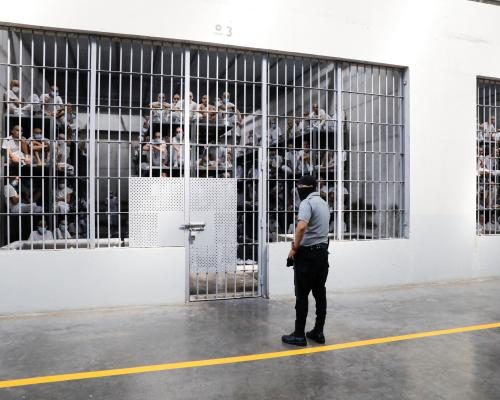
A group of 18 Venezuelan men expelled from the United States to El Salvador's notorious Terrorism Confinement Center (Cecot) is demanding international accountability for alleged human rights violations. In a petition submitted to the Inter-American Commission on Human Rights, they outline harrowing claims of torture, sexual assault, and medical neglect.
The petition, filed on Thursday, highlights the plight of these men, who were among 288 Venezuelans and Salvadorians transferred to Cecot in March 2025 without any charges. Human rights organizations are advocating on their behalf, emphasizing the urgent need for accountability. Bella Mosselmans, co-counsel on the petition and Director of the Global Strategic Litigation Council (GSLC), stated, "One year later, these men are still waiting for justice. We are demanding accountability for them, for their families, and to ensure it never happens again." Originally reported by The Guardian.
Allegations of Systematic Abuse
The former detainees reveal a disturbing pattern of abuse during their time in Cecot. They reported experiences of beatings, humiliation, and sexual assault while incarcerated. One man described how he still bears scars from the shackles he was forced to wear, stating that they serve as a constant reminder of his ordeal. He recounted his trauma, saying, "The sound of keys puts me into a panic state," referring to the way guards banged keys on the cells to psychologically torment inmates.
Another detainee recounted a brutal welcome upon arrival: "When I got off the plane, I fell, and two riot police from El Salvador picked me up with blows to the ribs." This man endured severe beatings throughout his four-month stay, suffering intense pain that left him unable to move properly for days. He noted that those in neighboring cells experienced even worse conditions, with many beaten over 100 times during their incarceration.
Living Conditions and Medical Neglect
The conditions within Cecot have been described as inhumane by those who experienced them firsthand. Detainees were held in windowless cells, lacking air conditioning and deprived of basic necessities such as food, water, and sleep. The men staged a hunger strike, which they maintained until a fellow inmate was brutally beaten. They also recounted a "blood strike," where detainees cut their wrists to protest their treatment, but their pleas went unheard by guards and medical staff alike.
Access to clean water was severely limited, with reports of sharing a single tank among ten inmates-often contaminated with worms and mosquitoes. One man shared his struggle with gastrointestinal issues, stating, "I had stomach issues and diarrhea three out of the four months I spent in Cecot. I don't know if it was because of the water or the food." His account highlights the dire health implications of their treatment.
Fleeing Persecution Only to Face More
The 18 Venezuelans, all of whom had fled their homeland to escape persecution, now face an uncertain future after returning to a place many had hoped to leave behind. Most of them have no criminal records, yet the U.S. accused them of links to the Tren de Aragua gang based on flimsy evidence, including innocuous tattoos. After four months at Cecot, 252 Venezuelan men were released, only to confront the same dangers they initially fled.
In a previous interview, Andry Hernández Romero, a gay makeup artist, shared his struggles upon returning to Venezuela. He faced significant challenges in finding employment, as potential employers viewed his expulsion as a mark of criminality. "It was difficult to navigate daily life back in Venezuela," he remarked, highlighting the stigma surrounding those expelled by the U.S.
The men's testimonies paint a grim picture of their time in Cecot, underscoring the urgent need for international oversight. Human rights advocates are calling for investigations into the treatment of detainees in El Salvador, emphasizing that systemic abuse must be addressed to prevent further violations.
The plight of these Venezuelan men sheds light on broader issues regarding the treatment of migrants and the responsibilities of nations in safeguarding human rights. As the world watches, the need for accountability and justice grows ever more pressing.
Originally reported by The Guardian. View original.