
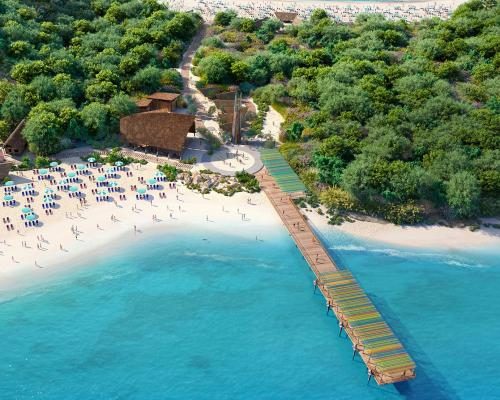
Indigenous leaders in Vanuatu are voicing strong opposition to Royal Caribbean's plans for a private beach club on Lelepa Island, citing incomplete environmental assessments and potential harm to delicate ecosystems. In a letter sent on February 26, 2023, the leaders expressed their concerns, stating the proposed development could jeopardize nearby UNESCO World Heritage sites.
Lelepa, a 5-kilometer-long island home to approximately 500 residents, is set to host a resort that could accommodate up to 5,000 visitors daily. Royal Caribbean plans to open the facility in 2027, with cruise ships transporting passengers from Australia. The resort aims to feature ten bars, two restaurants, and two exclusive beach areas, including one designated for adults only. Originally reported by The Guardian.
Concerns Over Environmental Assessment
The paramount chief of Lelepa, Ruben Natamatewia III, a key signatory of the letter to Royal Caribbean, emphasized the need for comprehensive consultation. "There needs to be lots of consultation so every person here understands what they are doing and can approve the work to go ahead," he said. The letter from the council of chiefs, representing various landowners, criticized the environmental impact assessment (EIA) conducted by the cruise line. They described the report as "incomplete, misleading, and not meeting the standards required under Vanuatu law."
The chiefs have called for the suspension of construction until adequate assessments and consultations are completed and approved by local leaders. They also demand a cultural heritage assessment to ensure that significant customary sites remain unaffected by the resort's development. A specific area of concern is Fels Cave, a culturally significant site housing ancient rock art that lies south of Lelepa.
Local Support for Tourism Amid Concerns
While many landowners see the potential benefits of tourism, significant apprehensions linger about the resort's environmental impact. Chief Tungulman Albert Solomon Peter Manaure, who also runs a tourism business on Lelepa and represents the council from Australia, remarked on the importance of protecting local resources. "The ocean and the land are our bank - that's where we harvest our resources, where we turn it into food or into cash," he said. Manaure added that if Royal Caribbean proceeds with its plans, it must ensure that environmental protections are prioritized.
Natamatewia III acknowledged the potential advantages of the Royal Caribbean project but reiterated his concerns about the EIA's realism. He expressed dissatisfaction with the promotional materials that have already branded Lelepa as a private beach resort despite unresolved issues regarding the environmental and cultural assessments.
Royal Caribbean's Response to Concerns
In response to inquiries from the Guardian, Royal Caribbean initially claimed that its EIA meets Vanuatu's environmental regulations. The company noted that the proposed development site is located at a considerable distance from the UNESCO World Heritage site. However, following further questioning, Royal Caribbean stated it was incorporating feedback from public consultations into its final EIA. This revised assessment will include considerations related to environmental protection and waste management.
A spokesperson for Royal Caribbean confirmed that the company is actively progressing through the necessary permitting processes for the Royal Beach Club Lelepa development. They emphasized their commitment to working with local government, chiefs, environmental organizations, and community members to safeguard Lelepa's natural ecosystems.
The Future of Lelepa's Tourism Development
Lelepa Island has long been a destination for Royal Caribbean cruise ships, where passengers engage in beach visits, hikes, and cultural experiences as part of their Pacific tours. The cruise operator has been in discussions with local landowners since at least 2018 regarding the establishment of a permanent tourism facility on the island, mirroring its exclusive beach clubs in the Bahamas.
As the cruise industry continues to expand, the environmental impact of cruise tourism has come under increased scrutiny globally, particularly in European port cities where restrictions have been imposed due to pollution and overtourism. Despite these concerns, the sector is thriving, with cruise travel projected to reach record numbers in 2025. The unfolding situation on Lelepa Island serves as a crucial case study in balancing economic development with environmental and cultural preservation.
Originally reported by The Guardian. View original.