
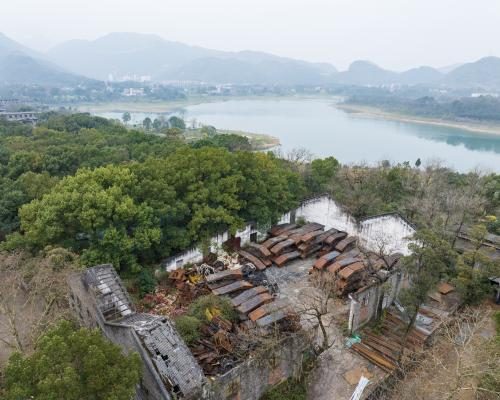
When it comes to the ‘third front’: china resurrects mao’s military capabilities, in the rugged hills of Sichuan, remnants of an ambitious military initiative from the 1960s are being reimagined. Once bustling factories, abandoned for decades, are now overtaken by nature, signaling a ghostly past. However, with escalating tensions between Beijing and Washington, China is resurrecting the 'Third Front' project, aiming to bolster its military capabilities amidst a shifting global landscape.
Understanding The ‘Third Front’: China Resurrects Mao’s Military Capabilities
Launched in 1964 by Mao Zedong, the Third Front project was a monumental defense strategy aimed at fortifying China's military infrastructure against potential threats from both the United States and the Soviet Union. This extensive initiative mobilized around 15 million workers, who were relocated to remote mountainous regions like Sichuan, Gansu, and Ningxia, to establish critical military factories shielded from enemy attacks. Over 200 billion yuan was invested in this covert program, which remained largely under wraps for about 15 years. Originally reported by The Guardian.
The aim was to create a "third line" of national defense facilities, less vulnerable than the eastern coastal factories dubbed the "first front" and the smaller inland cities identified as the "second front." The Huaying mountain range, with its towering peaks, served as a natural barrier, protecting these installations from any invading forces. However, following Mao's death in 1976 and an improvement in relations with the U.S., these factories fell into disuse. By 1985, Deng Xiaoping, then leader of China, declared, "There will be no large-scale war for a fairly long time," signaling a shift in military strategy.
A Resurgence amid Rising Tensions
Today, as geopolitical tensions escalate, particularly between China and the U.S., the legacy of the Third Front is being revived. Reports indicate that China is ramping up its Military Presence in these remote areas, with satellite imagery suggesting an expansion of its nuclear arsenal near the old factories. In July 2024, the Communist Party leadership passed a key resolution focused on "developing China's strategic hinterland and ensuring backup plans for key industries," directly referencing the use of these inland provinces to enhance national security and resilience against foreign threats.
Under the leadership of Xi Jinping, who is increasingly seen as the most powerful Chinese leader since Mao, the focus on national self-resilience has intensified. The current military strategy echoes the urgency of the past, as the country seeks to bolster its capabilities in response to perceived threats. As of now, China is estimated to possess around 600 nuclear warheads, with projections indicating that this number could more than double in the next decade.
Modern Military Investments and Strategic Shifts
Despite still spending significantly less on its military compared to the United States, the gap is narrowing. In 2012, China's defense budget was just one-sixth that of the U.S.; by 2024, it had risen to approximately one-third, amounting to $317.6 billion. Covell Meyskens, a historian specializing in China at the Naval Postgraduate School, noted, "The thing that's different than before is that China is in such a stronger position than it was before." This shift reflects a broader strategic objective to establish a credible second-strike capability against potential adversaries, particularly the United States.
Meyskens points out that while China was considered a "very poor third world country" in the 1960s, it has now emerged as a peer competitor in the western Pacific. This transformation has sparked concerns about the potential for conflict, especially given the intertwined nature of U.S. and Chinese economies. However, the ongoing trade war has intensified efforts on both sides to decouple their supply chains, raising the stakes for future relations.
Future Implications of the Third Front Revitalization
The revitalization of the Third Front is indicative of a significant shift in China's military posture. As the country seeks to reclaim its position in the global hierarchy, the lessons from past military strategies are being reapplied in a contemporary context. The focus on remote regions for military expansion highlights a strategic approach to mitigate vulnerabilities that were once exploited during the Cold War.
While the revival of the Third Front may provide China with additional military capabilities, it also reflects the broader geopolitical tensions that could define the coming decade. With both nations recalibrating their defense strategies, the international community closely watches how these developments unfold. The stakes are high, and the implications could reshape global security dynamics for years to come.
Originally reported by The Guardian. View original.