
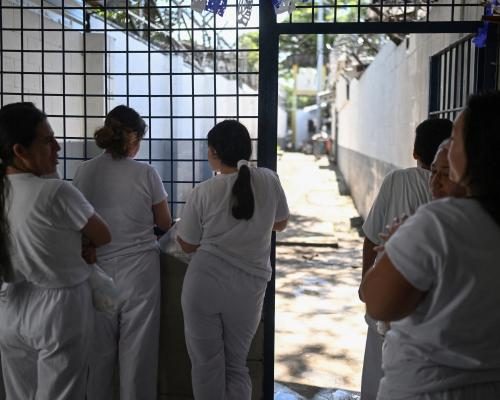
A significant milestone in international justice was achieved this week as the United Nations adopted a groundbreaking agreement that includes women in prison, a first in the Commission on the Status of Women's 70-year history. This momentous decision, made at the UN headquarters in New York, has sparked hope among advocates for hundreds of thousands of women who find themselves behind bars globally.
UN's Historic Inclusion of Female Incarceration
The 70th session of the Commission on the Status of Women (CSW70) concluded with the unanimous agreement that recognizes the plight of women in detention and imprisonment. This landmark resolution highlights the interconnections between discriminatory laws, violence against women and girls, and the increasing risk of incarceration. The decision comes amid rising numbers of incarcerated women and the tireless advocacy efforts from previously incarcerated individuals and civil society groups. Originally reported by The Guardian.
Experts estimate that over 740,000 women and girls are currently held in detention, accounting for about 7% of the global prison population. Alarmingly, the rate of female incarceration has surged by 60% since the year 2000, nearly three times the rate of their male counterparts. This includes around 19,000 children living in prison with their mothers, further complicating the issue of justice for these vulnerable populations.
Voices of Advocacy Amplified
Patsilí Toledo, a committee member of the UN Convention on the Elimination of All Forms of Discrimination Against Women and a lecturer focusing on gender and criminal justice, emphasized the momentous nature of this agreement. "It is really the first time in 70 years of this commission that the topic of women in prison is being taken seriously," Toledo remarked. "It's groundbreaking..and sends a very strong sign that all countries are behind this, with just one exception (the US voted against the conclusions)."
Former Irish president Mary Robinson also expressed her support, stating, "This recognition at CSW is an important step forward. For too long, women who have experienced criminalization have been largely invisible in global conversations about gender equality." She highlighted the need for action to accompany this visibility, underscoring that acknowledgment alone is insufficient.
A Call for Systemic Change
The CSW70 conclusions delineate crucial recommendations for governments and civil societies aimed at ensuring justice systems are equitable and inclusive. Advocates stress the importance of eliminating discriminatory laws, addressing structural barriers, and prioritizing preventive measures against violence aimed at women.
As the global community grapples with a crisis of female incarceration, the UN's recognition of women in prison as part of the broader women's rights agenda represents a key shift. Sabrina Mahtani, a lawyer and founder of the organization Women Beyond Walls, attributed the success of this initiative partly to media coverage, particularly from the Guardian. "Recognition like this signals that women deprived of liberty are finally being acknowledged as part of the global women's rights agenda," Mahtani noted.
From Recognition to Action
While the agreement marks a substantial step forward, experts warn that it must lead to tangible changes. Robinson emphasized that addressing the root causes driving women into prison-such as poverty, discrimination, and violence-is essential. She urged for investments in community-based solutions that prioritize support for women and their families over punitive measures.
This call for action echoes sentiments expressed in an open letter circulated by Women Beyond Walls, which urged feminist forums to stop overlooking the plight of women affected by the criminal justice system. The letter highlights the urgent need for improved access to justice, safety, and dignity for incarcerated women, a message that resonates strongly with the recent UN agreement.
As advocacy efforts continue to gain momentum, the hope is that this historic recognition will not only elevate the conversation around women in prison but also drive impactful reforms that enhance the lives of those affected. The journey towards equality and justice for incarcerated women is far from over, but the recent developments at the UN signal a promising beginning.
Originally reported by The Guardian. View original.