
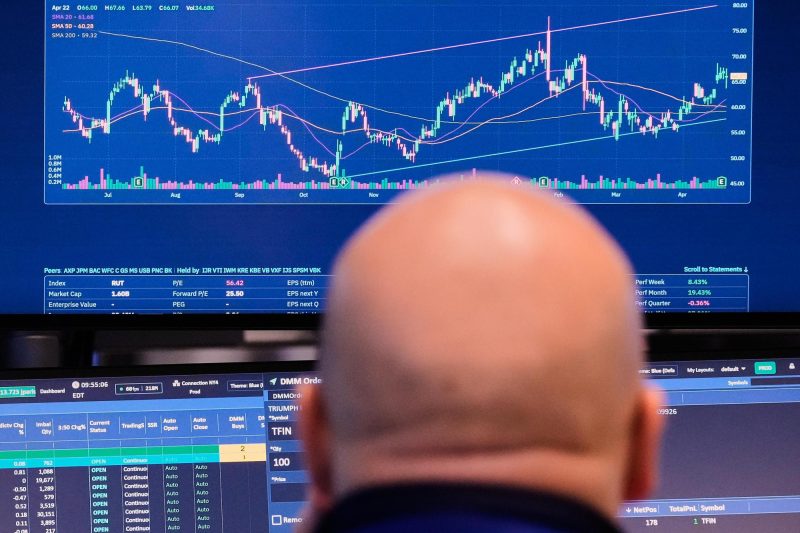
Wall Street exhibited a mixed performance in premarket trading on Friday, April 24, 2026, as oil prices experienced a decline amidst ongoing tensions related to the Iran war. The S&P 500 reached new heights, climbing 0.8% to surpass its previous all-time record, while the Dow Jones Industrial Average slipped by 79 points, or 0.2%. The Nasdaq composite, buoyed by a significant surge in technology stocks, including Intel, soared 1.6% to achieve its own record.
Intel Leads Tech Surge with Strong Earnings
Intel's stock skyrocketed by 23.6%, marking its most significant single-day gain since 1987, after the company reported exceptional earnings for the first quarter of 2026. The tech giant's performance not only eclipsed its previous peak from the dot-com boom in 2000 but also set an all-time high for the company. Intel's CEO, Lip-Bu Tan, attributed this success to the increasing demand for the company's chips and products, driven by advancements in artificial intelligence technology. Analysts had anticipated a strong profit report, but Intel exceeded expectations, further solidifying investor confidence. Learn more on Investopedia.
This surge in Intel's stock has played a crucial role in propelling the S&P 500 to a nearly 13% increase over the last month. Investor optimism is partly fueled by hopes that the United States and Iran might reach a resolution to their ongoing conflict, which has significant implications for the global economy. Despite a fragile ceasefire currently in place, the geopolitical tensions continue to pose risks for oil supply routes.
Oil Prices Fluctuate Amid Geopolitical Uncertainty
On the oil front, prices have seen considerable volatility, particularly in light of the ongoing conflict between the United States and Iran. Brent crude oil for June delivery fluctuated throughout the trading day, ultimately closing at $105.33 per barrel, a slight increase of 0.2%. However, the price for July delivery, which represents a larger share of market activity, fell by 0.2% to settle at $99.13 per barrel.
These fluctuations reflect the market's sensitivity to geopolitical developments, especially as the conflict restricts oil tankers from navigating the Strait of Hormuz, a critical passage for global oil supply. Encouragingly, Iran's foreign minister indicated he would travel to Pakistan, where discussions are underway to facilitate a second round of ceasefire negotiations. This potential diplomatic engagement has somewhat alleviated immediate concerns about oil supply disruptions.
White House press secretary Karoline Leavitt also shared insight into the U.S. government's approach, revealing that President Donald Trump is dispatching envoys Steve Witkoff and Jared Kushner to Pakistan to engage with Iranian officials. This step is viewed as a positive move towards stabilizing the geopolitical landscape and potentially easing tensions, which could have far-reaching effects on oil prices and market stability.
Mixed Earnings Reports Impact Major Companies
As investors sift through earnings reports, some companies are reporting stronger-than-expected profits, while others are facing setbacks. Procter & Gamble's stock rose 2.5% after the consumer goods giant announced quarterly results that exceeded analysts' projections. CEO Shailesh Jejurikar noted broad-based growth across various regions and product lines, including popular items like Bounty paper towels and Tide detergent. This performance reflects the company's ability to navigate challenging economic conditions effectively.
Conversely, Charter Communications faced a sharp decline of 25.5% in its stock value after reporting disappointing quarterly earnings. The company lost about 120,000 internet customers during the period, a much larger drop than analysts had anticipated. This setback highlights the challenges faced by some sectors amid shifting consumer preferences and increased competition.
Hartford Insurance Group also experienced a downturn, with its stock falling 3%. These mixed results underscore the variability in corporate performance as companies adapt to an evolving economic landscape shaped by external pressures, including geopolitical tensions and market dynamics.
Looking ahead, investors will be closely monitoring the developments in U.S.-Iran relations, as well as upcoming earnings reports from other major corporations. The ongoing fluctuations in oil prices, combined with the potential for further market volatility, suggest that the next few weeks will be pivotal for Wall Street and the broader economy.
Originally reported by Daily Press. View original.