
When it comes to downtown baltimore cre crash signals deeper fiscal crisis ahead, downtown Baltimore's commercial real estate market is facing a significant downturn, with over $1 billion in property value lost since 2020. This alarming trend is not just a financial issue but is intertwined with broader social challenges, including rising crime rates and a declining population. As the city grapples with these issues, the future remains uncertain for its residents and businesses alike.
Understanding Downtown Baltimore CRE Crash Signals Deeper Fiscal Crisis Ahead
In recent years, Baltimore's office market has experienced a catastrophic collapse, erasing more than $1 billion in commercial property value. Reports highlight that between 2020 and fiscal 2026, approximately 4,085 of the city's 14,027 commercial properties lost assessed values averaging 28.7%. This translates to a staggering 29% of the city's commercial properties facing substantial devaluation. The Baltimore Sun reported that the losses have prompted city officials to conduct out-of-cycle reassessments, rather than adhering to Maryland's standard three-year review process. Learn more on Investopedia.
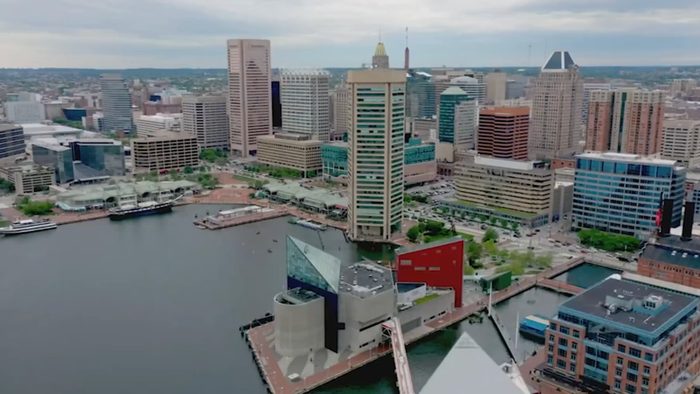
The steepest declines have been concentrated in key districts: Downtown, Inner Harbor, and Downtown West. Specifically, Downtown experienced a $496.3 million drop in assessed value, while the Inner Harbor saw a decline of $363.4 million, and Downtown West lost $214.6 million. The combined loss across these areas exceeds $1.07 billion, indicating a crisis of significant proportions.
Impact on Local Businesses and Employment
The ramifications of the commercial real estate crash extend beyond mere property values. As businesses shutter their doors, job losses ensue, leaving many residents without essential services. A recent notable closure was that of the Sheraton Hotel, a prominent establishment in the Inner Harbor, which resulted in 69 employees losing their jobs. The closure exemplifies the broader trend of businesses exiting the area, further exacerbating the economic challenges faced by Baltimore's residents.
David Bramble, managing partner at MCB Real Estate, emphasized the severity of the situation, stating that Baltimore's downtown area is experiencing "massive value loss." He cautioned that if this trend continues without intervention, it could lead to even greater financial hardship for the city and its inhabitants, affecting neighborhoods and waterfront areas alike.
The Intersection of Crime and Economic Decline
As the commercial real estate market declines, Baltimore is also battling a surge in violent crime, which contributes to the city's struggles. The relationship between crime rates and economic vitality is crucial; rising crime can deter businesses from investing in the area, further aggravating the fiscal crisis. Local leaders and business stakeholders have pointed to crime as a significant barrier to revitalizing the downtown area.
Moreover, the city's population is in freefall, currently at its lowest level in a century. This population decline not only diminishes the consumer base for businesses but also places additional strain on the city's tax base. As capital continues to flee Baltimore, the burden of taxes may shift to those who remain, creating a vicious cycle that is difficult to escape.
Political Ramifications and Future Outlook
The ongoing crisis has drawn the ire of both political leaders and media outlets. The Baltimore Sun, now owned by conservative David Smith, has faced criticism from local Democrats for failing to produce favorable coverage of leftist policies amid declining approval ratings for Governor Wes Moore. As the city grapples with its financial troubles, there is growing concern that city officials may resort to increased taxes on low-income households to bridge the budget shortfall.
This potential shift in tax policy raises alarms about the long-term sustainability of Baltimore's recovery efforts. As the city navigates these tumultuous waters, the need for comprehensive solutions is pressing. Experts suggest that addressing crime, enhancing public safety, and creating a conducive environment for business investment must be prioritized to reverse the current trends.
Looking ahead, Baltimore's path to recovery is fraught with challenges. The convergence of declining property values, rising crime rates, and a shrinking population presents a formidable task for city leaders. Without swift and decisive action, the city risks entering a prolonged period of economic stagnation, leaving its future hanging in the balance.
Originally reported by Zerohedge. View original.