
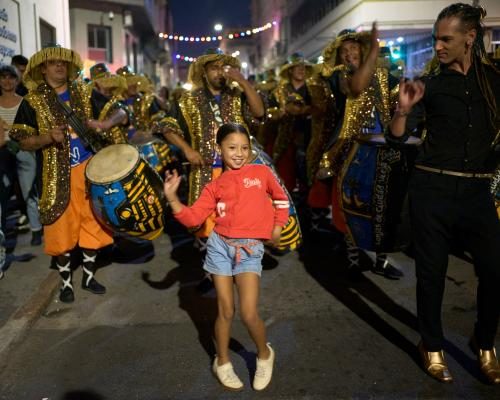
Uruguay's vibrant streets are alive with the pulsating rhythms of candombe, a musical tradition deeply rooted in the country's Afro-descendent heritage. Once marginalized and even banned, candombe has reclaimed its place in the cultural fabric of Montevideo and beyond. As the genre gains unprecedented popularity, groups like Rueda de Candombe are drawing crowds of thousands each week, celebrating the rich history and artistic expression of this unique sound.
Candombe's Historical Struggles and Revival
Candombe's journey from the shadows into the limelight mirrors that of several iconic music styles across the Americas, including the blues, samba, and rumba. Initially, candombe was restricted to the homes and secret gatherings of the African community during the 18th and 19th centuries, as authorities viewed it with disdain. Even as recently as 1807, candombe faced a ban due to its perceived impropriety. Yet, like many resilient art forms, candombe endured, whispering its rhythms through the alleyways of Montevideo. Originally reported by The Guardian.
Now, candombe is flourishing, marking a significant cultural shift in Uruguay. With around 10% of the country's 3.5 million residents identifying as Afro-Uruguayan, the revival of candombe represents a reclaiming of identity and heritage. This resurgence is particularly evident in the Ciudad Vieja neighborhood, where the Rueda de Candombe has become a focal point for weekly gatherings, attracting up to 2,000 enthusiasts every Monday to celebrate the genre's national roots.
The Growing Popularity of Rueda de Candombe
Rueda de Candombe, which started performing in a local bar just a year ago, has seen its audience expand rapidly, prompting a move to the larger Plaza España. This public square not only accommodates the growing crowds but also holds historical significance, as it was once a site where performers could practice away from the prying eyes of city residents. Claudio Martínez, a drummer with the group, reflects on this transformation: "It's crazy, because when you look around, you realize that in this very place we're dancing, singing and enjoying ourselves with some of the grandchildren and great-grandchildren of those who were denouncing us from inside the walls."
In addition to drawing local audiences, Rueda de Candombe has garnered attention from notable figures in the music industry. Jorge Drexler, an Oscar-winning Uruguayan artist, has incorporated candombe into his upcoming album, Taracá, set to release on March 12. The album features three tracks with Rueda de Candombe, and its rhythms resonate throughout, highlighting the genre's cultural significance. Drexler, an aficionado of candombe, describes it as a "trance, a spiritual tool" that fosters connection and understanding in an increasingly polarized world.
The Cultural Significance of Candombe
Candombe's roots trace back to the more than 200,000 enslaved Africans brought to Uruguay over 250 years of slavery, primarily from central Africa. The term 'candombe' is believed to originate from the Bantu language family, reflecting its deep connections to African heritage. While candombe drumming occasionally intertwines with religious practices, it is primarily a musical and dance form characterized by three distinct drums: piano, chico, and repique. Each drum mirrors the human voice, creating a rich dialogue that resonates with both performers and audiences alike.
Even after facing years of discrimination, candombe gained wider acceptance in Uruguayan society, especially through the efforts of pioneering artists like Rubén Rada. The genre received official recognition in 2006 and was later acknowledged by UNESCO as an intangible cultural heritage of humanity in 2009, solidifying its place in global cultural history.
Future Prospects for Candombe
The revival of candombe signals a new era for Uruguay, where cultural expressions that once faced suppression are now celebrated. As Rueda de Candombe continues to thrive, the genre's integration into mainstream Uruguayan culture suggests that candombe is not just a fleeting trend but a vital part of the nation's identity. With influential artists like Jorge Drexler championing the cause, candombe is poised to reach new heights, bridging gaps between generations and fostering unity through music.
As the rhythms of candombe echo through the streets of Montevideo, the genre stands as a testament to resilience and cultural pride, inviting all to join in the dance of history and community.
Originally reported by The Guardian. View original.