
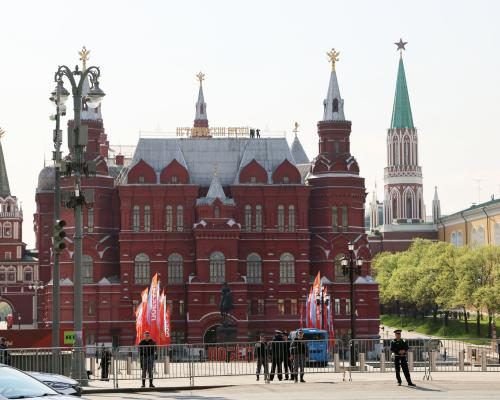
As the annual Victory Day parade in Moscow approaches, both Ukraine and Russia have accused each other of violating proposed ceasefires, intensifying the already fraught situation in the ongoing conflict. Ukrainian President Volodymyr Zelenskyy condemned Russia for failing to adhere to an indefinite ceasefire suggested earlier this week, while Russia claimed Ukraine had disrupted its own shorter ceasefire plan meant to protect the parade.
The escalating hostilities come as Russia prepares for one of its most significant national celebrations, with the Kremlin expressing concerns over potential Ukrainian strikes during the event. Moscow's threats of a massive retaliatory attack on Kyiv underscore the heightened tensions as the two nations engage in a bitter war that has lasted for more than four years. Prior to the parade, foreign diplomats in Kyiv have been urged to evacuate amid fears of an impending conflict. Originally reported by The Guardian.
Ceasefire Claims and Counterclaims
Ukraine's proposal for an indefinite ceasefire emerged earlier this week, but it was quickly marred by reports of ongoing Russian attacks. Zelenskyy stated, "All of this clearly shows that, on the Russian side, there was not even a token attempt to cease fire on the front. As we did over the past 24 hours, Ukraine will respond in kind today as well. We will defend our positions and people's lives." This firm stance showcases Ukraine's commitment to its defense amidst the chaos surrounding the celebrations in Russia.
On the other hand, Russia's position hinges on a shorter ceasefire, which it argues was meant to safeguard the Victory Day parade. The Kremlin accused Ukraine of breaking this arrangement, stating that it would respond "symmetrically" to any attacks. As the situation evolves, both sides are digging in, showcasing how the conflict has now become deeply intertwined with national pride and identity.
The Significance of Victory Day
Victory Day holds a special place in the heart of Russian national identity, a legacy that President Vladimir Putin has amplified throughout his time in power. The annual celebration commemorates the Soviet Union's triumph over Nazi Germany in World War II and has been increasingly used by the Kremlin to frame the ongoing conflict in Ukraine as a continuation of that fight. This year's parade is expected to be heavily loaded with symbolism, as Putin seeks to rally domestic support amid international scrutiny and military challenges.
Analysts suggest that the Kremlin's efforts to project strength during the parade are in part a response to the challenges posed by the West. The emphasis on military power and national unity during such events is seen as critical for maintaining public morale in a time of prolonged conflict. As the world watches, the parade will likely be a pivotal moment for Putin, marking another chapter in his narrative of Russian resilience.
International Diplomacy Amidst Domestic Strife
Beyond the battlefield, diplomatic tensions are also evident, particularly in the relationship between the United States and Italy. U.S. Secretary of State Marco Rubio is currently on a two-day visit to Italy, where he met with Prime Minister Giorgia Meloni and Foreign Minister Antonio Tajani. This diplomatic engagement comes amid rising tensions due to Italy's refusal to endorse U.S. military actions in Iran, which has strained relations between the two nations.
Rubio's meetings come on the heels of Meloni's criticism of Donald Trump's remarks regarding the war in Iran and Pope Leo's vocal opposition to it. The former president's comments about Meloni's lack of courage have added a layer of complexity to U.S.-Italy relations, highlighting the shifting dynamics in European politics. With the backdrop of the Ukraine conflict and Italy's position on international military involvement, the meetings are crucial for addressing the growing rifts.
As the situation unfolds, all eyes will be on both the military developments in Ukraine and the diplomatic interactions in Europe. The stakes are high, with the potential for further escalation in the conflict and implications for international relations. The next few hours leading up to the Victory Day celebrations will be critical in determining how both Russia and Ukraine navigate these tense waters.
Originally reported by The Guardian. View original.