
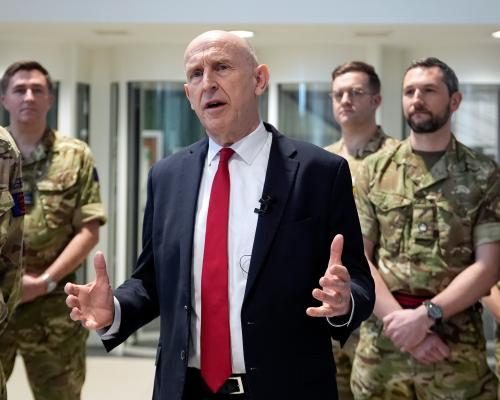
The UK Defence Secretary, John Healey, has drawn a direct connection between Iran's military strategies and the influence of Russian President Vladimir Putin, following a drone strike that targeted a base housing western forces in Erbil, northern Iraq. This incident highlights an alarming trend: Iranian drone pilots are increasingly employing tactics reminiscent of those used by Russian forces, according to British military officials.
Drone Strikes Raise Concerns in Northern Iraq
In a significant escalation of military activities, drones struck a western military base in Erbil on a night that saw heightened tensions in the region. British personnel stationed at the base reported no casualties, as a UK counter-drone team successfully intercepted two additional drones. This latest attack is part of a broader strategy by Iran, which has deployed over 2,000 Shahed drones across the Middle East amid ongoing conflicts. These long-range drones have notably been used by Russia in its military operations in Ukraine, raising alarms about the potential for further collaboration between Iran and Russia. Originally reported by The Guardian.
Iran's Tactical Shift Mirrors Russian Strategies
John Healey revealed insights from British officers stationed at the UK's military headquarters in north-west London, who noted a discernible shift in Iranian drone tactics. Lieutenant General Nick Perry, the chief of joint operations, confirmed that Iranian drone pilots have begun to fly their drones at lower altitudes, making them significantly more effective in striking targets. This tactical evolution is troubling, as the Shahed drone system has become one of Tehran's most potent weapons amid escalating violence in the region.
"It appears that Russia has since passed back tactical advice to Iran and its proxies on how to fly them," Perry stated. The implications of this collaboration are severe, as it not only enhances Iran's capabilities but also poses a direct threat to western interests in the Middle East, particularly in light of recent drone strikes.
Putin's Financial Gains from Conflict
Healey attributed part of the cooperation between Russia and Iran to the financial advantages Putin gains from rising oil prices, which have soared to approximately $100 a barrel. He emphasized that the current geopolitical climate benefits Russia, allowing for a fresh influx of funds that supports its ongoing military aggression in Ukraine. "I think no one will be surprised to believe that Putin's hidden hand is behind some of the Iranian tactics and potentially some of their capabilities as well," Healey remarked.
Since the onset of the Ukraine conflict, Russia and Iran have strengthened their military partnership, with Iran providing Russia with drones while also receiving military intelligence in return. Although the Kremlin has denied these allegations, US sources indicate that this exchange has taken place in the past fortnight, raising concerns about the implications for global security.
Strategic Implications for the Strait of Hormuz
During a recent discussion with the E5 group of European defence ministers, Healey addressed concerns surrounding the potential closure of the Strait of Hormuz. Reports have surfaced indicating that Iran is attempting to mine this vital waterway, through which approximately 20% of the world's oil supply passes. The UK has some autonomous systems at its disposal for locating Iranian mines, though the HMS Middleton, a mine-hunting vessel previously deployed in the region, has returned to the UK for maintenance.
The effective blockade of the Strait, exacerbated by drone attacks on oil tankers, has contributed to the spike in oil prices, further complicating the geopolitical landscape. Healey pointed out that the quickest resolution to this situation would be a de-escalation of the ongoing conflict.
While the UK is considering participating in a convoy for merchant shipping through the Strait, no formal proposals are imminent, especially with the US currently weighing its options. With only HMS Dragon available for deployment, which recently set sail for Cyprus, the UK's naval presence in the region remains limited.
As tensions continue to rise in the Middle East, the intersection of Iranian and Russian military tactics poses significant challenges for western forces. The evolving situation will require careful monitoring and strategic responses to mitigate threats to international security, especially as Iran's drone capabilities become increasingly sophisticated.
Originally reported by The Guardian. View original.