
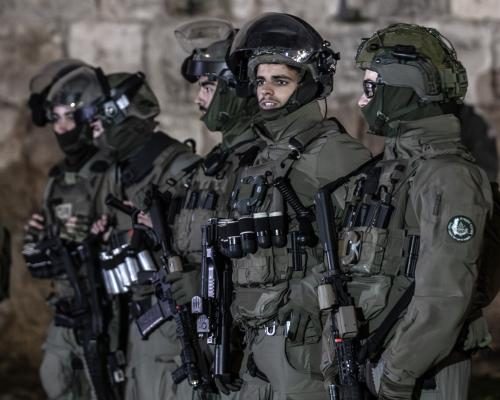
For the first time since 1967, the al-Aqsa mosque, a site of immense spiritual significance, will remain closed to Muslim worshippers on the final day of Ramadan this Friday. The closure has ignited tensions among Palestinians, who are compelled to pray outside the Old City as Israeli authorities barricade access to the mosque, known as al-Haram al-Sharif to Muslims and the Temple Mount to Jews. Hundreds of worshippers gathered in the streets near the Old City, expressing their frustration and sorrow over the unprecedented restrictions.
The decision to close the mosque follows a series of escalated security concerns tied to the ongoing U.S.-Israeli conflict involving Iran. Israeli authorities had first sealed off the mosque complex to most Muslim worshippers on February 28, citing security measures amid rising tensions. This has left thousands of Palestinians unable to access one of their holiest sites, forcing them to congregate outside the gates to perform Eid prayers. Originally reported by The Guardian.
Palestinian Sentiment and the Impact of Closure
As the date approaches, many Palestinians are voicing their sorrow and anger over the mosque's closure. Hazen Bulbul, a 48-year-old Jerusalem resident who has celebrated the end of Ramadan at al-Aqsa mosque since childhood, articulated the deep disappointment, saying, "Tomorrow will be the saddest day for Muslim worshippers in Jerusalem." He went on to express concerns about the implications of this closure, warning, "What I fear is that this sets a dangerous precedent. It may be the first time, but probably not the last."
In recent months, tensions have escalated, with numerous arrests of Palestinian worshippers and religious staff in the Old City. Reports indicate that Israeli police have detained individuals inside the mosque precincts, sometimes during prayer times, which has only intensified fears of potential clashes as the mosque's closure coincides with the spiritual observance of Eid.
International Response and Local Outcry
The closure has drawn widespread condemnation from various international organizations, including the Arab League and the Organisation of Islamic Cooperation. In a joint statement, they described the action as a "blatant violation of international law" that threatens freedom of worship and exacerbates regional tensions. They emphasized that such measures serve to undermine the historical and legal status quo at Islamic and Christian holy sites in Jerusalem.
Khalil Assali, director of the media unit at al-Quds University, labeled the closure a "catastrophe for Palestinians." He noted the harsh reality faced by those attempting to pray, stating, "When Israelis see young Palestinians trying to pray at the closest point to al-Aqsa mosque, they run after them, they kick them out while they are praying." This reflects the escalating difficulties that worshippers face in accessing their holy sites, further compounding the challenges of religious observance.
The Duality of Eid in Gaza
As the al-Aqsa mosque remains closed, the situation in Gaza presents a stark contrast. The humanitarian crisis there continues to deepen, with ongoing Israeli bombardments disrupting the lives of many. Despite the destruction, hundreds of thousands of Muslims in Gaza are preparing to mark Eid amid the devastation, living in a reality filled with both grief and fleeting moments of joy.
Sadeeqa Omar, a mother displaced from northern Gaza, expressed the conflicting emotions of the occasion, stating, "The joy of Eid is incomplete." She emphasized the struggles faced by families in Gaza, many of whom have lost loved ones or homes. "Each of us carries our own burdens," she remarked, highlighting the resilience of those trying to maintain their religious traditions despite overwhelming hardships.
The sounds of celebrations and the echoes of bombardments paint a harrowing picture of a community striving to find joy amidst sorrow. As the festive spirit of Eid clashes with the backdrop of destruction, the resilience of Gazans shines through, yet the deep scars of conflict remain palpable.
The closure of the al-Aqsa mosque on Eid signifies more than just a restriction on access; it encapsulates the ongoing struggle for religious freedom and the complex dynamics of the Israeli-Palestinian conflict. As tensions remain high and international scrutiny intensifies, the situation calls for urgent dialogue and resolution to prevent further escalation and to safeguard the rights of worshippers in Jerusalem and beyond.
Originally reported by The Guardian. View original.