
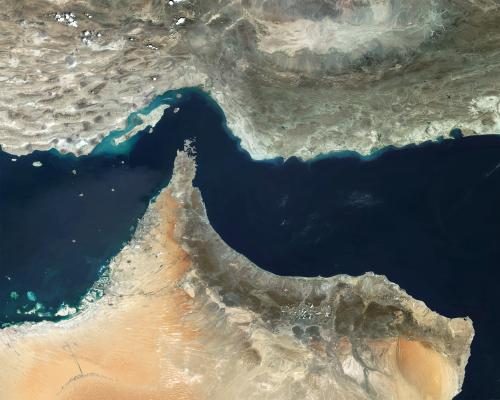
The ongoing conflict stemming from the US-Israel war on Iran has severely impacted shipping routes through the Strait of Hormuz, a vital corridor for global oil and gas supplies. Over the past month, this strategic waterway has witnessed a drastic reduction in maritime traffic, causing significant disruptions in energy markets and pushing prices to new heights.
Impact of Conflict on Global Shipping
Since the outbreak of hostilities four weeks ago, threats to commercial shipping have effectively closed the Strait of Hormuz, a route that normally facilitates the passage of approximately 138 ships daily. This channel is crucial, handling nearly 20% of the world's oil and gas supplies and around a third of global fertilizers essential for food production. However, recent data suggests that only a trickle of vessels has managed to navigate these troubled waters. Originally reported by The Guardian.
According to Lloyd's List Intelligence, just 100 vessels exited the Gulf, and 40 entered in March, a stark contrast to the typical traffic levels. The region has seen more than 20 attacks on ships, resulting in injuries and loss of life. The Palau-flagged Skylight was notably the first tanker to be struck, with its captain and a crew member both succumbing to the attack.
While there have been no reported damages since March 22, analysts warn that restoring normal shipping patterns might take months even after the fighting ceases. This uncertainty has led around 1,000 vessels, including oil and gas tankers and container ships, to remain anchored or docked, avoiding the risks of transit.
Iran's New Shipping Corridor
The situation has prompted Iran to offer a workaround. On Tuesday, Tehran announced to the International Maritime Organization (IMO) and the United Nations that it would allow "non-hostile vessels"-defined as those not participating in or supporting aggression against Iran-to pass through the Strait. Iran has proposed moving commercial vessels through what it describes as a "safe corridor" in its territorial waters, which runs north of the traditional shipping lanes along the Iranian coastline.
This alternative route, located between Larak Island and the Iranian mainland, enables Iranian authorities, including the Islamic Revolutionary Guard Corps (IRGC), to visually monitor and approve vessel passage. Shipping analysts have dubbed this route "Tehran's tollbooth," viewing it as a strategic move by Iran to exert control over maritime traffic.
While it's unclear whether Iran is charging for this safe passage, reports indicate that at least two vessels have made payments, with one transaction reportedly reaching $2 million (£1.5 million) for a Very Large Crude Carrier (VLCC). These payments were made in Chinese yuan, likely due to the IRGC facing sanctions from the US, EU, and UK.
Risks of Transiting Hormuz
Even with Iranian clearance to navigate the strait, the safety of vessels remains uncertain. Analysts caution that the IRGC does not operate as a unified body; thus, factions within could still pose threats, potentially delaying or seizing approved vessels. In recent days, some shipping activity has resumed, with a slight uptick in transits on March 26. That day, Israel announced the targeted killing of Alireza Tangsiri, head of the IRGC navy, who had been overseeing the de facto closure of the strait.
On March 24, four vessels were noted to have crossed the strait with their transmitters activated. This included one Panama-flagged tanker and two cargo vessels exiting the Gulf, while another cargo ship entered. However, the lack of recorded traffic in established commercial lanes raises questions about the number of unreported crossings, as some ships opted to navigate close to the Oman coastline without disclosing their positions.
Marine intelligence platform Windward indicated that while no maritime traffic was registered in the standard shipping lanes, a number of large vessels were seen north of Larak Island, possibly preparing for transit. This suggests a coordinated approach to vessel movement, controlled by Iranian authorities.
Future of Maritime Traffic in Hormuz
The current situation in the Strait of Hormuz reflects a complex interplay of geopolitical tensions and economic realities. With energy prices already on the rise due to supply disruptions, the fate of global shipping through this narrow corridor remains uncertain. The international community watches closely as Iran establishes its parameters for maritime navigation.
As tensions persist and the conflict unfolds, shipping companies face a precarious decision-making landscape. They must weigh the risks of navigating through the strait against the critical need to maintain supply chains. The coming weeks will be crucial in determining whether the trickle of vessels can grow into a steady stream once again, or if the strait will remain a battleground for geopolitical rivalries.
Originally reported by The Guardian. View original.