
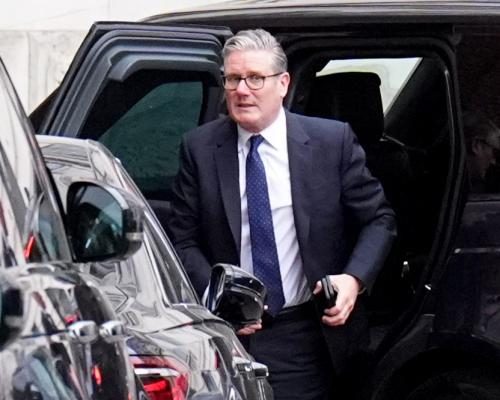
Keir Starmer is set to face Prime Minister's Questions (PMQs) today, amid ongoing scrutiny surrounding the controversy over Peter Mandelson's vetting. The situation is intensifying, with many Labour MPs expressing concern over Starmer's leadership as the political landscape shifts. The incident raises questions about the impact of personal disputes on broader governmental issues.
Mandated Scrutiny: The Mandelson Vetting Row
The ongoing debate regarding Peter Mandelson's appointment as a sensitive diplomatic figure continues to overshadow Keir Starmer's leadership. Following Olly Robbins' testimony before MPs, Labour insiders have voiced their discontent with Starmer's decision-making process. Robbins, whom Starmer dismissed as the Foreign Office permanent secretary, has become a key figure in the controversy, leading many to question Starmer's judgment in appointing someone with Mandelson's controversial history. Originally reported by The Guardian.
As the political climate grows increasingly hostile, Labour MPs are expressing alarm over the implications of this scandal. They believe Starmer's leadership may be at risk, with some describing it as "on borrowed time." The concerns are amplified by the fact that the political landscape is currently dominated by social media narratives, which often prioritize scandals over substantial policy discussions. This shift in focus complicates Starmer's efforts to address pressing national issues.
Robbins' Testimony and Its Ramifications
Robbins provided evidence to MPs yesterday, further complicating Starmer's position. His testimony was interpreted by many as a vindication of his professionalism and decision-making, particularly regarding his judgment about Mandelson. Mark Sedwill, the former cabinet secretary who served from 2018 to 2020, publicly supported Robbins. In a letter to The Times, Sedwill emphasized Robbins' "calm integrity and intelligence," urging for his reinstatement to the pivotal role in the Foreign Office.
Robbins' testimony highlighted the operational challenges he faced when making decisions on Mandelson's vetting process. He explained that the critical question was not whether to inform the prime minister of prior concerns but rather whether those issues could be mitigated effectively to allow Mandelson access to sensitive intelligence. Robbins believed they could be managed, a decision that now appears to have backfired in light of recent events.
Opposition's Tactics: Badenoch's Charges and Starmer's Response
During last week's parliamentary session, Kemi Badenoch, the Conservative leader, attempted to corner Starmer by accusing him of lying to Parliament. However, her claims fell flat as evidence indicated that Starmer had not misled MPs. Rather than directly addressing the allegations, Starmer shifted the focus to procedural matters in his Monday statement, which inadvertently drew attention to his controversial decision to sack Robbins.
This strategic pivot has not necessarily played in Starmer's favor, as many observers believe it has exposed vulnerabilities in his leadership style. The ongoing discourse now centers on whether Starmer's actions, particularly regarding Robbins and Mandelson, reflect deeper issues within his administration. As PMQs approaches, the atmosphere is tense, and Labour MPs are likely to scrutinize Starmer's expressions and demeanor as much as his words.
Upcoming Parliamentary Agenda and Broader Implications
As Keir Starmer prepares for today's PMQs, the broader parliamentary agenda includes a session with Hilary Benn, the Northern Ireland secretary, who will provide testimony on the human rights implications of the Troubles bill. This will be followed by a debate on Lords amendments to the children's wellbeing and schools bill, where the government is set to accept a proposal for a statutory ban on smartphones in schools, although it will reject amendments for a social media ban for under-16s.
Later in the day, prominent political figure Nigel Farage will address supporters at a rally in Barnsley, further showcasing the dynamic and contentious political environment. As the day unfolds, the ramifications of Robbins' testimony and the Mandelson controversy are expected to reverberate throughout Parliament. The tension surrounding Starmer's leadership may become more pronounced as Labour MPs assess the consequences of these events.
As the political landscape continues to evolve, Starmer's handling of this controversy will be closely watched, with potential long-term implications for his leadership and the Labour Party's direction.
Originally reported by The Guardian. View original.