
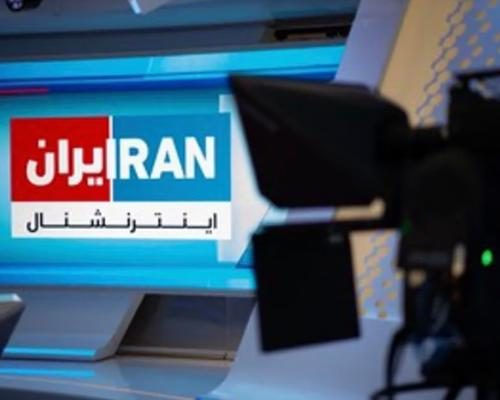
Iranian journalists residing in London are increasingly alarmed for their safety following a surge of threats and violent attacks they attribute to the Iranian regime's efforts to suppress dissenting voices. The recent attempted arson at the offices of Iran International, a prominent news channel, underscores the perilous climate for those reporting on Iranian affairs from abroad.
Targeted Attacks and Intimidation
On Wednesday, the London offices of Iran International were targeted in an attempted arson attack when an ignited container was thrown into the car park of a neighboring building. The Metropolitan Police are investigating the incident, which reflects a disturbing trend of violence against journalists who oppose the Iranian government. An Iran International journalist described the normalization of violence within the newsroom, stating, "Our minds are ignoring these ugly things automatically." The journalist expressed the emotional toll of living in constant fear, revealing that their British colleagues often commend their bravery, while they internally grapple with the distressing reality of their situation. Originally reported by The Guardian.
Another journalist from Iran International recounted a chilling encounter where Iranian security forces displayed a photo of his home balcony to his family in Iran, warning them of their proximity. He received a threatening message that he would be "cut into pieces and sent each separately to your family." This kind of intimidation is not isolated but part of a broader strategy to silence dissenters, with many journalists facing similar threats, including attempted assassinations and abductions.
Escalating Threats Post-Crisis
The risks for Iranian journalists in London have intensified markedly since the outbreak of the Israel-Iran war in June 2025 and the mass street protests in Iran that followed in December and January. One BBC Persian journalist reported that threats against her and her colleagues escalated during these crises. She recounted how Iranian authorities warned her family that she could face charges of moharebeh, or waging war against God, which carries the death penalty. "As soon as there is a crisis that's when they [the Iranian regime] start to create fear," she said, emphasizing how the regime aims to control the narrative heard within Iran.
The emotional toll on journalists is significant. The BBC Persian journalist shared her fear for her family's safety and her own sense of vulnerability, stating, "You no longer feel safe. You are here living and working in the UK and then suddenly you find [the violence] has reached here." She described the anxiety of knowing that the Iranian regime could hire someone to harm her even in London, a city perceived as a sanctuary for press freedom.
Community Impact and Government Response
Experts have noted that the Iranian regime employs criminal proxies to carry out acts of violence against its opponents abroad. An Iranian activist supporting journalists in London reported that many have received direct threats, compelling some to reconsider their work for fear of retribution. "The threats have gone off the scale," she stated, pointing out that many journalists now look over their shoulders while in public. Parents among them have heightened concerns for their children's safety, often feeling unsupported in the face of escalating threats.
Dr. Lucia Ardovini, a member of the Tackling Transnational Repression in the UK Working Group, explained that attacks on journalists frequently involve members of the Iranian diaspora acting as informal agents of the state. "The recent attack on the offices of Iran International in London is a clear example of these dynamics," she noted, emphasizing a continuous campaign by the Iranian government to discredit the outlet by labeling it a 'terrorist organization.' The Iranian community has faced increased targeting since the onset of the war involving the U.S., Israel, and Iran, with little satisfactory response from the UK government.
Journalists Confronting Trauma
For journalists who have fled Iran, the threats to their lives compound the trauma endured while covering violent crackdowns on protests back home. Many describe having witnessed horrific scenes during the January protests, where tens of thousands lost their lives amid state repression. One journalist recounted the harrowing images of violence and suffering, stating, "Imagine what we have been through with the January suppression.. we saw two wars with corpses, damaged brains and a sea of blood from our own people in Iran."
The situation for Iranian journalists in London is increasingly precarious. As they continue to report on the realities of life in Iran, they grapple with the remnants of trauma and the persistent threats that shadow their work. The cycle of violence and intimidation shows no signs of abating, leaving many to wonder how long they can continue their important work in such a hostile environment.
Originally reported by The Guardian. View original.