
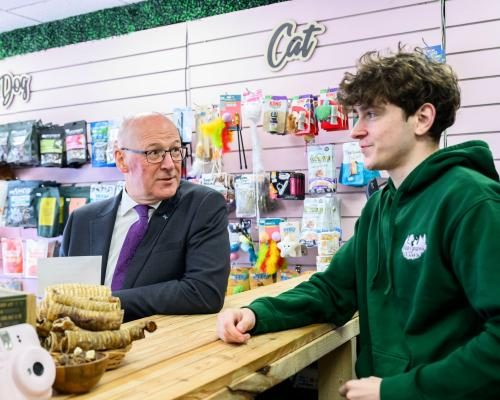
When it comes to ‘i am losing faith’: disaffected scottish voters may deny snp a majority, john Swinney, the leader of the Scottish National Party (SNP), faced unexpected backlash during a campaign walkabout in Hamilton. Rather than a smooth event, he encountered frustrated voters questioning the party's commitment to pressing local issues. Natasha Kelly, a long-time SNP supporter and mother of two, expressed her disillusionment over the local council's failure to address the damp conditions of her flat, which have contributed to her children's chronic asthma. "I do believe in the SNP but I am losing faith vastly," she said, highlighting a growing sentiment among constituents. Similarly, Gavin Boyle, a bar owner from Glasgow, vented his anger over a staggering 438% increase in business rates that has pushed his annual bill to £645,000. "They're as bad as each other," he declared, indicating he won't vote for the SNP or any other party.
Understanding ‘I Am Losing Faith’: Disaffected Scottish Voters May Deny SNP A Majority
The atmosphere during Swinney's visit was charged with emotion, illustrating a stark contrast to the SNP's previous campaign successes. As he attempted to reassure constituents with promises of immediate action, the harsh realities of local governance and economic struggles loomed large. The daughter of an elderly woman spoke tearfully about her mother's struggles with inadequate social care, further illustrating the disconnect between voter expectations and governmental action. Mark Diffley, a polling analyst, characterized the current election campaign as "uninspiring, short of fresh policy and ideas, and failed to make an impression on voters." This discontent hints at an unpredictable election outcome, with potential implications for turnout and tactical voting. Originally reported by The Guardian.
Election Dynamics Shift
The SNP's path to a fifth consecutive term appears fraught with challenges. In the last election, held in 2021, the party won 47.9% of the constituency vote, securing 64 Members of the Scottish Parliament (MSPs) and falling just one seat short of a majority. Now, with current polling placing the SNP in the mid-30s, the party's dominance is being questioned. Scottish Labour organized a lively rally in Glasgow, where party leader Anas Sarwar urged supporters to chant their core message: "Reject Reform, beat the SNP, change Scotland and vote Scottish Labour." Despite the optimism, Labour officials privately acknowledge that they may not surpass the SNP but could position Sarwar to challenge for first minister.
Strategic Moves and Last-Minute Campaigning
As the election approaches, Labour has invested £200,000 into an aggressive social media campaign, aimed at attracting undecided voters. Senior figures in the party project they could capture up to 23 constituency seats, alongside regional top-ups. Polling data shows a significant number of undecided voters, with Labour asserting that more are leaning towards them than any other option. However, they also recognize a troubling trend of working-class voters drifting towards Reform and the SNP. In response to these challenges, the SNP has doubled down on its core voting strategy, pledging to prioritize a vote on independence powers as soon as the new parliament convenes, a move that underscores their anxiety about maintaining support.
Challenges for Reform and the Greens
Reform UK, aiming to disrupt traditional party dynamics, has faced a series of setbacks, including candidate resignations and controversies surrounding its leadership. Malcolm Offord, the party's Scottish leader, has struggled to resonate with voters, a task made more difficult by his self-proclaimed wealth, which drew ridicule during a televised debate. Meanwhile, the Scottish Greens are attempting to make headway in the election, hoping to secure at least one constituency win. However, their decision not to field candidates in every constituency may leave pro-independence voters without an alternative option should they feel disillusioned with the SNP.
As the campaign reaches its final days, the political landscape in Scotland remains volatile. With disenchanted voters openly questioning their loyalties and the SNP's once-stalwart support appearing shaky, the outcome of this election is anything but certain. While Labour seeks to capitalize on the SNP's vulnerabilities, Reform UK grapples with its identity and voter engagement. Turnout will be crucial, as many constituents weigh their options amidst a backdrop of frustration and unmet expectations.
Originally reported by The Guardian. View original.