
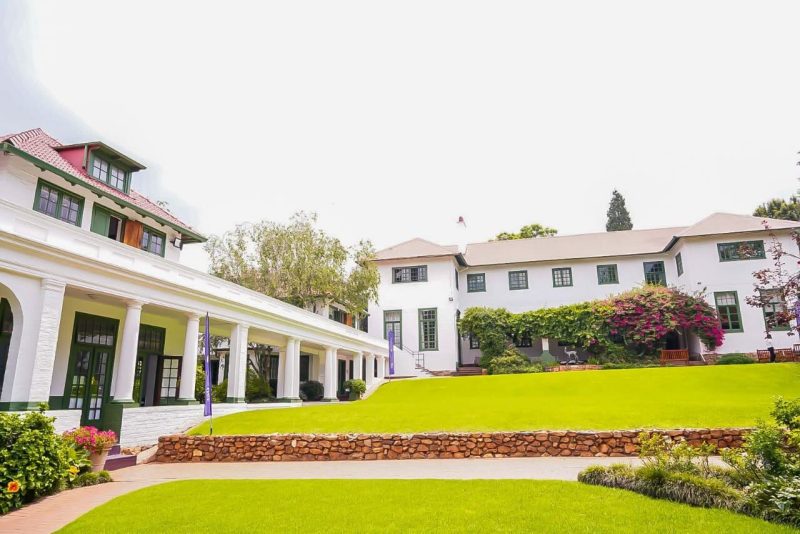
The recent controversy surrounding Roedean School and King David Linksfield has ignited a fierce debate in South Africa about the delicate balance between protest rights and discrimination. Until just weeks ago, these two prestigious Johannesburg high schools were relatively under the radar. However, their involvement in a tennis match on February 3 has exposed underlying tensions in South African society, prompting a reevaluation of the values enshrined in the Constitution.
Unexpected Tensions Emerge
On February 3, a tennis match was scheduled between King David Linksfield, a Jewish school, and Roedean, an Anglican institution. However, the Roedean team was notably absent. Prior to the match, Roedean's principal reached out to her counterpart at King David to discuss concerns raised by some parents about competing against a Jewish school. This conversation, which was later leaked, revealed a tense yet collegial exchange. The Roedean principal expressed her intent to monitor the situation closely, saying, "I am going to be at the fixture anyway, basically going there to make sure my parents behave."
Despite this, Roedean later cited timetable conflicts-specifically geography and academic programs-as the reason for their absence. This prompted King David to accuse Roedean of antisemitism, interpreting the situation as a refusal to compete against a Jewish institution. At no point did the Roedean principal indicate that the school's absence was due to the religious identity of their competitors. Instead, she expressed concern over some parents' discomfort with the association to Israel amidst ongoing political tensions.
The Complex Nature of Discrimination and Protest
The incident sparked discussions among students and educators alike about the constitutional rights to protest and to be free from discrimination. In a recent class on education policy, over 200 students engaged in a vibrant debate about these competing rights. The conversations highlighted the need to understand the nuances of each principle enshrined in the South African Constitution. On one hand, there's the right of individuals and groups to express their discomfort with the policies or identity of others; on the other hand, there's an equally important right to protection from discrimination based on religion.
While King David's accusations of antisemitism are serious, the evidence does not support the claim that Roedean's absence was rooted in prejudice. In fact, the accusations could be seen as a diversion from the real issues at play: a lack of communication and clarity between the two schools and an inability to address sensitive topics without escalation. The discourse surrounding antisemitism is important, particularly given South Africa's historical context, but care must be taken not to conflate discomfort with outright discrimination.
The Impact on Students
Throughout this unfolding saga, the voices of the students have been largely overshadowed. The learners from both schools found themselves caught in the crossfire of a debate that should have focused on their interests and experiences in sports and education. As adults grappled with the implications of their actions and statements, the students watched as their institutions struggled with public relations and accountability.
It's essential to recognize that the students are not merely passive observers. They are directly affected by how their schools address issues of discrimination, identity, and the rights to protest. The adults in charge, particularly the school governors and administrators, have a responsibility to ensure that students learn from these experiences rather than merely witnessing them. The emphasis should be on fostering an environment that promotes understanding and respect for all identities.
Lessons for the Future
The Roedean/King David situation serves as a compelling case study for educators, parents, and students alike. It highlights the need for effective communication, especially when dealing with sensitive issues of identity and rights. Both schools must reflect on their response and seek to improve how they handle conflicts of this nature in the future. Schools should prioritize open dialogue, allowing students to voice their concerns and learn how to navigate complex social landscapes.
Ultimately, the fallout from this incident should not deter schools from engaging with difficult conversations. Rather, it should encourage them to create frameworks where issues of discrimination and protest can be discussed openly and respectfully. In doing so, they will not only uphold constitutional values but also prepare students to thrive in a diverse society.